The most underused camping resource in the United States is probably not a campground at all. The Bureau of Land Management administers roughly 245 million acres of public land in the western United States. The national forest system adds another 193 million acres. On most of that land, camping is permitted outside of designated campgrounds — dispersed camping, often for free, with a degree of solitude that reserved campgrounds cannot offer.
Dispersed camping is not complicated, but it does require understanding a set of rules that apply by default and knowing where to find the local guidance that modifies them. Getting it right means better camping experiences and land that stays available for future visitors.
What Dispersed Camping Is (and Isn't)
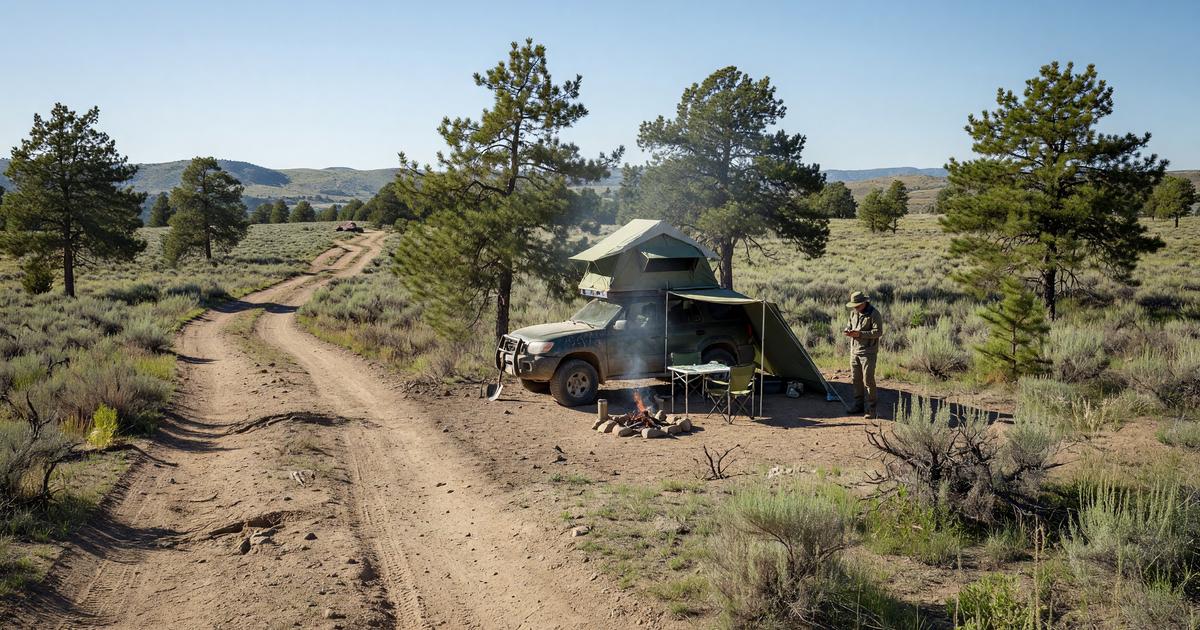
Dispersed camping means camping on public land outside of designated campground boundaries. No fire ring, no picnic table, no fee station. You set up where the land allows, follow the rules, and leave without a trace.
This is different from backcountry camping in wilderness areas, which may have additional permit requirements and more specific use regulations. Dispersed camping on BLM land and national forests is generally more accessible — reachable by vehicle, often on maintained dirt roads — and requires no advance permit for standard stays.
It is also different from any kind of unauthorized camping. Dispersed camping is explicitly permitted and managed by federal land agencies. The rules that govern it are designed to distribute use and protect the resource, not to restrict access.
The Default Rules That Apply Everywhere
Dispersed camping on BLM and national forest land operates under a set of default rules that apply system-wide unless local regulations are more restrictive.
14-day stay limit. You may camp in any one location for up to 14 consecutive days. After 14 days, you must move at least 25 miles from that location. This prevents long-term occupation of public land and ensures access for others.
200-foot setback from water. Camp at least 200 feet (roughly 70 adult paces) from streams, lakes, ponds, and wetlands. This protects riparian areas, water quality, and wildlife habitat.
200-foot setback from roads and trails. Camp out of sight of established roads and trails where practicable — this reduces visual impact and maintains the sense of solitude that dispersed camping exists to provide.
Leave No Trace. Pack out everything you pack in. This includes trash, food scraps, toilet paper, and all equipment. The seven Leave No Trace principles are the standard — plan ahead, camp on durable surfaces, properly dispose of waste, and leave what you find.
Human waste disposal. Where no toilet is available, bury human waste in a cathole 6-8 inches deep, 200 feet from water, trails, and camp. Pack out toilet paper rather than burying it — paper does not decompose quickly and is the most common sign of irresponsible backcountry use.
Campfire rules. Check current fire restrictions before you go. Many dispersed camping areas fall under the jurisdiction of county or national forest fire restrictions that prohibit campfires during dry periods. Fire restrictions can change daily during fire season. Check with the local BLM field office or ranger district for current status.
How Local Rules Modify the Defaults
The default rules are a floor, not a ceiling. Individual BLM field offices and national forest ranger districts frequently impose additional restrictions:
- Some areas require a dispersed camping permit for high-traffic zones (popular areas in Colorado, Utah, and southern California have adopted these)
- Specific canyons or drainages may be closed to dispersed camping entirely due to sensitivity or overuse
- Some areas have site-level fire restrictions more stringent than the regional order
- Certain road corridors restrict camping to designated sites only
The only reliable way to know the current local rules is to check with the managing office before you go. The BLM and US Forest Service maintain field office websites with current fire restrictions and area closures, and calling the ranger station for the specific forest or district you plan to camp in takes five minutes and eliminates guesswork.
Finding Dispersed Camping Sites
The BLM's website (blm.gov) has a national map that shows BLM-managed land. Any BLM land shown without a specific designated campground overlay is generally open to dispersed camping unless otherwise noted.
Inciweb and local ranger district sites post current fire restrictions and area closures. This is the first check during fire season.
Freecampsites.net and iOverlander are user-contributed databases of specific dispersed camping locations — GPS coordinates, access road condition notes, water availability, cell coverage. These are not official sources but are reasonably reliable for established informal sites.
Google Earth. Before driving a remote road, zooming into satellite view gives you a reasonable sense of terrain, road quality, and whether a given area has flat ground suitable for camping. Compare the satellite view against USGS topo maps for the same area — the combination gives you what you need to evaluate a site from the desk.
The Motor Vehicle Use Map (MVUM) for each national forest shows which roads are legally open to motor vehicles — dispersed camping off roads not shown on the MVUM is not permitted. Download the relevant MVUM from the forest's website before going.
What to Bring That Campgrounds Don't Provide
Dispersed camping means no infrastructure. Factor this into your preparation:
Water. No potable water source. Bring all the water you need, or plan for filtering from a natural source (with a quality filter rated for backcountry water treatment). Calculate minimum 1 gallon per person per day for drinking and cooking; more if it is hot.
Human waste management. A trowel for catholes, or a portable toilet with waste bags for RV or overlanding use. Do not assume you can use a campground bathroom nearby — you cannot.
Navigation. Cell coverage is unreliable or absent. Download offline maps (Gaia GPS, Avenza with the MVUM and topo layers) before you leave pavement. Know where you are going before you lose signal.
Self-sufficiency for vehicle recovery. A high-clearance vehicle is often helpful, and a shovel, traction boards, and a high-lift jack can get you out of soft sand or mud. Tell someone where you are going and when to expect you back.
Proper waste storage. In bear habitat — which includes most of the West — use a bear canister or hang food. Check whether the specific area requires bear canisters (some Sierra Nevada zones mandate them). In areas with active ravens or camp robbers, keep food secured even outside bear zones.
The Dispersed Camping Advantage
The case for dispersed camping over campground camping comes down to three things: cost, solitude, and flexibility.
Cost is easy — most dispersed camping is free. The only cost is fuel.
Solitude is harder to quantify but more impactful. A reserved campsite in a popular campground puts you within 30-50 feet of neighbors on most sides. A well-chosen dispersed camp puts you potentially miles from another party. The quality of the outdoor experience — the wildlife density, the night sky, the morning quiet — is categorically different.
Flexibility is the one that experienced overlanders and long-term campers value most. No reservation system. No window. No race to book six months out. You can decide Thursday afternoon to leave Friday morning and find a campsite worth camping in, which is impossible at the most popular reserved campgrounds. For families with kids and variable schedules, that flexibility has genuine value.
For campground alternatives that include some amenities, see our guide to campgrounds near national parks — the gateway national forest options near most major parks blend some of the dispersed camping flexibility with better road access.
Frequently Asked Questions
Is dispersed camping on BLM land free? Yes, dispersed camping on most BLM land is free and requires no reservation. Some high-traffic areas in the West have adopted free permit systems to manage use, but no fee is charged. The main requirement is following the 14-day stay limit and Leave No Trace principles.
How far from a water source do I need to camp? The standard minimum setback is 200 feet from lakes, streams, ponds, and wetlands — roughly 70 adult paces. The setback protects water quality and wildlife habitat. The same 200-foot distance applies to trails and roads to minimize visual impact.
Can I have a campfire while dispersed camping? It depends on current fire restrictions. Many dispersed camping areas fall under forest-wide or county fire restrictions during dry periods that prohibit campfires entirely. Always check current fire restriction status with the local ranger district or BLM field office before your trip.
How do I find dispersed camping spots near a specific destination? Use the BLM's national map at blm.gov to identify BLM-managed land. For national forests, download the Motor Vehicle Use Map (MVUM) for the specific forest from the USFS website. User-contributed apps like Freecampsites.net and iOverlander have GPS coordinates for established informal spots.
Do I need a permit to camp on BLM land? For most BLM land in most areas, no permit is required for dispersed camping within the 14-day limit. Some specific high-use areas have implemented free permit systems. Check with the local BLM field office for current requirements in the area you plan to camp.
Further Reading from Authoritative Sources
- Bureau of Land Management — Recreation — Official BLM camping and recreation guidance including dispersed camping rules and field office locator.
- National Park Service — Leave No Trace — The seven LNT principles that govern dispersed camping impact minimization on all public lands.