I have been camping with my kids since the oldest was 18 months. I have strong opinions about what works and what does not, formed through many actual camping trips and a non-trivial number of complete disasters. What follows is what I have learned — about activities, about campground selection, and about the gap between camping with children as imagined versus camping with children as lived.
The short version: kids who are engaged are happy campers. Boredom at a campsite hits differently than boredom at home — there is no YouTube fallback, the space is unfamiliar, and you are asking children to function on disrupted sleep in a new environment. The activities and campground features that keep them genuinely engaged are the difference between a trip they talk about for years and one they never want to repeat.
Choosing a Family-Friendly Campground
The most important decision in family camping is not the activity list — it is choosing the right campground. A well-chosen site makes everything easier.
Key features to look for:
Proximity to bathrooms — Kids, especially younger ones, need fast access to toilets. A 10-minute walk to the bathroom is a problem at 2 AM. Look for sites within reasonable walking distance of flush facilities, or commit to a portable toilet at the campsite.
A playground — Not a dealbreaker, but a genuine asset. A campground playground gives kids a structured option during dead time (when you are setting up, cooking, resting) that does not require your active involvement.
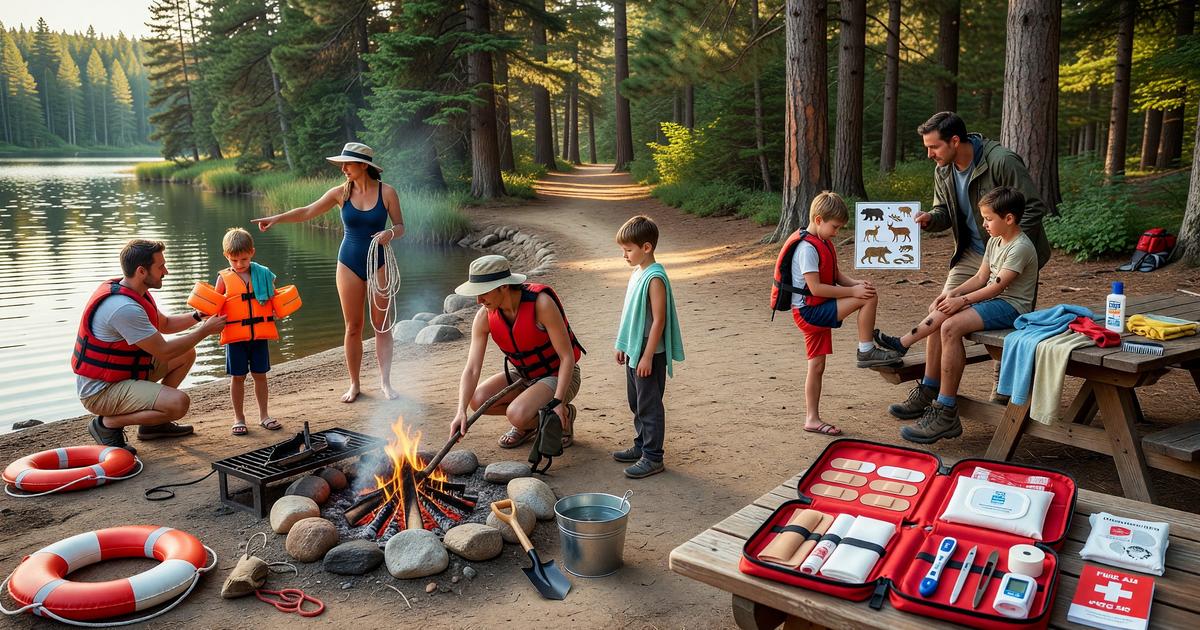
Safe water access — A lake or river with a designated swim area and lifeguards dramatically expands activity options. Swimming is one of the most reliably popular activities across age ranges. Check for lifeguard hours and water quality notices before you rely on this.
Camp store — Convenience counts. A camp store means forgotten sunscreen is a minor inconvenience rather than a crisis. It also means ice cream, which is a powerful tool.
Relative isolation from main road — Campsites next to entrance roads or highway noise are harder for kids to sleep in. Request or filter for interior loop sites when booking.
For campground recommendations near national parks, see our national park campground guide which includes notes on family-friendly site quality at each location. For keeping young children safe at campgrounds, see our guide to camping safety for families.
Activities That Work by Age
Toddlers (Ages 2-5)
Toddlers are sensory learners, which makes camping exceptionally well-suited for them — if exhausting for parents. The forest floor, rocks, sand, water, and fire all hold genuine novelty.
Rock and stick collecting — Give a toddler a small bucket and commission them to find "the most interesting rocks." This buys 20-40 minutes reliably. The quality control criteria are yours to set.
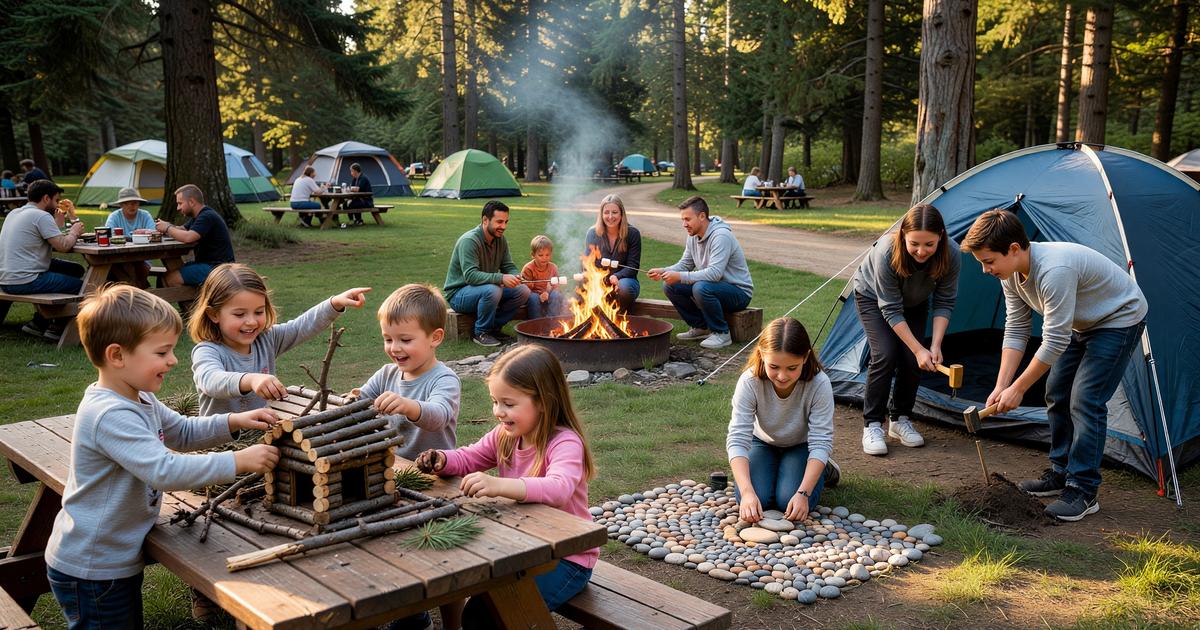
Nature art — Leaves, pinecones, flower petals, seed pods. Arrange them on a flat rock or picnic table into patterns, faces, or abstract compositions. No supplies needed beyond the forest floor.
Bug observation — A magnifying glass ($3-5) transforms an ordinary log into an entertainment source. Pill bugs, beetles, ants, and millipedes are fascinating to toddlers. The goal is observation, not collection.
Water play at the spigot — At a campground with a water spigot, a toddler with a cup and a small puddle is occupied for longer than any electronic alternative. Bring a change of clothes.
Campfire watching — Toddlers are hypnotized by fire. Supervised campfire time — marshmallows, poking with sticks, watching the coals — is legitimately engaging. Obvious safety supervision required.
Elementary Age (Ages 6-10)
This is the golden age for camping activities. Kids this age are old enough to genuinely hike, fish, and engage with nature; young enough to be easily delighted by things adults take for granted.
Hiking with a purpose — The difference between a successful hike with an 8-year-old and a miserable one is often the "purpose." A destination (a waterfall, a lake, a summit, a specific boulder formation), a checklist (wildlife bingo, plant identification), or a mission (find the oldest-looking tree) transforms a walk into an adventure.
Fishing — Campground lakes and rivers near state and national parks often have good fishing for kids — bass, bluegill, trout. A simple rod, bobber, and worm setup is sufficient. Kids do not need to catch anything to be engaged; the anticipation and the mechanics of fishing hold attention. If they do catch something, you will hear about it for months. See our state park camping guide for parks with good fishing access.
Scavenger hunts — Create a list before leaving home: pinecone, three different shaped leaves, animal track, spider web, something older than you are, something that moves. Print it or write it on a card. Works for a broad age range and can be scaled in difficulty.
Geocaching — The Geocaching app shows hidden caches near any campground. Finding a cache in the woods is legitimately exciting for kids this age. Many campgrounds have multiple caches within walking distance. Download the app and cache locations before you lose cell signal.
Night sky observation — Campgrounds away from city light pollution offer star visibility that most kids never experience. A red-light flashlight preserves night vision. Apps like Star Walk or Sky Map (download offline maps ahead of time) let you identify constellations, planets, and the Milky Way in real time. This activity has a way of becoming a trip highlight regardless of age.
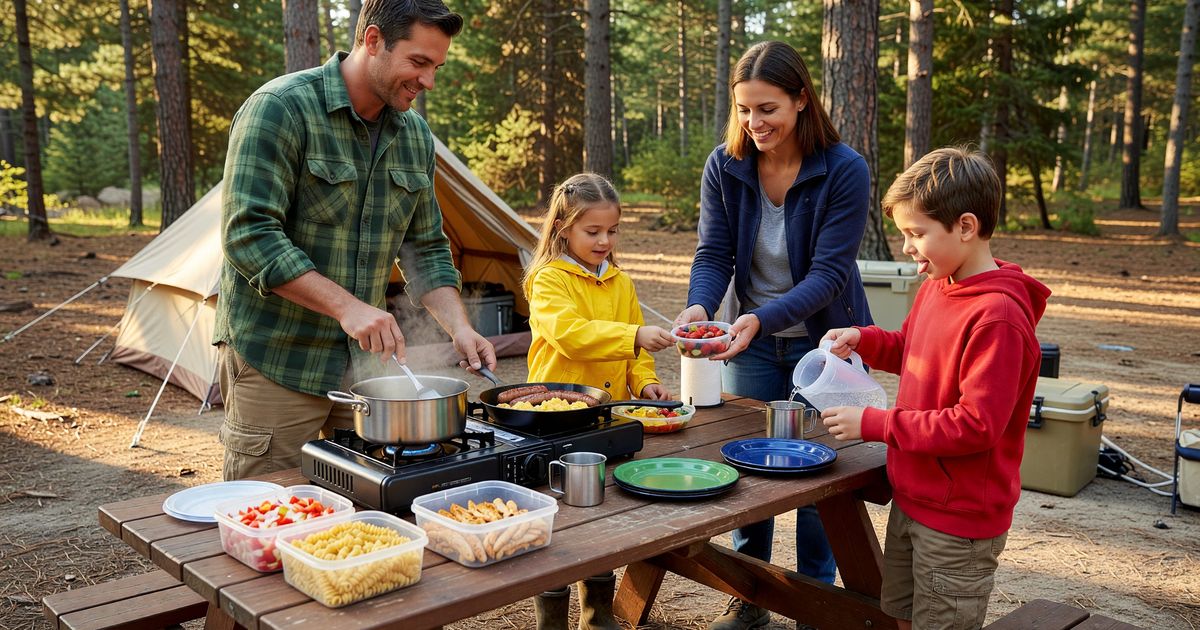
Camp cooking involvement — Kids who help cook eat better and are more engaged. Simple roles: stirring the oatmeal, helping build the foil packets for dinner, learning to flip pancakes, roasting their own hot dog. Fire cooking has inherent drama that kitchen cooking lacks.
Tweens and Teenagers (Ages 11+)
Older kids are harder to engage passively and need activities with some genuine challenge or social dimension.
Paddling — Many campground lakes have canoe, kayak, or paddleboard rentals. For teenagers, a self-guided paddle across a lake (with safety rules established) delivers autonomy and a genuine physical challenge. A destination — small island, far shore, fishing spot — makes it better.
Mountain biking or trail cycling — Campgrounds near rail-to-trail systems or purpose-built mountain bike trails are increasingly common. A half-day on a trail is better for teenager engagement than any other campground activity I have found.
Photography — Giving a teenager a dedicated camera (even a modest one) and a photography brief — document the wildlife, capture the best light of the day, make a 10-photo story of the trip — creates engagement and something to show at the end. Phone cameras work fine; having an intentional assignment is the key.
Campfire cooking challenges — Assign each person a meal to plan and execute for the group. A teenager planning, shopping for, and cooking dinner over a camp stove or fire has ownership of something real. Dutch oven cooking, in particular, has enough complexity and novelty to be genuinely interesting.
Stargazing with apps and star charts — Older kids can go beyond identifying constellations to learning to use a planisphere (a rotating star chart), tracking satellite passes, or finding specific deep-sky objects with binoculars. The Milky Way's galactic center is visible from dark-sky camping locations on clear summer nights.
What to Pack for Kid Campground Activities
A dedicated kids' activity kit eliminates most "I'm bored" situations:
- Magnifying glass
- Bug observation container (with ventilation lid)
- Nature journal and colored pencils
- Field guide for local birds or plants (Peterson series regional guides work well)
- Geocaching app set up on a phone (offline maps downloaded)
- Deck of cards
- Headlamp (each child has their own)
- Fishing tackle kit (rod, bobber, hooks, weights, worms from camp store)
- Hammock (lightweight, sets up anywhere)
- Star map or planisphere
The kit should be packed and accessible before you leave, not assembled at the campsite.
Managing the First Night
The first night camping with kids is usually the hardest. New sounds, different sleeping surfaces, unfamiliar dark — young children in particular need extra reassurance. Strategies that help:
Arrive with daylight to spare — Never arrive at a campsite after dark with kids. The chaos of night setup in an unfamiliar place is stressful for everyone.
Set up sleeping gear first — Before cooking dinner, get sleeping bags, pillows, and sleeping pads arranged inside the tent. Knowing where they sleep and what it feels like reduces bedtime anxiety.
Campfire as anchor — A campfire at the campsite becomes the visual and social center. Kids who are nervous about the dark are calmed by fire. S'mores at the campfire are both a tradition and a bribe.
Consistent bedtime rituals — If your child has a bedtime book routine at home, bring the book. Familiar elements in an unfamiliar environment reduce settling time significantly.
By the second night, most kids are running around the campsite like they own the place. The first night investment pays off.
Frequently Asked Questions
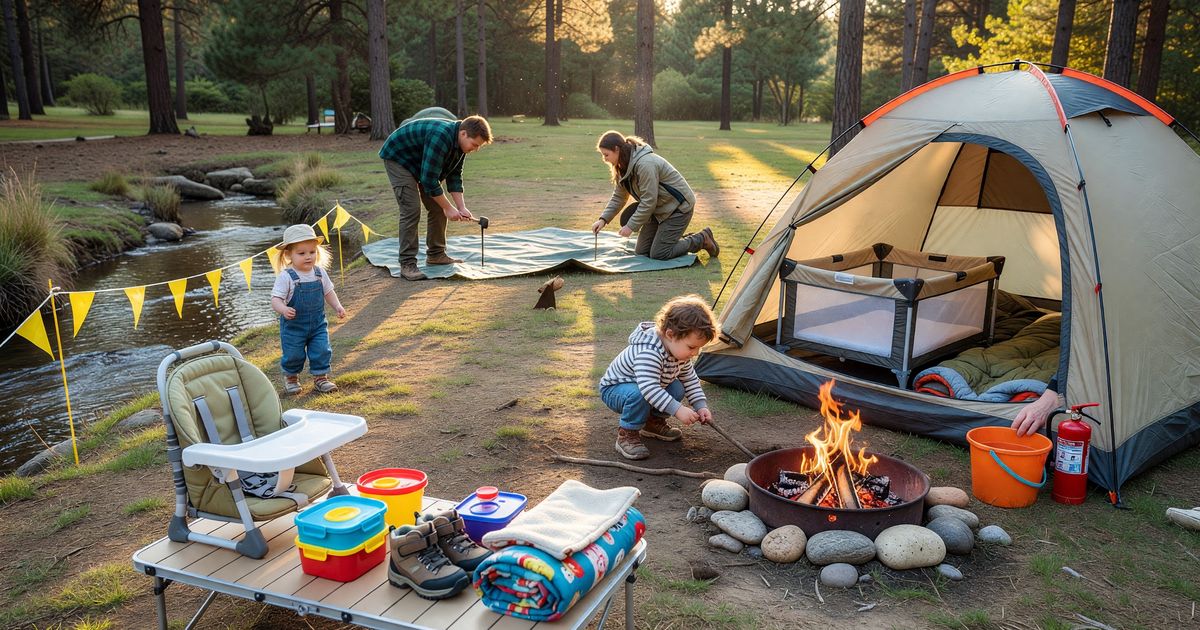
What age can kids start camping? Kids can camp at any age — infants camp successfully with prepared parents. The practical challenges vary by age: infants require more gear and temperature monitoring, toddlers require constant supervision near fire and water, and elementary-age kids are often the most enthusiastic campers. Most families find ages 4-5 and up to be the easiest starting point for tent camping trips.
What are the best campground activities for kids? The most reliable campground activities for kids include hiking with a specific destination or purpose, swimming at a designated swim area, fishing, geocaching, scavenger hunts, campfire cooking, and stargazing. Activities work best when they have a defined goal or mission rather than open-ended exploration, especially for younger children.
What should I look for in a family-friendly campground? Key features for family camping include: bathroom proximity (especially flush toilets), a playground, safe swimming access with lifeguards, a camp store, and site placement away from main road noise. Campgrounds with lake or river access dramatically expand activity options for families.
How do you keep kids entertained while camping? A dedicated activity kit (magnifying glass, bug container, field guides, geocaching app, fishing tackle, headlamps, star map) handles most situations. Structure helps: hiking with a purpose or challenge, cooking assignments, and scavenger hunts work better than open-ended time for most kids. Swimming and fishing are the most universally popular campground activities across age ranges.
How do you handle the first night camping with kids? Arrive with daylight remaining, set up sleeping gear before cooking dinner so kids see their sleep space early, establish a campfire as the social center, and maintain familiar bedtime rituals from home. The first night is typically the hardest; by night two most kids adapt fully to the camping environment.