Camping with a toddler is a different activity than camping with a school-age child. The logistics are more intense, the safety stakes are higher, the gear list is longer, and the trip itself is shorter in effective hours than a solo or adult camping trip. It is also genuinely worth doing — toddlers are sensory learners who experience nature with an absorption that older children and adults cannot fully access, and those early camping trips become foundational memories for both the child and the parents.
The parents who succeed at toddler camping are the ones who adjust their expectations and their preparation in equal measure.
Adjusting Expectations
A camping trip with a toddler is not a camping trip with an additional person. It is a camping trip built around the toddler's schedule, tolerance, and attention span. This means:
Shorter drives. A five-hour drive to a distant campground is a reasonable day of travel for adults and older kids. For a toddler, a two-hour drive with a stop is nearer the limit of productive traveling before the experience starts degrading. Choose a campground within two to three hours of home for the first few trips.
Earlier arrivals and departures. Arrive with significant daylight remaining — ideally mid-afternoon. Setting up camp in fading light with a toddler underfoot is its own category of difficulty. Departing before lunch on the final day, before nap time creates a meltdown, produces a more pleasant drive home.
Earlier bedtimes. Your toddler's sleep schedule does not automatically adjust to camping. Some children surprise their parents and sleep deeply and happily in a tent. Others do not sleep well in unfamiliar environments for the first one or two nights. Plan around the possibility of a difficult first night and carry no expectations that the evening campfire will extend past 8 PM.
Fewer miles. A hike that is a pleasant leg-stretcher for adults can be a marathon for a toddler on foot. Either bring a carrier (front-pack for infants and younger toddlers, back-pack style child carrier for older toddlers up to around 50 lbs) or plan to cover half the distance you would without a small child. The best toddler hiking approach is a destination — a stream, a rock, a viewpoint — close enough to reach in 20-30 minutes of walking.
The Gear Additions for Toddlers
On top of a standard camping gear list (see our first-time camping checklist), toddler camping requires:
Sleeping:
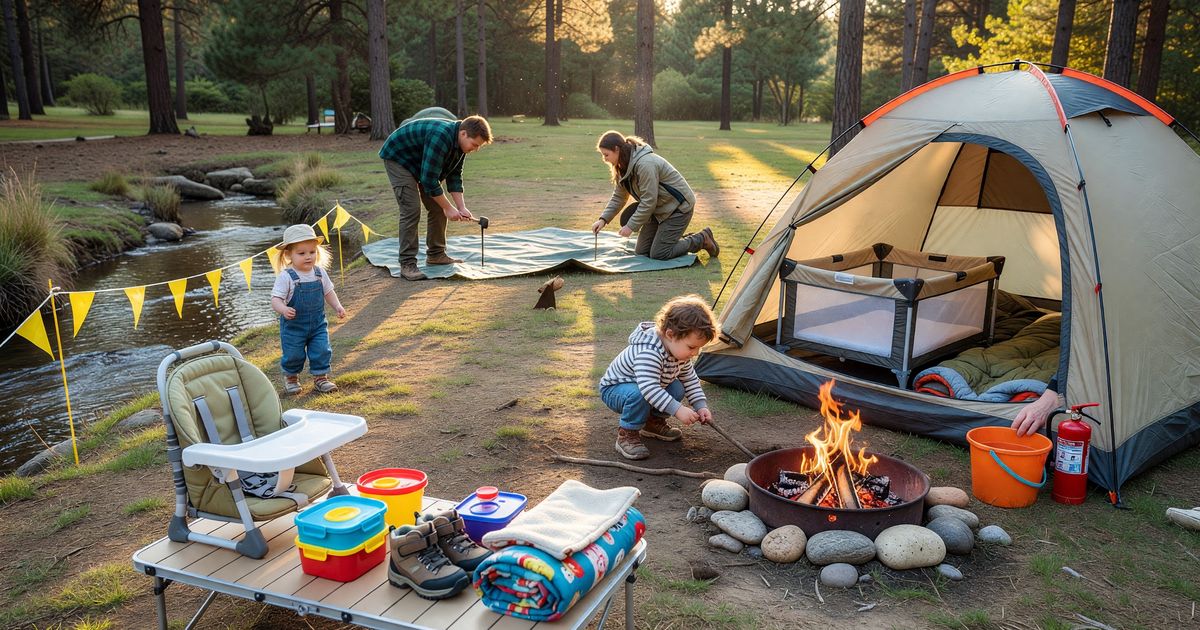
- Pack-and-Play or portable travel crib for children who still sleep in one — an enormous tent-floor improvement over hoping the toddler sleeps between parents
- Toddler sleeping bag or a small sleeping bag with familiar blankets — familiar bedding helps
- White noise machine or app downloaded offline — campground sounds are different from home sounds, and white noise masks them effectively
Clothing:
- Three times more clothing than you think you need — toddlers at a campsite will get dirty, wet, and dirty again
- Sun hat and long-sleeve sun shirt for outdoor time
- Wellies or waterproof sandals — water, mud, and puddles are inevitable
Safety:
- Baby sunscreen (SPF 50+)
- Toddler-specific insect repellent — the CDC recommends DEET-based products for children over 2 months; for younger infants, use clothing and physical barriers rather than repellent
- A playpen or baby gate to create a contained area near the campfire that prevents toddler access to the fire ring
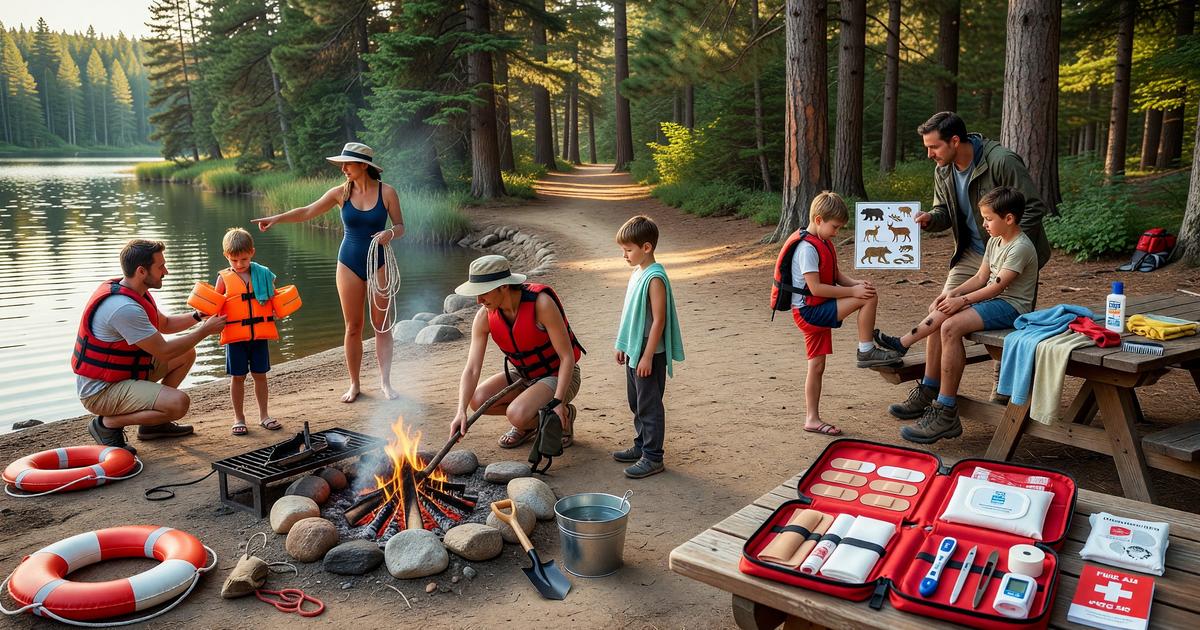
- A toddler life jacket (Coast Guard-approved Type II or III) if there is any water access near the campsite
Eating:
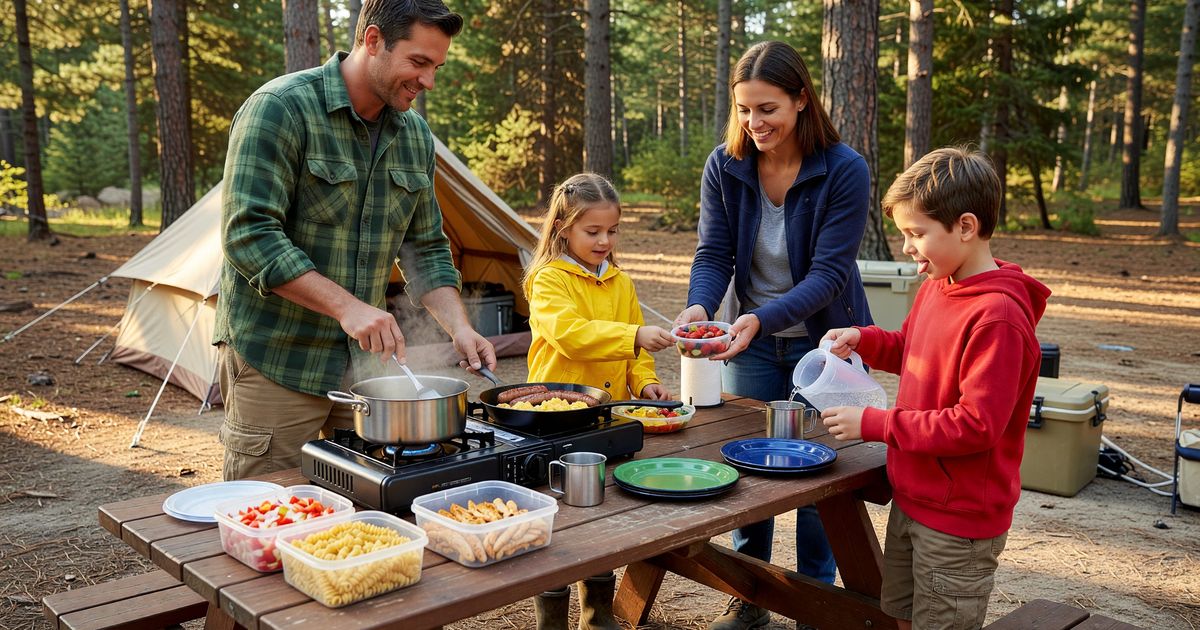
- All food pre-prepped and in containers ready to serve — mealtime at a campsite with a hungry toddler is not the time for extended cooking
- Extra-easy snacks (pouches, crackers, fruit already cut) available without cooler access
- Favorite comfort foods from home — this is not the trip to introduce unfamiliar foods
Sleep Strategy: The Part That Determines Everything
The single factor that most determines whether a toddler camping trip is successful or a disaster is sleep. A toddler who is sleeping adequately is a functional participant in a camping trip. A toddler who is not sleeping is everyone's problem.
The familiar sleeper advantage. If your toddler uses a specific white noise machine, a specific lovey, or a specific combination of environmental cues to fall asleep, bring all of those items. Camping removes the familiar environment and replaces it with unfamiliar sounds and smells. The more familiar the sleep environment within the tent, the easier the transition.
First-night management. The first night is typically harder than subsequent nights as the child adjusts to the new environment. Plan to be in the tent with the toddler at their normal bedtime, not leaving them to fall asleep alone in an unfamiliar dark tent. The expectation that the toddler will be fine alone in a tent while you stay up by the fire is wishful thinking for most ages under four.
Split-parent watches. For couples, one parent goes to the tent with the toddler at bedtime while the other stays up for campfire time. Switch later in the evening. This preserves some of the campfire time that is central to the camping experience for adults.
Campfire Safety with Toddlers
Campfires are the greatest single hazard for toddlers at a campsite. A toddler's natural curiosity about fire, combined with unpredictable movement and limited impulse control, means the fire ring is a constant supervision demand.
Strategies that work:
A physical barrier. A small portable baby gate (the kind that unfolds and freestanding) placed around the fire ring perimeter is the most reliable solution. It costs a few pounds of pack weight and eliminates the continuous "don't touch" management.
Never unsupervised. If you need to step away from the campsite for any reason while the fire is burning, the fire goes out, or the toddler goes with you, or another adult assumes full-attention supervision. The fire ring is not a place where a momentary lapse is acceptable.
Burns. If a burn does occur: immediately cool the burned area with cool (not cold, not ice) running water for 10-20 minutes. Do not apply butter, toothpaste, or other home remedies. Cover lightly with a clean non-stick dressing. Seek medical care for any burn larger than the child's palm, any burn on the face or hands, or any burn that appears deeper than surface-level redness.
Campground Selection for Toddler Camping
Not all campgrounds work equally well for families with toddlers. Features that improve the experience significantly:
Bathroom proximity. Potty training toddlers at a campsite require bathroom access at short notice. A site within 100 meters of flush toilets changes the logistics significantly.
Relatively flat terrain. A toddler navigating steep or rocky terrain is slower, more fatigued, and harder to keep up with. Campground loops with relatively flat terrain are easier.
A playground. A campground playground provides structured entertainment during the dead times of the day — when adults are cooking, resting, or setting up — without requiring active parental involvement.
Away from roads and water. The most dangerous campground sites for toddlers are those adjacent to vehicle traffic areas or directly on water. Request interior loop sites away from the campground entrance road, and assess water hazard proximity when booking.
For campground recommendations with good family amenities, see our national park campground guide.
Frequently Asked Questions
What age can you start camping with a baby or toddler? There is no minimum age. Most families find it easiest to start around 3-6 months when temperature regulation improves. Toddlers require constant campfire and water supervision. Ages 12-18 months is a common practical starting point for short trips.
How do toddlers sleep in a tent? Variable. Maximize familiarity by bringing their normal sleep environment elements: white noise machine, lovey, same blankets. A portable Pack-and-Play provides a familiar contained sleep space. Plan for a parent to be in the tent at the toddler's normal bedtime on the first night.
What is the best insect repellent for toddlers while camping? The CDC recommends DEET-based products for children over 2 months, applied by adults to exposed skin. 20-30% DEET is appropriate. For infants under 2 months, use protective clothing and mosquito netting rather than chemical repellent.
How do I prevent my toddler from going near the campfire? A portable baby gate around the fire ring perimeter is the most reliable solution. Without a physical barrier, continuous active supervision is required. Never leave a toddler unsupervised near a burning fire.
How long should a first camping trip with a toddler be? One night. A single overnight gives the toddler one sleep adjustment and lets you assess their needs before committing to longer trips.
Further Reading from Authoritative Sources
- CDC — Insect Repellent Use and Safety for Children — Age-specific guidelines for DEET and alternative repellents for infants and young children.
- National Park Service — Camping with Kids — NPS guidance on bringing children to national park campgrounds, including activity ideas and safety considerations.