Every camping gear list on the internet is too long. It has been written by someone who has camped for twenty years and genuinely uses all of it, or by someone writing for SEO who has never set up a tent in their life. Neither serves a first-time camper who needs to know what to actually bring for a weekend trip to a developed campground.
This list is written for a family's first camping trip at a campground with bathrooms and running water — the correct starting point before moving to more remote camping. It separates what you genuinely need from what is nice-to-have and what you definitely do not need for trip one.
The Non-Negotiables
These are the items without which camping does not work.
Shelter
Tent rated for your group size, plus one. A four-person tent sleeps four — technically. In practice, four adults in a four-person tent have no floor space for gear and will be shoulder to shoulder. For a family of four, a six-person tent provides livable space. For couples, a three-person tent is comfortable for two. A quality mid-range tent from REI, Coleman, or similar costs $80-250 depending on size and weather rating. You do not need an expedition tent for your first campground trip.
Tent footprint or ground cloth. A separate piece of material under the tent protects the floor from abrasion and adds insulation. Some tents include one; others do not. A cheap tarp cut slightly smaller than the tent floor works.
Mallet or tent stake pounder. Most tent stakes can be hammered in with a shoe, but a mallet is easier and faster. A cheap rubber mallet from a hardware store costs $6.
Sleep System
Sleeping bags rated for the expected low temperature. Look up the forecasted overnight low for your destination and campground. Choose sleeping bags rated at or below that temperature. A 30°F bag at a campground where nights drop to 45°F leaves you warm; a 45°F bag at a campground where nights drop to 38°F leaves you cold and miserable.
Sleeping pad for each person. The ground pulls heat away from you far faster than the air does. A sleeping pad provides both cushion and insulation. For first-time family camping, closed-cell foam pads (the lightweight roll-up kind) are cheap, durable, and effective. Self-inflating pads are more comfortable. Air-only inflatable pads are the most comfortable but require a pump and puncture protection.
Pillow. Bring an actual pillow from home. Stuff-sack pillows are functional but significantly less comfortable than your own.
Cooking and Eating
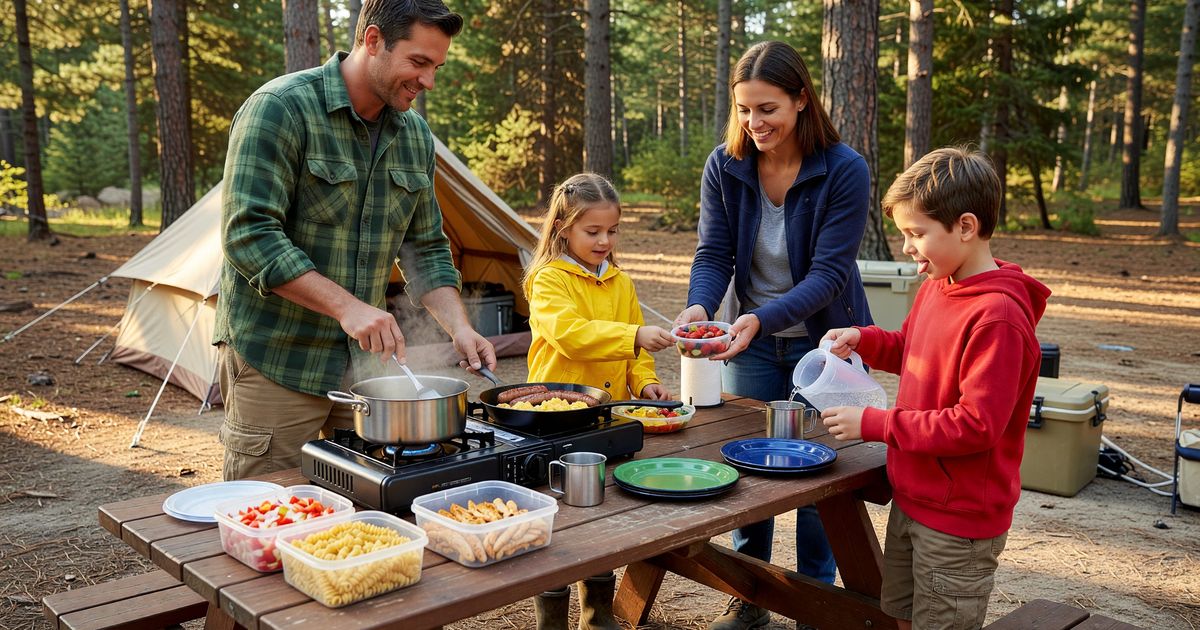
Camp stove and fuel. A two-burner propane stove is the practical choice for family camping. You can cook a complete meal — eggs and coffee simultaneously — as efficiently as at home. Bring a full propane canister plus one backup. Isobutane canister stoves (backpacking-style) work for simpler cooking but limit you to one burner.
Cookware: A pot, a pan, a spatula, and a knife cover 80% of camp cooking. A cutting board. A can opener. Pot holders or silicone gloves. If you cook regularly at home, bring the minimum subset of what you use.
Plates, bowls, cups, utensils. Reusable is better than disposable both practically (disposable blows around and creates trash) and environmentally. A camp mess kit or a set of melamine plates works fine. Bring one per person plus spares.
Dish soap, sponge, and basin. You need a way to wash dishes at the campsite. A collapsible basin from an outdoor store ($8-15) holds wash water; you can dump it on soil (away from water sources) or in a campground grey water disposal site.
Cooler with ice. For anything that needs refrigeration. Pre-chill the cooler for several hours before loading. Block ice lasts significantly longer than cubed. Keep the cooler in shade when possible.
Clothing
Dress in layers for the temperature range, not for the expected daytime high.
Non-cotton base layers. At cold campgrounds, a cotton shirt as a base layer becomes a problem when you sweat — wet cotton loses thermal value and dries slowly. Merino wool or synthetic moisture-wicking fabrics are the correct choice. For warm summer camping at comfortable temps, cotton is fine.
Rain layer. Pack a rain jacket regardless of the forecast. Weather at campgrounds changes, and a rain jacket without rain is just an unneeded layer; no rain jacket during a storm is misery.
Camp shoes. Something you can slip on for middle-of-the-night bathroom runs and campsite wandering. Sandals or crocs. Not your hiking boots.
Warm layer for the evening. Even summer nights at elevation or near water get cool. A fleece or medium-weight jacket for campfire time.
Safety and Health
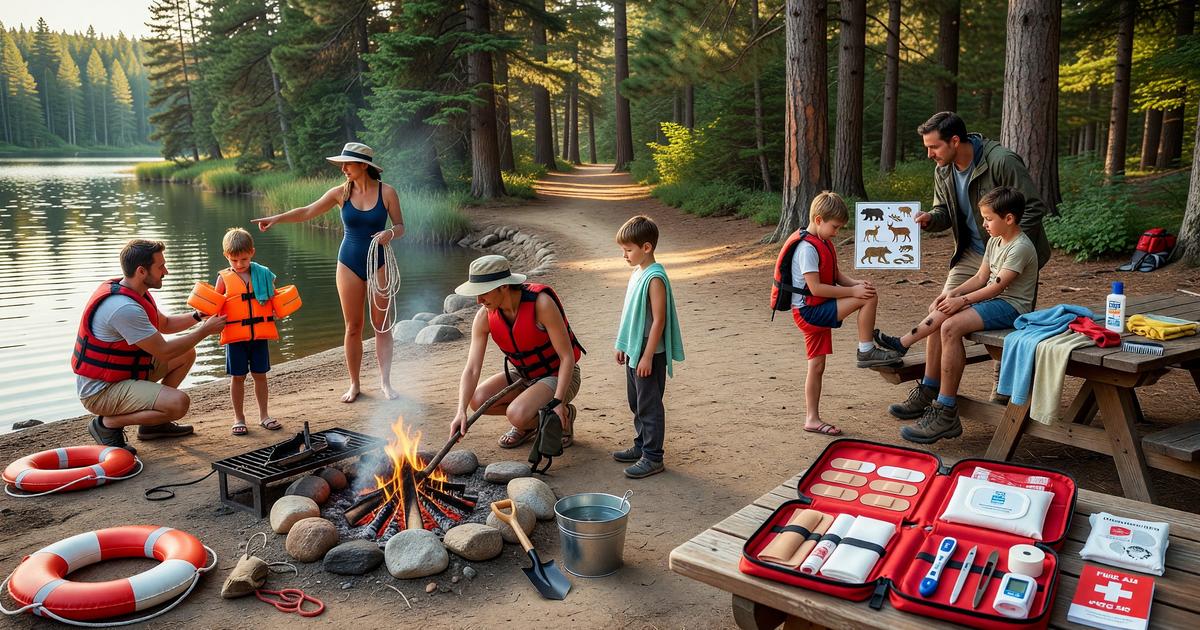
First aid kit. A basic kit with bandages, antiseptic wipes, moleskin for blisters, tweezers (for splinters and ticks), pain reliever, antihistamine, and any prescription medications needed. Pre-packaged camp first aid kits exist and are convenient; they can also be assembled from hardware and drug store supplies. See our guide to keeping kids safe at campgrounds for family-specific additions.
Headlamps, one per person. A flashlight is a second-best substitute. Headlamps leave both hands free — for bathroom runs, cooking at dusk, and reading in the tent. Bring extra batteries.
Sunscreen and insect repellent. Apply before you need them. In tick-prevalent areas, the CDC recommends DEET-based repellent and full tick checks at the end of each day, especially on children.
Map of the campground and area. Download an offline map before you leave cell coverage. Many campgrounds have maps at the entrance station — take one.
Camp Setup
Camp chairs. One per person. A quality camp chair is among the highest return-on-investment purchases in outdoor gear. You will use yours every camping trip for years.
Lantern. A battery or propane lantern for table light after dark. A camping headlamp per person covers individual needs, but a lantern illuminates the table for card games, cooking, and conversation.
Tablecloth. Sounds trivial. Dramatically improves the camp table experience and keeps things cleaner. A cheap vinyl tablecloth with clips costs $10.
Trash bags. Bring more than you think you need. One per night of camping minimum.
Hand sanitizer. For before meals at the campsite when the bathroom is a walk away.
What You Can Skip on Trip One
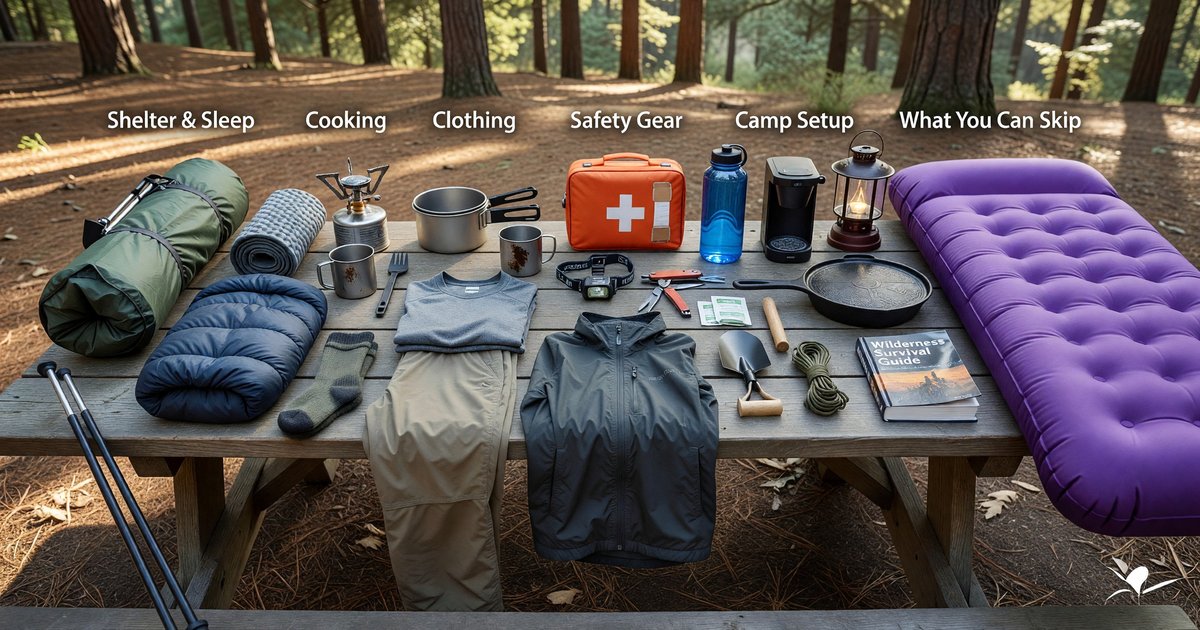
- Specialty camp kitchen gear. A pie iron, a Dutch oven, a camp percolator — all fine for later trips. For trip one, cook what you know how to cook.
- A camp shower. Developed campgrounds have bathrooms. A solar camp shower is useful for dispersed camping; it is extra weight for a campground with facilities.
- An axe. If you need split wood, buy it at the camp store. An axe adds weight and risk for a trip one camper.
- Bear canister. Essential for some backcountry destinations. Not needed at most developed campgrounds, which have bear boxes or food storage regulations specific to the site.
The Night Before Checklist
Pack the night before, not the morning of. Load the car in this order: heavy gear (cooler, camp chairs) first and lowest; tent and sleeping gear accessible; day bags and food cooler last.
Charge all headlamps and device batteries. Confirm that the propane canister is full. Print or download the campground map and any trail maps. Text a friend or family member the campground name, your site number when you know it, and expected return date.
For campgrounds near national parks and how to pick the right site, see our national park campground guide.
Frequently Asked Questions
What do I absolutely need for a first camping trip? The true non-negotiables: a tent rated for your group size (plus one), sleeping bags appropriate for the expected overnight temperature, sleeping pads, a camp stove with fuel, basic cookware, headlamps, a first aid kit, sunscreen, and insect repellent. Everything else is an enhancement.
What sleeping bag temperature rating do I need? Choose a bag rated at or below the lowest expected overnight temperature. A bag rated to 45°F at actual 45°F temperatures is not comfortable — the rating indicates functional limit, not comfort. Check the campground's historical overnight lows for your travel season.
Do I need a sleeping pad if I have a sleeping bag? Yes. The ground conducts heat away from your body far faster than air does. A sleeping pad's insulation is critical — bag insulation compresses under your weight and loses effectiveness against uninsulated ground.
How big a tent do I need for a family of four? A 6-person tent is the practical recommendation for four people. Manufacturer ratings assume minimal gear. A 6-person tent gives adults room to sit up and store some gear inside.
Can I camp without a camp stove? Yes, with adjustments. Campfire cooking or no-cook meals are viable. For families with young children, a camp stove is generally more practical than depending entirely on campfire availability.
Further Reading from Authoritative Sources
- CDC — Tick Prevention for Campers — Specific guidance on repellent selection, tick checks, and removal procedures for outdoor activities.
- National Park Service — Camping Basics — NPS overview of camping preparation, site selection, and Leave No Trace practices for first-time campers.