Wildfire smoke doesn't announce itself with a reservation window. It arrives on its own schedule — sometimes drifting in overnight from a fire hundreds of miles away, sometimes thickening over the course of an afternoon until the mountains disappear and the air tastes like an ashtray. If you camp in the western United States between June and October, this is no longer an edge-case scenario. It's part of the planning calculus.
The question isn't whether wildfire smoke will affect your camping trips. For most campers in fire-prone regions, it will, eventually. The question is how to monitor it intelligently and how to make clear-headed decisions about when to adapt, when to stay, and when to leave.
What AQI Actually Measures — and Why PM2.5 Is the Number That Matters
The Air Quality Index runs from 0 to 500. It aggregates several pollutants, but for wildfire smoke, the relevant number is PM2.5 — fine particulate matter measuring 2.5 microns or less in diameter. These particles are small enough to bypass your nose and throat and lodge deep in lung tissue. They're what makes smoke genuinely dangerous rather than merely unpleasant.
The EPA's AQI scale breaks down like this for particle pollution:
- 0–50 (Green — Good): No restrictions. Normal activity.
- 51–100 (Yellow — Moderate): Acceptable for most people. Unusually sensitive individuals may notice effects.
- 101–150 (Orange — Unhealthy for Sensitive Groups): Children, older adults, people with asthma, COPD, heart disease, or diabetes should reduce prolonged outdoor exertion. Healthy adults may notice some irritation.
- 151–200 (Red — Unhealthy): Everyone should reduce outdoor exertion. Sensitive groups should avoid it.
- 201–300 (Purple — Very Unhealthy): Everyone should avoid prolonged outdoor activity.
- 301+ (Maroon — Hazardous): Avoid all outdoor activity. Health emergency conditions.
The practical camping threshold for most healthy adults is roughly 150. Below that, with common-sense adjustments, a camping trip can continue. Above 150, you need a plan B.
How to Monitor AQI Before and During a Trip
AirNow.gov is the primary federal resource, maintained by EPA in partnership with state and tribal air agencies. The site's Fire and Smoke Map at fire.airnow.gov overlays active fire perimeters with current and forecast AQI readings — useful for seeing not just what the air quality is at your campground, but where the smoke is coming from and where it's heading.
A few things worth knowing about AQI monitoring in fire-prone areas:
Monitoring station density is uneven. Federal monitoring infrastructure was built for population centers, not wilderness campgrounds. A reading from a station 40 miles away may not reflect conditions at your actual site — particularly if your campground sits in a valley or basin where smoke settles overnight. An Undark investigation from 2025 documented significant gaps in monitoring coverage in rural fire-affected regions. Use the nearest reading as a baseline, not a guarantee.
Low-cost sensors fill some gaps. PurpleAir and similar networks use consumer-grade sensors that are more numerous but less rigorously calibrated. AirNow's Fire and Smoke Map now incorporates corrected PurpleAir data, which gives you better local resolution in areas without official monitoring stations. Treat those readings as directional rather than precise.
Conditions change fast. An AQI of 60 at 8 AM can become 180 by 3 PM if wind patterns shift or a nearby fire ramps up. Check before bed and first thing in the morning, not just once on the day you leave home.
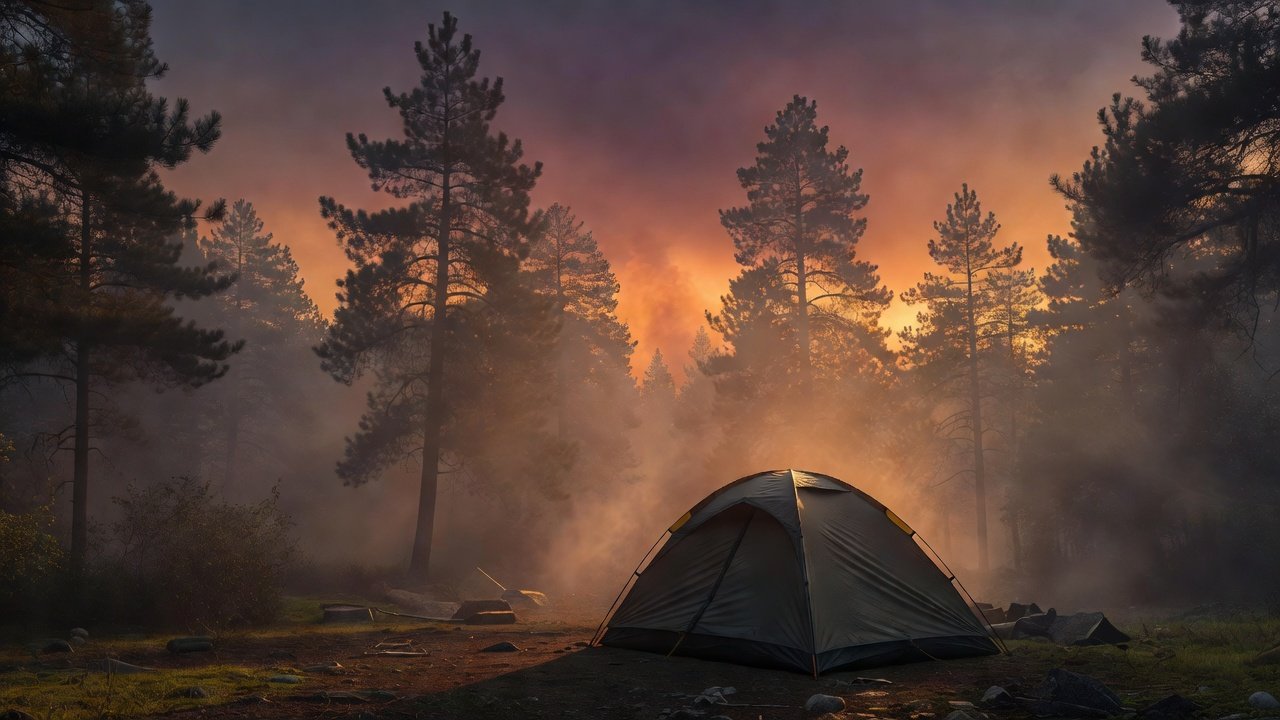
Smoke settles into low areas at night. Valleys, basins, and creek drainages concentrate smoke after dark, when temperature inversions trap air close to the ground. If you wake up in a smoky landscape that looked clear at sunset, that's why. The color of the sky gives you a rough read: a yellowish-orange to reddish hue means PM2.5 is elevated enough to matter.
What to Actually Do When Smoke Moves In
AQI under 100: Carry on. Keep an eye on it.
AQI 100–150: Reduce sustained aerobic exertion — cut the long ridge hike, do an easier route. Sensitive group members (kids under 12, anyone with respiratory or cardiac conditions) should take it easy. Keep the campfire out, or minimize it — adding smoke from your own fire on top of ambient smoke is counterproductive.
AQI 150–200: Healthy adults should limit time outdoors and avoid heavy exertion. Sensitive group members should stay inside or leave. If your campsite has no shelter option — you're in a tent or a fully open setup — leaving starts to make sense for everyone.
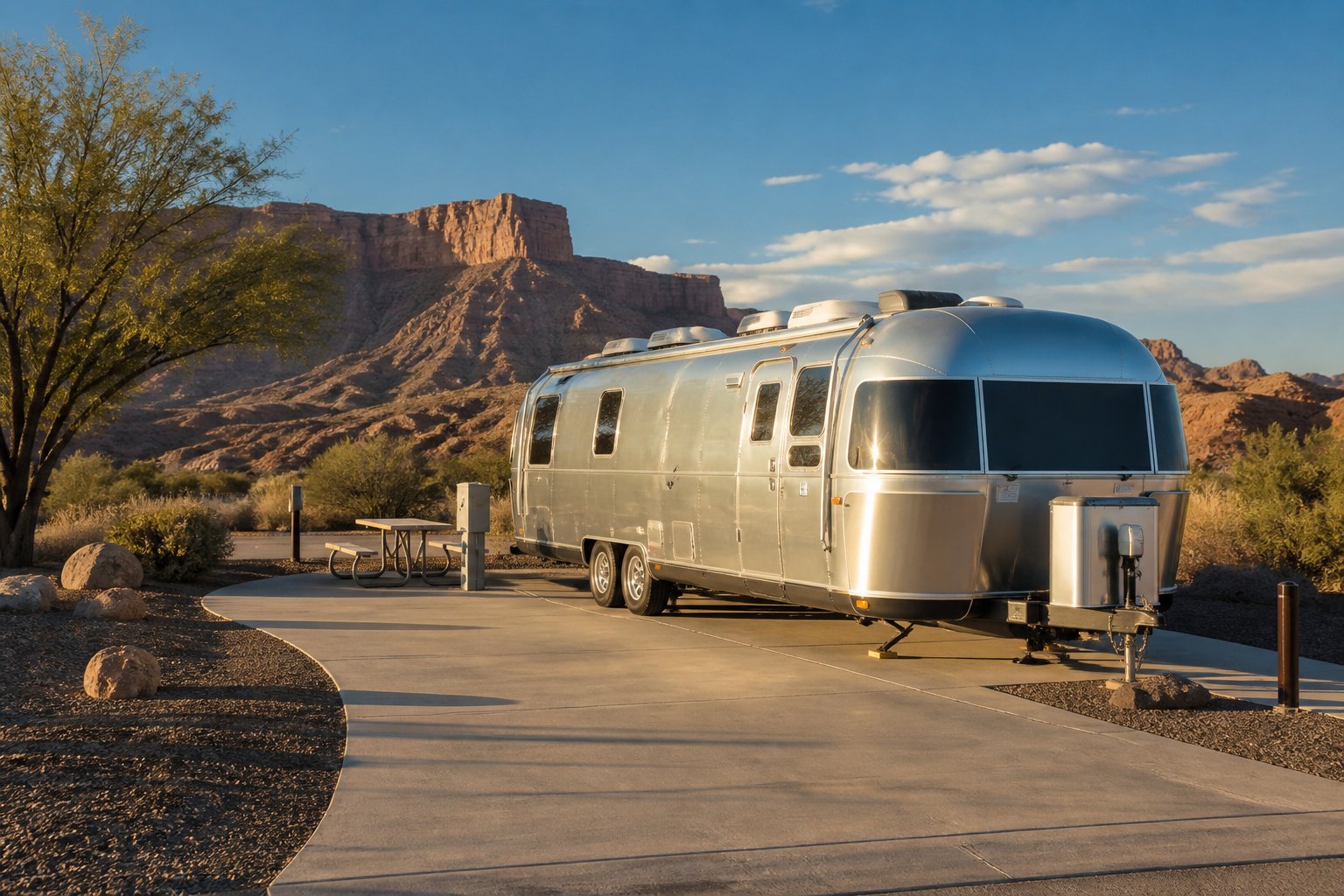
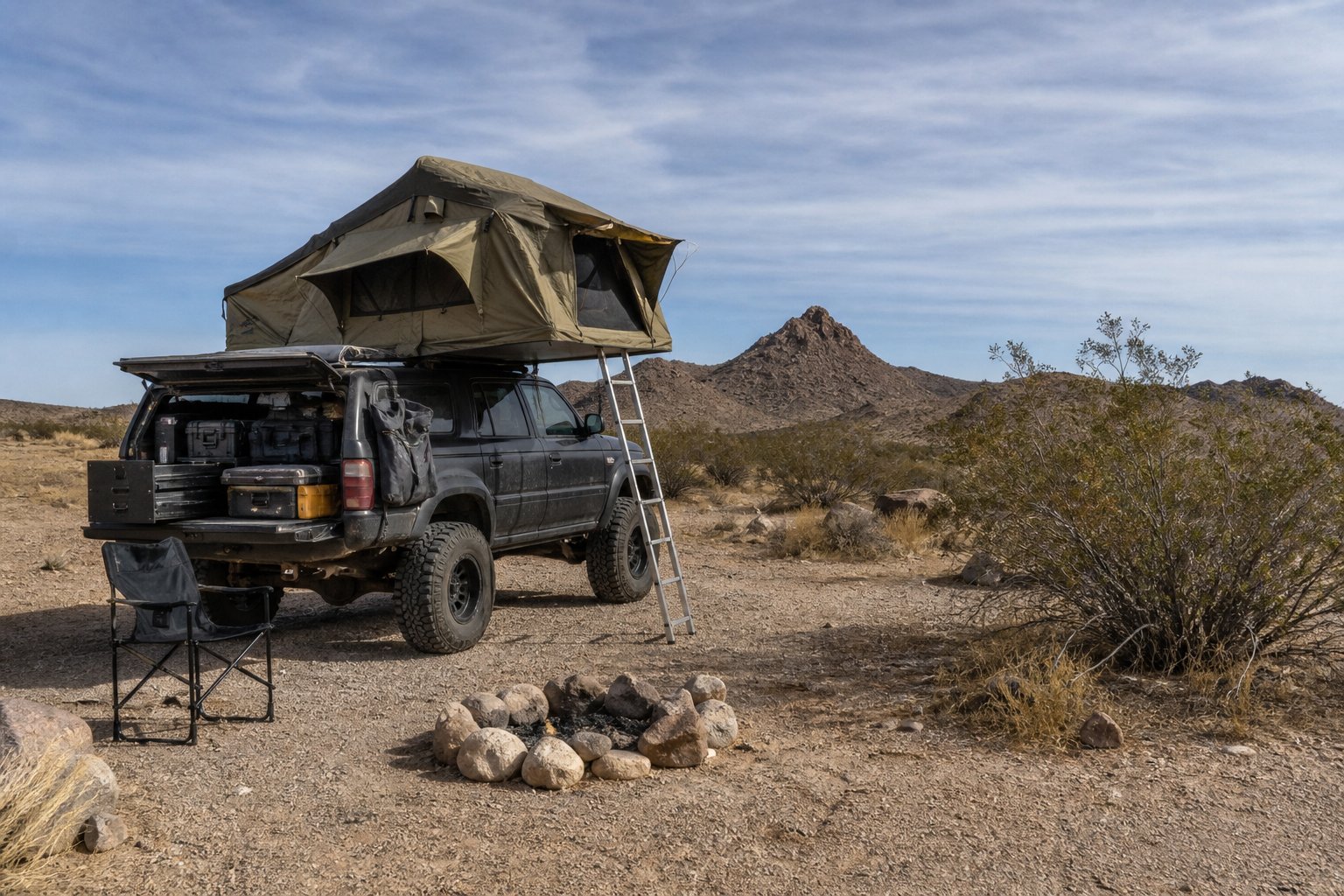
AQI above 200: Recommend departing regardless of tent or RV setup. An RV with the HVAC on recirculate mode and windows sealed provides meaningful protection; a tent does not. If you're tent camping and the forecast shows sustained 200+ conditions, leave.
The National Park Service advises checking for fire restrictions and area closures at nps.gov before any wilderness camping trip. The USDA Forest Service maintains current fire restrictions at fs.usda.gov. Call the local ranger station when you're close to your destination — online information doesn't always reflect same-day conditions.
Gear That Helps When You Can't Leave
Sometimes leaving isn't practical — you're mid-trip, the reservation is non-refundable, or smoke moved in after you arrived. These won't eliminate exposure, but they reduce it:
N95 respirators. A properly fitted N95 filters PM2.5. A bandana, neck gaiter, or surgical mask does not — those catch larger particles and do little for wildfire smoke. If you're going to spend extended time outdoors in moderate smoke, an N95 is the appropriate tool. The American Lung Association recommends them for outdoor activity during unhealthy air days.
Sealing your sleeping space. Close all windows and vents in your tent or RV when AQI rises overnight. An RV on recirculate mode is substantially better than a tent for keeping smoke out during sleep.
Staying low — literally. On smoky days, smoke concentration often decreases with elevation. If your campground is in a valley and there's a higher-elevation option accessible by day hike, the air may be noticeably cleaner.
Cutting active campfire time. During elevated AQI periods, your own campfire contributes meaningful additional PM2.5 right at ground level where you're breathing. Many parks issue campfire restrictions exactly because of this compounding effect. Follow them, and consider skipping the fire even when restrictions haven't been issued yet.
Building a Plan B Into Every Western Trip
The most useful shift for campers in fire-prone regions isn't any specific piece of gear — it's accepting that a backup itinerary is part of the planning process, not a sign of pessimism.
When booking a summer trip in the Southwest, Pacific Northwest, or Rockies, identify an alternate campground at different elevation or on the opposite side of a ridge system from where the fire season typically concentrates. Know ahead of time which recreation.gov reservation you'd modify or cancel. Check the NPS and Forest Service fire restriction pages the week before departure.
Most campgrounds on recreation.gov allow modifications and cancellations within specific windows without losing the full booking fee — understand the rules for your specific reservation before you need them urgently.
Smoke will end a trip occasionally. That's different from smoke ruining it — the difference is whether you had a plan that let you pivot quickly instead of spending two days staring at a hazy sky wondering what to do.