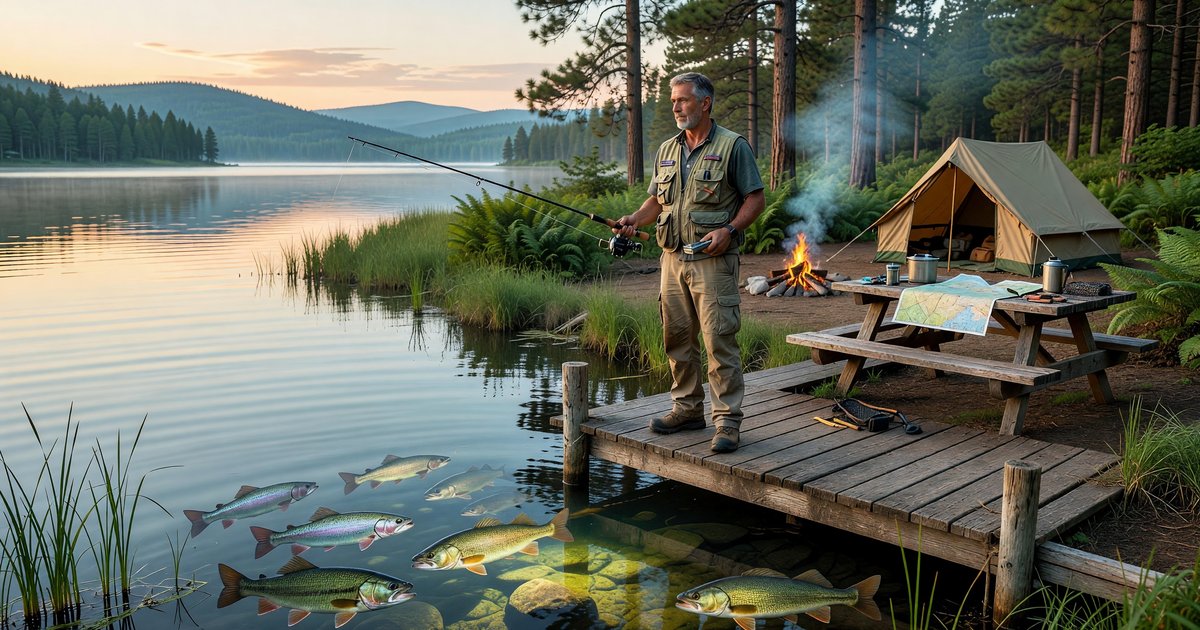
The state park system is often overlooked as a fishing destination because the names associated with serious fishing — established lakes, major river systems, dedicated fishing access areas — are not state parks. But for camping anglers who want to combine an overnight with productive water, state parks offer specific advantages: campground-adjacent access, managed fish populations (including stocking programs), and often less pressure than dedicated fishing destinations simply because most park visitors are there for hiking and scenery rather than fishing.
This guide covers the regional standouts for freshwater fishing in state park settings and the practical considerations for planning a fishing camping trip.
Why State Parks for Fishing
Three things make state parks distinctively useful for fishing campers:
Proximity. At a state park campground with a designated fishing area, you walk from your tent to the water. The access quality that requires a drive to a boat launch or a paddle from a distant put-in is available on foot. For families with children, this proximity changes the whole logistics of a fishing morning.
Managed populations. Most state park systems stock their lakes and designated fishing areas with sport fish — trout, bass, walleye, catfish — at a rate calibrated to produce a reasonable catch rate for the level of fishing pressure. This is deliberately different from the variable experience of fishing unmanaged water. State park stocking programs are not secret: most state fish and wildlife agencies publish stocking schedules online.
Licensing and regulation integration. State park fishing areas operate under the same licensing requirement as all other state waters. The advantage is that the regulations applying to park fishing areas are clearly defined and posted — less ambiguity than remote or multi-jurisdiction water.
Regional Standouts
Northeast: Bass, Trout, and Landlocked Salmon
The Adirondack State Park system in New York encompasses roughly six million acres of mixed public and private land, including hundreds of lakes with quality bass, pike, and trout fishing accessible from state campgrounds. Raquette Lake, Blue Mountain Lake, and Long Lake each have state campgrounds within reasonable walking or canoe distance of quality water. Landlocked Atlantic salmon survive in several Adirondack lakes — a species rarely found in the lower 48 outside this region.
Vermont's state park system has campground-lake combinations worth knowing. Lake St. Catherine State Park (a mid-sized lake with bass and perch) and Bomoseen State Park are both practical fishing camping destinations with quality campground infrastructure.
New Hampshire's Lake Sunapee has a state park campground with launch access to a deep, clear lake that holds lake trout and smallmouth bass. The trout fishing here is serious by any standard — the lake regularly produces fish over 15 pounds.
Southeast: Bass, Crappie, and Catfish
Alabama and Tennessee have state park campgrounds on reservoirs that rank among the best bass fisheries in the South. Monte Sano State Park in Alabama is near Wheeler Lake, a TVA reservoir with extensive largemouth and spotted bass habitat. Pickwick Landing State Park in Tennessee sits directly on the Pickwick Lake reservoir — a serious bass and catfish fishery with a marina, boat launch, and campground all co-located.
South Carolina's Cheraw State Park is on a small lake that is reliably productive for bass, crappie, and catfish — a quietly underrated destination for families who want a focused fishing trip without driving to a large reservoir destination.
Midwest: Walleye, Muskie, and Crappie
Minnesota's state park system includes some of the best campground-adjacent fishing in the country for walleye and bass. Mille Lacs Kathio State Park sits adjacent to Mille Lacs Lake — one of the top walleye lakes in the US. Tettegouche State Park on Lake Superior offers lake trout and steelhead access from a quality campground with dramatic north shore scenery.
Wisconsin's Copper Falls State Park is near the Bad River, which holds wild brook trout — a fish that requires very cold, clean water to thrive and is increasingly rare. This is a specific draw for trout anglers willing to wade rather than use a boat.
Devil's Lake State Park in Wisconsin consistently provides the state's largest park campgrounds with access to a lake famous for bass and walleye — and rocks that draw as many climbers and hikers as anglers, making it a versatile family destination.
West: Trout, Steelhead, and Mountain Fishing
Western state parks near moving water often have the best trout opportunities. Idaho's Dworshak State Park sits on Dworshak Reservoir — a long, fjord-like reservoir that holds smallmouth bass and kokanee salmon alongside brown and rainbow trout.
Montana's Flathead Lake state parks (several small state parks are situated around the lake's perimeter) provide access to one of the largest natural freshwater lakes in the western US, with lake trout, bull trout, and kokanee. The bull trout (listed under the Endangered Species Act) has special regulations — check Montana Fish, Wildlife & Parks before targeting them.
California's Lake Almanor, accessible from Plumas-Eureka State Park and nearby state park campgrounds, holds planted rainbow trout alongside wild browns — a combination that produces a long active season.
Practical Planning for a Fishing Camping Trip
Fishing license: Required in every state for anyone 16 or older fishing in public waters, with some exceptions for designated free fishing days. Purchase before arrival — many remote state park campgrounds do not have license vendors on-site, and online purchase is the reliable method. Non-resident licenses are significantly more expensive than resident licenses; factor this into destination selection.
Gear for campground fishing: A medium-light spinning setup (6.5-7 foot rod, 3000 series reel, 8-10 lb monofilament) covers the majority of bass, trout, and panfish situations you will encounter at a state park lake. Add a tackle box with basic hardware (small spinners, plastic worms, jigs, bobbers, hooks, split shot) rather than specialized terminal tackle.
Timing: State park campgrounds stocked with trout fish best in the week to two weeks after stocking — fish are active near the surface and responding to artificial baits and natural presentations. Stocking schedules are published by state fish and wildlife agencies and are worth checking before booking.
Non-fishing family members: State park campgrounds with quality fishing tend to have good hiking and swimming infrastructure, making them viable destinations even when not every family member is an angler. A child who catches their first fish at a state park campground and a non-fishing parent who spent the morning on a trail is a successful trip for everyone.
For campground booking guidance including state park reservation systems, see our state park camping reservations guide.
Frequently Asked Questions
Do I need a fishing license to fish in a state park? Yes. State park fishing areas require the same fishing license as any other state water. Most states require a license for anyone 16 and older. Purchase licenses online through the state's fish and wildlife agency before your trip.
What type of fish can I catch in state park lakes? It depends on region. Eastern and Midwestern parks typically hold bass, bluegill, and catfish with stocked rainbow trout in cooler waters. Western states have rainbow and brown trout as primary stocked species, with wild populations in rivers.
How do I find out when a state park lake is stocked with trout? State fish and wildlife agencies publish trout stocking schedules online, typically by lake or stream name and date. Stocked fish are most active and catchable in the first 1-2 weeks after stocking.
What fishing gear do I need for state park lake fishing? A medium-light spinning rod (6.5-7 feet), matching reel, and 8-10 lb mono or braid handles most situations. A basic tackle box with spinners, plastic worms, hooks, bobbers, and split shot covers bass, trout, and panfish.
Can children fish without a license at state parks? In most states, children under 16 do not require a license. Specific age exemptions vary by state — check your state fish and wildlife agency website for current rules.
Further Reading from Authoritative Sources
- National Park Service — Fishing in National Parks — NPS fishing guidance covering licensing, regulations, and where fishing is available in the national park system.
- ARVC — Campground Amenities Standards — National Association of RV Parks and Campgrounds resources on fishing and recreation amenities at private campgrounds.