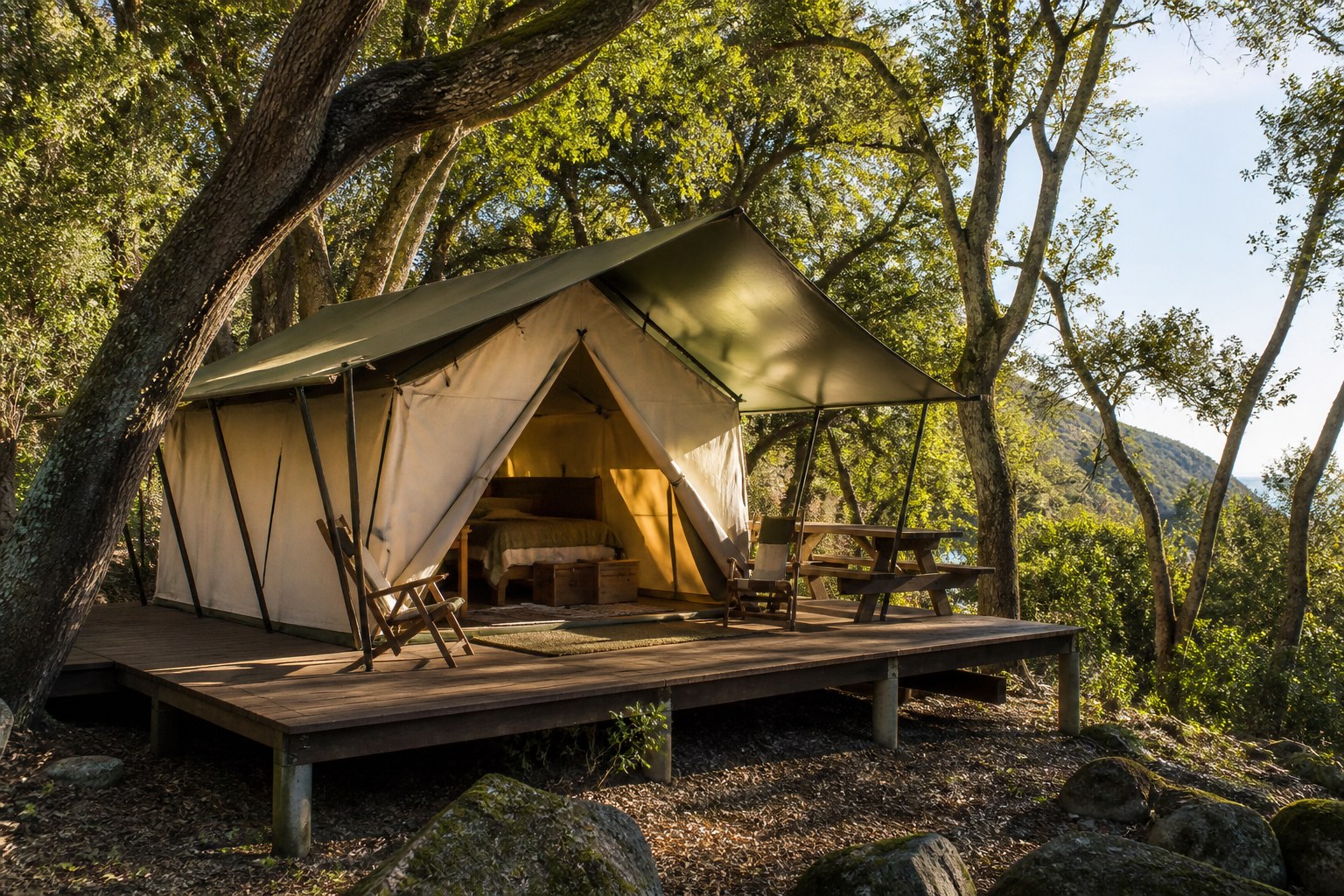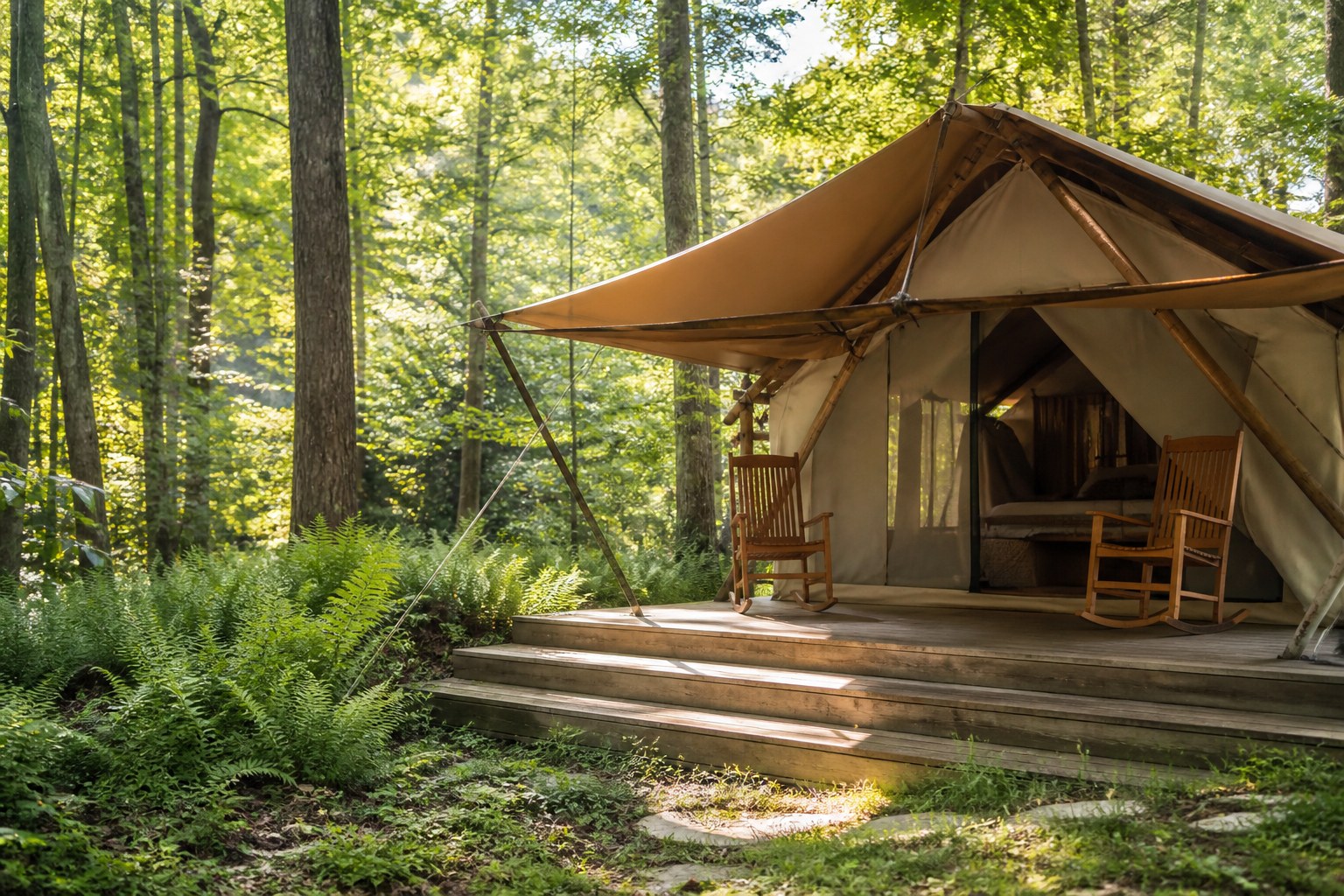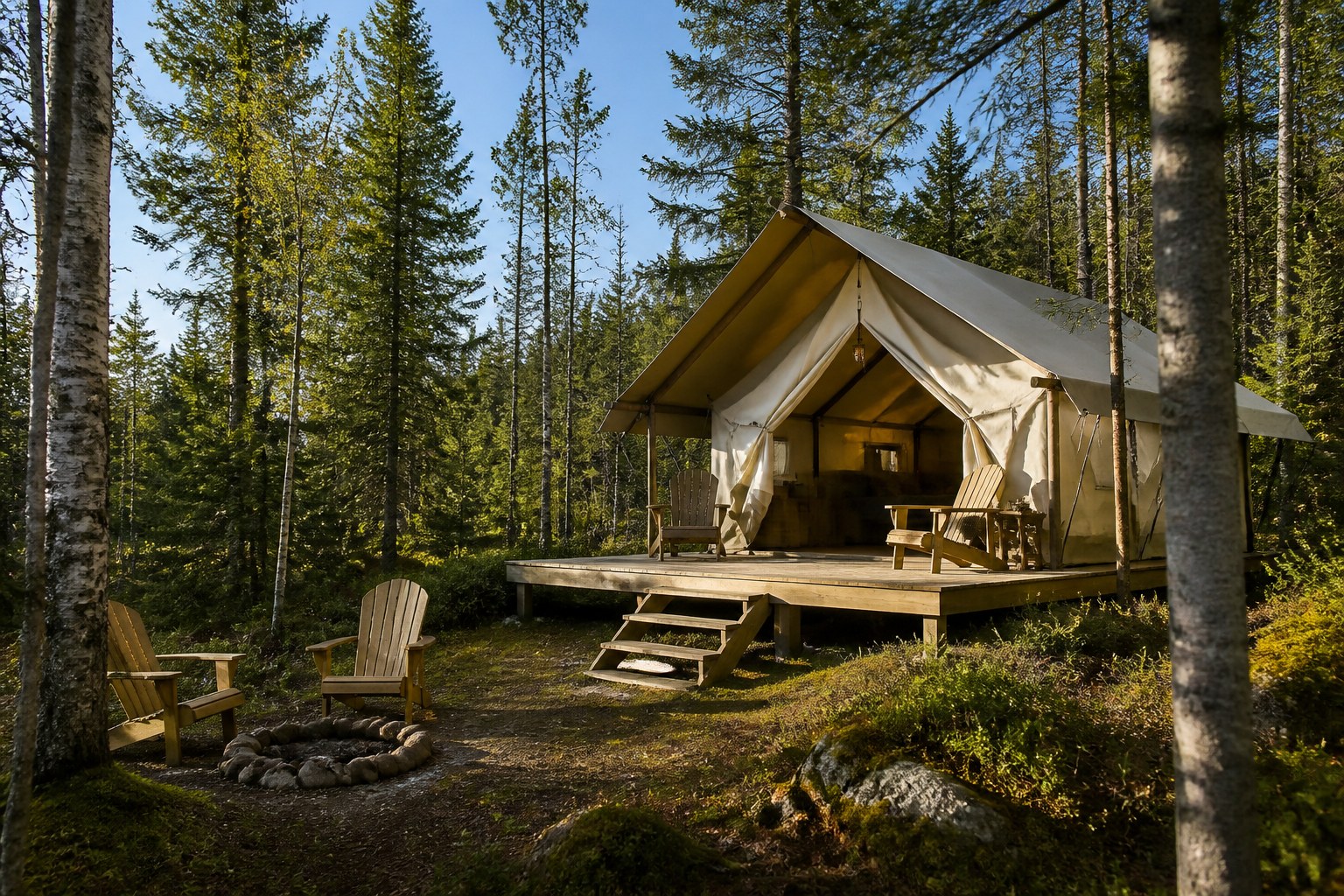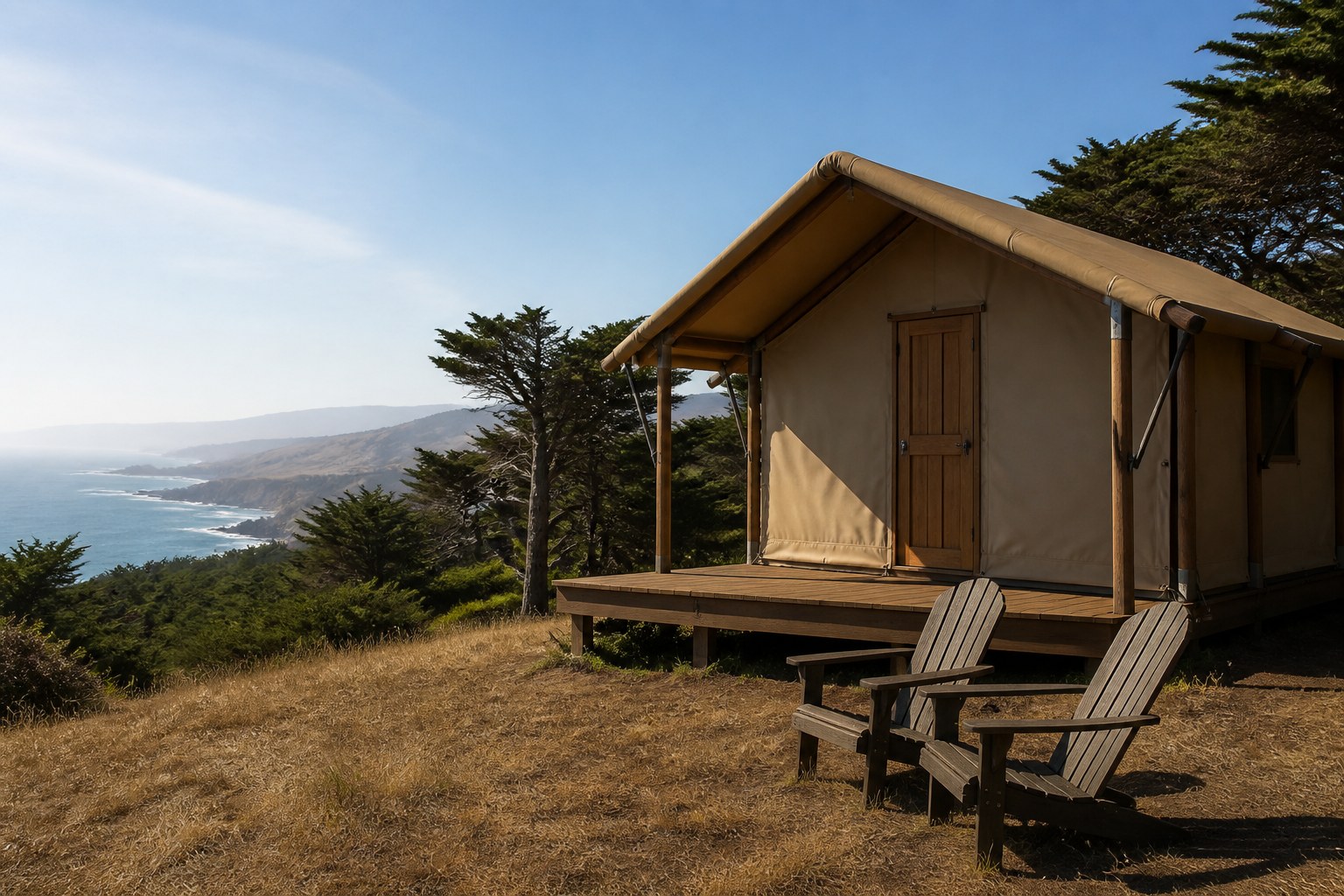
Costanoa Lodge & Camp sits at 2001 Rossi Road at Highway 1, Pescadero, CA 94060 — on the San Mateo County coast between Santa Cruz and Half Moon Bay. The operator describes tent bungalows as wood or metal frames with waterproof canvas walls, electricity, sliding windows, and locking doors. This is fixed-structure coastal glamping: more enclosed than a raw tent pad, less solid than the property’s lodge rooms or hard-sided cabins. The same campus also runs RV sites, walk-in tent campground, and lodge accommodations; this note covers the canvas bungalows only.
Village Layout and Unit Types
Costanoa organizes bungalows into named villages with distinct sleeping layouts. From the operator’s glamping-tents page:
Cypress Village — queen bed, heated electric blanket, in-tent heater, bathrobes and towels; daily maid service.
Outer Pine — secluded couples’ bungalows along a wooded ridge; queen bed, heated electric blanket, linens, towels; no maid service.
Pine Village — double plus twin configuration (sleeps three); fire pit and picnic table; no maid service.
Lighthouse Bungalows — large tents near the ocean and Pigeon Point Lighthouse; queen bed with single trundle plus bunk bed (sleeps five); rock patio, fire pit, picnic table, coffee station, double French doors.
Family Bungalows — two adjacent tent bungalows paired side by side: one with a queen, the second with two bunk sets sleeping up to four additional guests; fire pit; sleeps six total.
All bungalow guests access bathrooms, showers, and saunas at the nearby bath house. Maid service applies to Cypress Village only; other villages note no maid service during stays. Pet-friendly options exist for an additional fee in select villages.
What You Are Actually Getting
Unlike open safari tents on raised decks, Costanoa’s bungalows read as small canvas cabins: lockable door, wired for electricity, windows that slide rather than flap. You arrive to beds made with linens and heated blankets where the village includes them — not to poles and rain fly assembly.
The trade against lodge rooms: shared bathhouse instead of ensuite, canvas walls that breathe coastal fog, and proximity to the property’s active campground loop. The trade against the walk-in tent campground: bed, electricity, and weather-ready canvas shell without bringing your own shelter.
Who Should Book
Coastal cyclists and Highway 1 travelers who want a made bed without RV rig or tent kit.
Families splitting village categories — Pine or Family for fire-pit evenings; Cypress or Outer Pine for couples wanting quieter ridge or grove settings.
Book lodge or cabins instead when: Ensuite bathroom and hard walls matter for multi-night marine-layer forecasts.
Use the tent campground when: You carry quality gear and prefer primitive camping at lower nightly cost.
When a State Park Tent Site Is the Better Call
California state park tent sites inland or along the coast — when you have gear and reservations. Public campgrounds deliver redwood or bluff settings without resort pricing.
Peak summer weekends — bungalow rates compress against Bay Area coastal demand. A secured state-park site with your own kitchen kit may yield more space per dollar if gear is not the constraint.
Guests requiring fire pits in every village — confirm village at booking; Cypress and Outer Pine differ from Pine, Lighthouse, and Family layouts.
For glamping category context across structures, see glamping campgrounds worth booking.
Arrival Notes
- Pescadero sits on Highway 1; Rossi Road access is signed from the coastal highway.
- Bungalow guests use the central bath house — pack a headlamp for night walks in fog.
- Confirm village selection at booking: sleeping layout, fire pit presence, and pet policy vary by category.
Costanoa tent bungalows are the correct reservation when Pescadero coast location, waterproof canvas walls, and resort bathhouse access beat hauling tent gear — and when your village choice matches your bedding and fire-pit requirements.