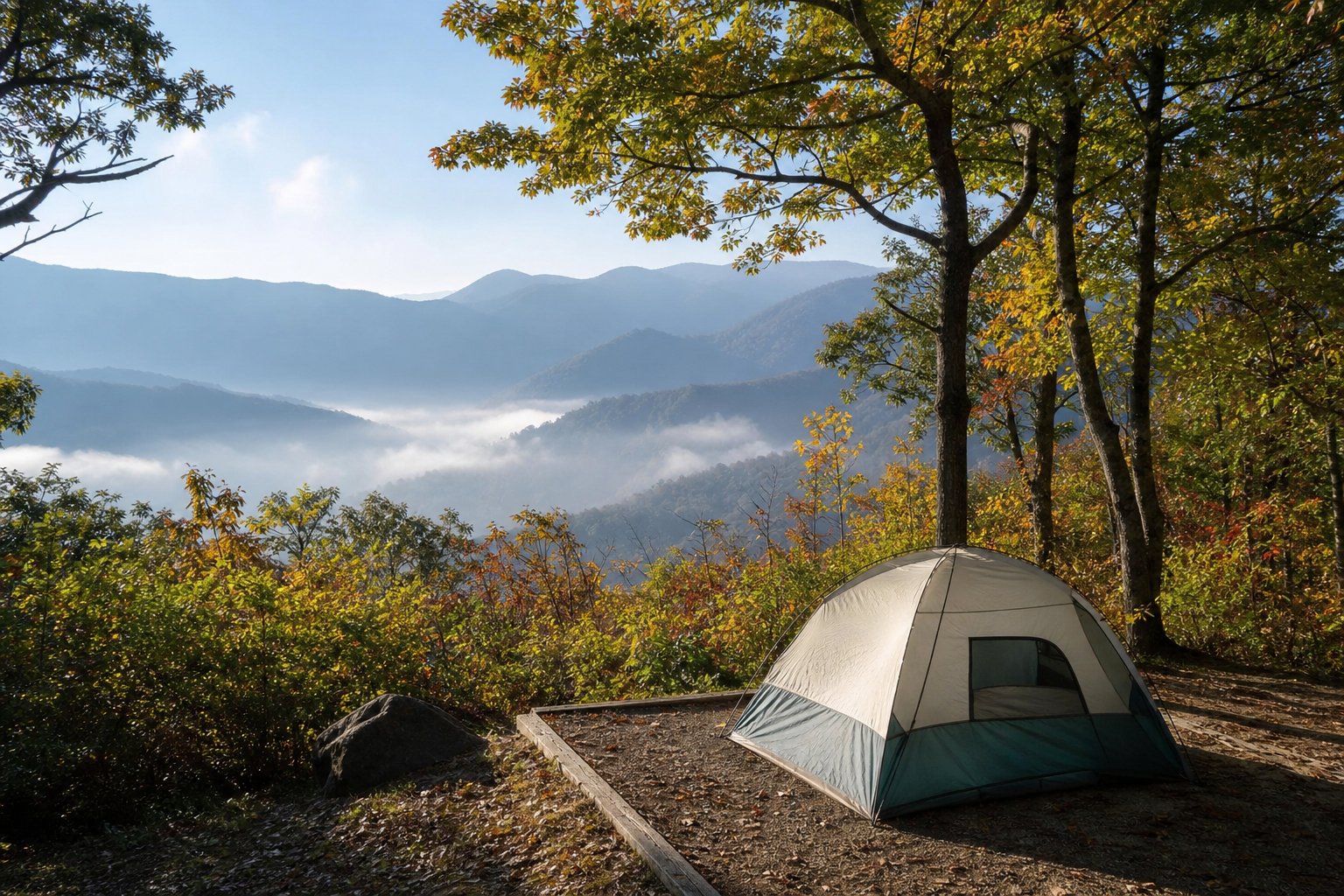
Appalachian Mountain camping is not one experience — it is two distinct propositions that share a mountain range but differ in temperature, humidity, wildlife pressure, and what you hear at 2 am. Ridge-line campgrounds deliver views, breeze, and cooler nights. Valley-floor campgrounds deliver water access, shelter from wind, and the dense, green quiet of cove forest. Most campers pick based on scenery photos. Experienced campers pick based on what they plan to do the next morning and what elevation does to sleep quality in July.
This guide covers the campgrounds worth booking across the Smokies, Shenandoah, and Blue Ridge Parkway corridor — where the insider sites are, what elevation actually costs you, and how to build a trip that uses both ridge and valley camping strategically.
The Appalachian Camping Framework
Before specific campgrounds, understand the three variables that define every Appalachian site:
Elevation changes everything. A campground at 2,000 feet in a Smokies cove and a campground at 5,000 feet on a Blue Ridge ridge may be 30 miles apart horizontally and feel like different climate zones. Expect 3-5°F cooler per 1,000 feet of elevation gain, plus more wind exposure on ridges.
Humidity is the constant. Unlike western mountain camping where dry air makes cold nights manageable, Appalachian humidity keeps dampness in fabrics, sleeping bags, and tent walls even when temperatures are moderate. Site selection with airflow matters — a stagnant cove site feels colder than a breezy ridge site at the same temperature.
Wildlife is present and habituated. Black bears in the Smokies and Shenandoah are not an abstract risk — they are a nightly campground management concern. Every Appalachian campground in this guide requires bear-safe food storage. Assume you will see bears or bear sign during peak season.
Great Smoky Mountains National Park
The Smokies are the most-visited national park in the US and the anchor of Appalachian frontcountry camping. Ten developed campgrounds, all reservation-required for peak dates through recreation.gov.
Elkmont Campground is the default recommendation for a reason — 220 sites, central location on the Tennessee side, walkable access to Jakes Creek and Little River trails, and the historic Elkmont ghost town area for evening exploring. The tradeoff is density and traffic. Elkmont feels like a small city on October weekend nights. Book loop J or K for slightly more separation from the main road.
Cades Cove Campground is the valley-floor pick. You camp at the entrance to the most popular wildlife-viewing loop in the park, with open meadows, historic structures, and consistent black bear and deer sightings at dawn and dusk. Sites are less private than Elkmont but the setting is unmatched for wildlife photographers and families who want visible scenery from the campsite.
Cosby Campground on the northeastern corner is the insider choice. Lower profile, fewer visitors, excellent trail access to Mount Cammerer and the Low Gap trail network, and availability when Elkmont and Cades Cove are sold out. Cosby lacks the marquee name but delivers better camping for hikers who do not need a scenic drive from their tent door.
Smokemont Campground on the North Carolina side near Cherokee is the practical base for the southern half of the park — Oconaluftee Visitor Center, Mingus Mill, and the Road to Nowhere trailheads. Quieter than Elkmont, with good stream access and fewer Tennessee-side traffic patterns.
Cataloochee Campground requires a commitment — a narrow, winding access road from I-40 that discourages casual visitors. The payoff is elk viewing (reintroduced herd, most visible at dawn and dusk), historic valley buildings, and a campground that feels removed from the park's main arteries.
Shenandoah National Park
Shenandoah runs 105 miles along the Blue Ridge crest in Virginia, with four main campgrounds inside the park. All are accessible from Skyline Drive, which means elevation is built into every option.
Big Meadows Campground at mile 51 is the flagship — highest traffic, best facilities, adjacent to the Big Meadows open-area ecosystem that attracts deer, black bear, and birdwatchers. The campground sits at roughly 3,500 feet, which means genuinely cool nights even in August and morning fog that burns off by 10 am. Sites in the outer loops (C and D) have more tree cover and feel less like a parking arrangement.
Loft Mountain Campground at mile 79 is the largest in the park (200+ sites) and the best option for campers who want space. It sits on a broad ridge with meadow edges and long views to the west. Loft Mountain catches more weather than Big Meadows — wind and thunderstorms move across the ridge openly — but the stargazing and sunset quality are superior.
Mathews Arm Campground at mile 22 is the northern entry campground — convenient for DC-area campers, smaller, and quieter than Big Meadows. Good for a first night if you are driving Skyline Drive southbound and want to start early without a long approach.
Lewis Mountain Campground at mile 57 is small (31 sites), first-come-first-served, and the most private option in the park. Arrive by mid-morning on summer weekends or book nothing and hope — cancellations happen, but this is a gamble for planners.
Adjacent to Shenandoah, Shenandoah River State Park and George Washington National Forest campgrounds (Elizabeth Furnace, Todd Lake) offer valley-floor alternatives with river access at lower elevation. Use these when Skyline Drive campgrounds are booked or when your group includes members who do not handle mountain driving comfortably.
Blue Ridge Parkway Corridor
The Blue Ridge Parkway is not a campground destination itself — commercial vehicle restrictions and the absence of developed sites on the road mean you camp in adjacent national parks, national forests, and state parks. The Parkway is the connector between camping bases.
Julian Price Park (MP 296) near Blowing Rock, North Carolina, has a Parkway-adjacent campground on Price Lake — one of the few developed camping options directly associated with the Parkway. Flat-water paddling, a loop trail around the lake, and easy access to Blowing Rock and Grandfather Mountain. Reservations through recreation.gov for peak season.
Linville Falls Campground area (MP 316) connects to Linville Gorge Wilderness trails and the falls themselves. The national park service campground is small; the surrounding Pisgah National Forest has dispersed camping options for experienced campers willing to trade amenities for solitude.
Mount Pisgah Campground (MP 408) south of Asheville sits at 5,000 feet — one of the highest developed campgrounds in the Blue Ridge. Cool summer nights, rhododendron tunnels on nearby trails, and direct access to the Shut-In Trail and Blue Ridge Parkway hiking. The elevation means this campground closes earlier in fall (typically late October) than valley options.
Crabtree Falls Campground (MP 339) is a hiker's campground — tight sites, excellent trail access, not suited for large RVs.
The insider move for multi-night trips: book one ridge night (Loft Mountain, Mount Pisgah) and one valley night (Cades Cove, Cosby). See our campground booking tips for multi-campground itineraries.
Practical Notes for Appalachian Campers
Black bear food storage is mandatory in every campground listed. Use park-provided bear boxes where available. Never store food, toiletries, or cooking equipment in tents or unattended vehicles. A bear encounter caused by poor food storage ruins the trip for you and often results in the bear being euthanized.
Mountain driving on access roads to Cataloochee, Linville Gorge, and several Parkway-adjacent campgrounds is narrow and winding. RVs over 30 feet should verify length restrictions and road conditions before committing. Trailer sway on steep grades is real.
Cell service is unreliable at most ridge-line campgrounds. Plan navigation and communication accordingly. See our campground cell service guide for realistic expectations by park.
Frequently Asked Questions
What is the best Appalachian campground for hiking? Cosby Campground in the Smokies and Loft Mountain in Shenandoah are the strongest hiking bases — less crowded trail access at Cosby, ridge-line Appalachian Trail segments from Loft Mountain.
When should I book Smokies and Shenandoah campgrounds? Both open six months in advance on recreation.gov. October and summer weekends fill fastest. Cosby and Cataloochee tend to have more availability than Elkmont and Cades Cove.
Are Blue Ridge Parkway campgrounds open year-round? Most close November through March. Higher-elevation campgrounds like Mount Pisgah close earlier than valley options. Check NPS for current seasonal status.
What is the coolest Appalachian campground in summer? Mount Pisgah (5,000 feet) and Loft Mountain (~3,900 feet) offer the most reliable summer temperature relief in the corridor.
Can I camp along the Blue Ridge Parkway itself? No. Overnight camping on the Parkway is prohibited. Use developed campgrounds in adjacent national parks, national forests, or state parks.