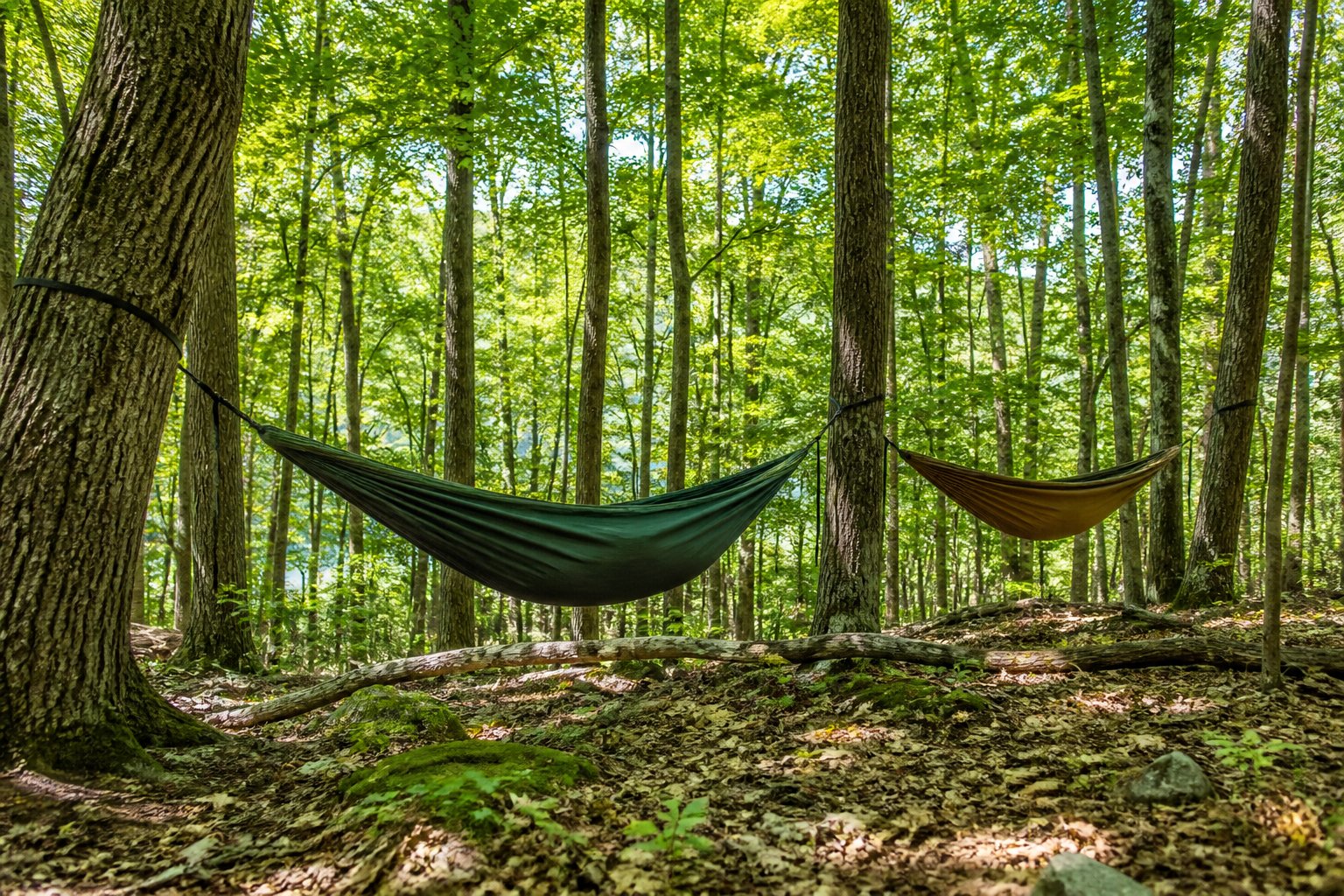
Hammock campers sort campgrounds in five minutes: hang possible or why did I bring straps to a desert pad. Developed loops were designed for tents on rectangles and RVs on asphalt. Trees were landscaping, not load-bearing infrastructure.
Site selection is the entire game. Treat tree spacing, strap rules, and pad boundaries as booking criteria equal to electric hookups for RVers.
Minimum Tree Requirements
A viable hang needs:
- Two live trees 12–18 feet apart (most gathered-end hammocks)
- Trunk diameter ≥ 6 inches at strap height
- Clear overhead — no dead branches in the swing arc
- Tree-saver straps (≥ 1 inch width) — rope scars get you evicted and damage bark permanently
Measure before unpacking. Decorative pines with four-inch bases fail regardless of aesthetic shade.
Regulations by Region
Three patterns dominate:
Explicitly allowed with strap rules — Southeastern and Appalachian state parks with hardwood shade (Florida oak hammocks, Adirondack DEC loops). Wide straps required; hang from live trees on your paid pad only.
Silent tent-pad culture — Western desert and high-plains loops: no trees, no policy because hanging from pavilion beams violates structural rules even when unstated.
Prohibited or restricted — Fragile ecosystems (juniper, Joshua tree zones) or historic groves. Read kiosk regulations and park pages — LNT includes minimizing tree impact.
When uncertain, ask the host with your site number and strap type.
Hammock-Friendly Profiles
Consistent hang options:
- Hardwood shade loops — Midwest, Southeast, Appalachians; Florida parks like Myakka and Anastasia Shady Loop
- Riparian national forest campgrounds — Pisgah, Chattahoochee, Superior National Forest stream corridors
- Coastal maritime forest — Pacific Northwest spruce where spacing allows
Challenging: Southwest desert, Great Basin, alpine-adjacent sites — carry ground backup (compact tent or bivy). Hammock-only travelers without backup get burned regularly.
Site Selection Workflow
When booking: open campground map PDFs; favor loop names with "Shady," "Hickory," "Creekside"; read reviews mentioning hammock or shade; prefer end-of-loop sites bordering forest; avoid pull-through RV bowls with ornamental trees.
On arrival: walk the loop with a strap before committing at FCFS parks; hang rainfly first in weather; mind neighbor sightlines — hammocks sit higher than tents.
Insulation discipline unchanged by bathhouse proximity — underquilt or pad whenever nights drop below comfortable sleep temperature.
Etiquette
Hosts get called when campers hang from dead trees, block roads with diagonal spans, occupy two sites' trees for one pad, or leave strap marks after multi-night friction. Reposition straps on long stays; keep hardware off gravel.
Failed site? Move before dark — hosts respect self-correction.
See our Florida state park campgrounds guide and campground booking tips.
Frequently Asked Questions
Can I hammock camp at regular campgrounds? Yes where trees and rules allow. Wide straps, live trunks on your pad, ground backup for treeless loops.
How far apart should trees be? 12–18 feet; trunks ≥ 6 inches at strap height.
Which campgrounds are best for hammocks? Hardwood-shaded loops in Southeast, Appalachians, Midwest, Florida.
Do I need an underquilt at campgrounds? Whenever nights cool below comfortable sleep temps — spring and fall at most parks.