If you work in campground reservations long enough, you learn that holiday weekends are not "busy season" — they are a separate inventory event. Memorial Day, July 4, and Labor Day each behave differently in the booking data. Treating them as interchangeable summer weekends is how families end up driving three hours to a walk-up-only forest campground with no plan B.
Three factors compress demand: fixed Friday–Monday dates, school and work calendars aligning family trips, and regional tradition turning certain parks into pilgrimage destinations regardless of whether they are the best available site.
Memorial Day: The Opening Shot
Memorial Day marks the psychological start of camping season. Water temperatures are still cold in northern states; southern and low-elevation destinations bear the brunt of demand.
- Federal campgrounds (recreation.gov): Six-month rolling window at 10 AM Eastern. Memorial Day dates open in late November. Popular national park campgrounds sell out within hours.
- State parks: Typically 3–6 months. California, Texas, and Florida are aggressive early sellers.
- Private campgrounds: Often open 9–12 months ahead with 20–40% holiday premiums.
Alternatives when sold out: National forest first-come campgrounds (arrive Thursday), Army Corps of Engineers parks, mid-elevation state parks above 4,000 feet where swimmers stay home.
July 4: Maximum Compression
July 4 is the hardest camping reservation date in the United States. Lakefront, riverfront, and oceanfront campgrounds within three hours of major metros reach capacity fastest.
July 4 dates open in early January on recreation.gov — set calendar alerts for January 4–5. State parks in lake country (Wisconsin, Minnesota, Michigan, Texas, Colorado) routinely sell out within minutes.
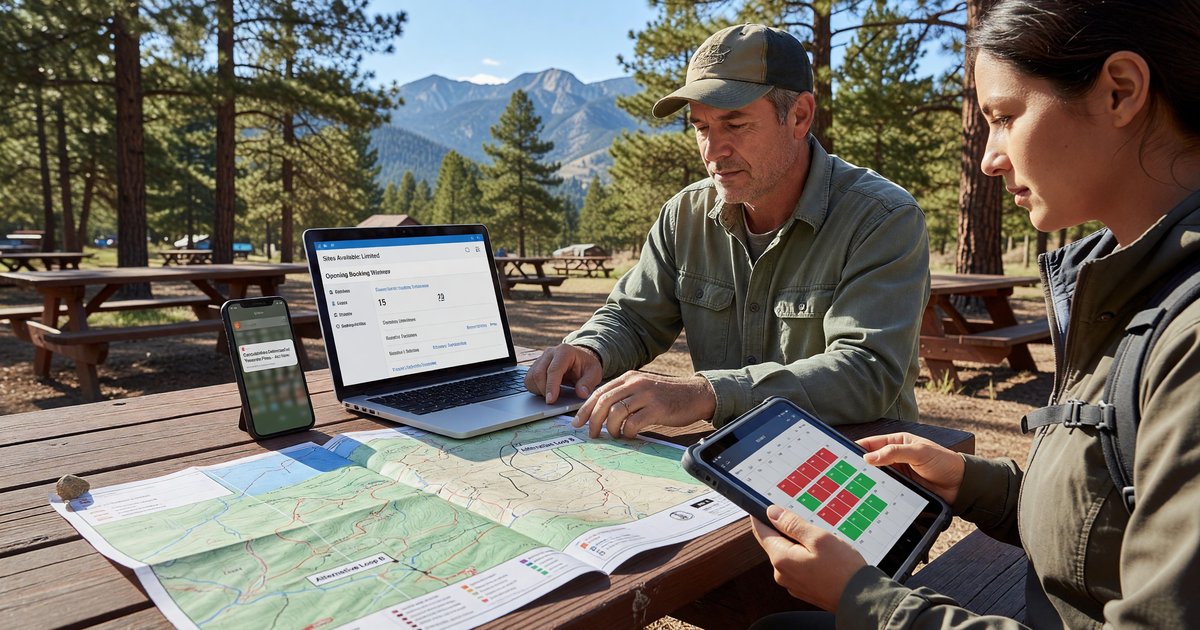
The cancellation flush: The most reliable inventory appears 2–3 weeks before the holiday when families finalize plans. Check recreation.gov and state systems daily at 7–8 AM local time. Cancelled sites re-enter inventory immediately on most platforms.
Alternatives: Higher-elevation mountain campgrounds above 6,000 feet, BLM dispersed camping near small towns with municipal fireworks, or mid-week July 4 years when the holiday falls Tuesday/Wednesday (the adjacent weekend, not the holiday itself, sees peak demand).
Labor Day: The Last Summer Weekend
Labor Day is high demand but slightly less compressed than July 4 — families with early school starts in some districts skip it. Same six-month federal window opens in early March.
Shoulder season begins the following week at many campgrounds. Flex to the weekend after Labor Day for similar weather with 30–50% less demand.
Alternatives: Fall-color preview at northern elevations, Gulf Coast beaches after peak humidity, Oregon and California wine country as harvest season begins.
Cross-Holiday Booking Framework
- Identify your platform — recreation.gov, state system, or private direct. They do not share inventory.
- Set a calendar alert for the exact opening date and time, account logged in 10 minutes early.
- Pre-select three campgrounds — primary, same-region backup, different-ecosystem backup.
- Monitor cancellations starting three weeks before the holiday.
- Hold one reservation while searching for upgrades — cancel the lower-priority site only after confirming the better one.
When all else fails: dispersed BLM or national forest camping, Hipcamp private land, or camping Thursday-to-Tuesday when parks release holiday hold sites to standard inventory.
Frequently Asked Questions
How far in advance should you book campgrounds for July 4? At the six-month window opening — early January for recreation.gov. Monitor cancellations three weeks before the holiday.
Is Labor Day easier to book than July 4? Generally yes, except at iconic lake destinations that still sell out immediately.
When do campground cancellations appear before holiday weekends? Two to three weeks before the holiday. Check daily at 7–8 AM local time.
What are alternatives when holiday campgrounds are sold out? National forest walk-up campgrounds, Corps of Engineers parks, higher elevation sites, BLM dispersed camping, and Hipcamp.