Hot springs camping sells itself until you arrive at the wrong pool at the wrong hour with the wrong expectations. The West has hundreds of geothermal features — some developed into resort-style pools, some wild and clothing-optional, some family-friendly with boardwalks and ranger patrols. Directors who book soak-adjacent campgrounds well match the pool culture to the guest, secure sites close enough for dawn soaks, and brief clients on etiquette before they walk in with a cooler and a camera.
This guide covers campgrounds where the hot spring is the reason for the trip — not campgrounds that happen to have a lukewarm swimming pool labeled "hot tub."
Idaho: The Density Leader
Idaho has more soakable hot springs per square mile than any other state. The campground-to-spring connection varies from walk-across-the-parking-lot to a three-mile hike.
Bonneville Hot Springs — Boise National Forest: A developed Forest Service campground near Lowman with a natural rock pool on the Payette River. The campground is basic — vault toilets, no hookups — but sites 6 through 12 sit closest to the short trail to the pools. The main pool is clothing-optional after dark; daytime soakers typically wear suits. Arrive early on summer weekends; the parking area overflows by noon.
Kirkham Hot Springs — Boise National Forest: Not a campground itself but adjacent to Boiling Springs Campground and Grandjean Campground in the Sawtooth National Recreation Area. Kirkham is the most popular roadside soak in Idaho — multiple pools cascading down a hillside. Camp at Grandjean (14 miles south on a gravel road) for a quieter base. Grandjean sites are first-come; arrive Friday by 2 PM for weekend availability.
Goldbug Hot Springs — Salmon-Challis National Forest: A 2-mile hike to terraced pools above the Salmon River. No campground at the trailhead — dispersed camping on forest roads or stay at North Fork Campground on the Salmon River, 15 minutes from the trailhead. The hike filters crowds; weekday mornings you may have the upper pools alone.
Trail Creek Hot Springs (Pine Flats) — Cascade area: Small pools along a forest creek. Pine Flat Campground on Cascade Lake is the nearest developed option. Soak etiquette here is strictly leave-no-trace — pack out everything, no glass, no soap.
Montana: Developed and Wild
Boulder Hot Springs Inn and Spa — Boulder, Montana: A historic inn with natural hot springs pools and adjacent camping. The campground is small and quiet — more glamping-adjacent than rustic. Book rooms or campsites together; day-use soakers arrive midday and change the pool atmosphere.
Norris Hot Springs — Madison County: A music-venue-meets-hot-spring in a rural valley. The campground is a field adjacent to the pool — basic, no reservations, first-come. Soaking is clothing-required in the main pool. Live music on summer weekends draws crowds; camp Tuesday through Thursday for the best experience.
Boiling River — Yellowstone National Park: Where the Gardner River meets a hot spring outflow. Not a campground — the nearest frontcountry sites are at Mammoth Campground (first-come, year-round) or Tower Fall Campground (seasonal). The Boiling River soak area has strict hours (daylight only), no clothing-optional, and closes during high water. Mammoth sites fill by 8 AM in summer — send one person to hold a site while the group enters the park.
California: Desert and Sierra Soaks
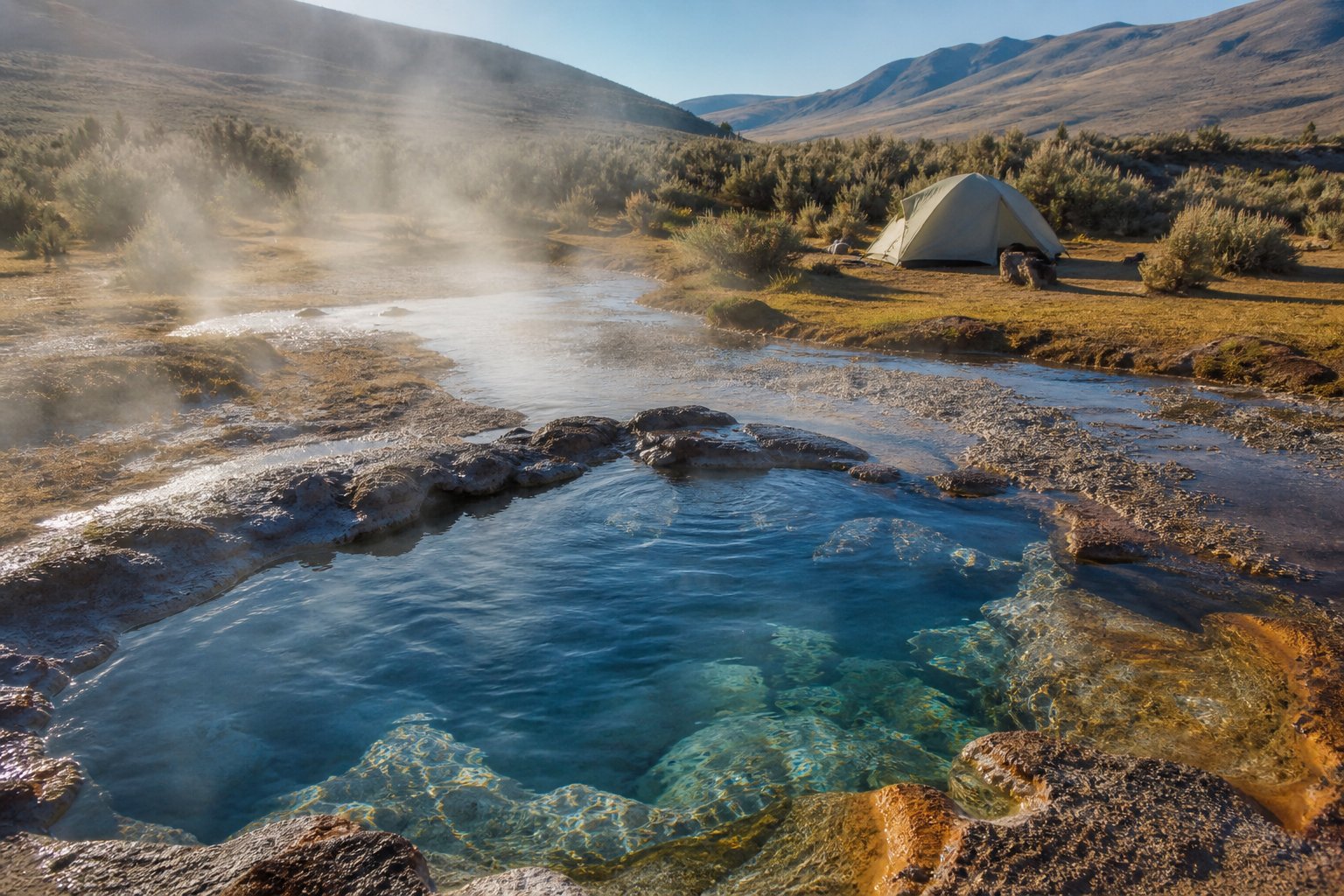
Travertine Hot Springs — Bridgeport, California: A BLM-managed soaking area east of the Sierra crest with panoramic views. No campground — dispersed camping on nearby BLM roads or stay at Bridgeport Reservoir Campground (USFS) or Twin Lakes Campground. The springs are clothing-optional. Morning soaks (before 9 AM) are the least crowded and most photogenic.
Keough's Hot Springs — Bishop, California: A developed pool complex with adjacent tent and RV camping. Family-friendly, clothing-required, with pool hours and lifeguards. Sites closest to the pool (A loop) book first. This is the director's choice for families who want hot springs without the culture shock of a wild pool.
Sykes Hot Springs — Big Sur (Pine Ridge Trail): A 10-mile hike to coastal hot springs in Ventana Wilderness. Pfeiffer Big Sur State Park Campground serves as the trailhead base — book through ReserveCalifornia six months ahead. The springs are clothing-optional and heavily visited on weekends. Start the hike at dawn.
Desert Hot Springs — California (city and region): The town sits atop an aquifer of naturally hot water. Multiple RV parks and motels pipe geothermal water into pools. Desert Hot Springs RV Park and Sam's Family Spa offer full-hookup camping with private soaking tubs. This is resort hot springs camping, not wilderness — appropriate for guests who want a shower after the soak.
Etiquette: Clothing-Optional vs. Family Areas
Directors brief every hot springs guest on these rules before arrival. Violations get you removed from pools and create liability for the group.
Clothing-optional pools: Nudity is normal and expected. Do not stare, photograph anyone, or comment on bodies. Sit on a towel. Phones stay in bags — no photos at the pool regardless of who is in frame. Speaking volume stays low. Alcohol rules vary; many wild pools prohibit it.
Family-friendly pools: Swimsuits required. Children present means the culture shifts — no alcohol, no loud music, no after-dark parties. Keough's, Norris (main pool), and developed resort pools fall here.
Wild pools: Leave no trace applies absolutely. No soap, shampoo, or oils in the water — they kill the microbial ecology that keeps the pool clean. No glass containers. No digging to redirect water flow. Pack out all trash including organic waste.
Timing: Dawn (6-8 AM) and dusk are the best soak windows at popular pools. Midday draws tour groups and day hikers. Full moon soaks at Travertine and Goldbug are exceptional but require headlamps for the approach trail.
Site Selection Near Hot Springs
Distance to the pool: At developed campgrounds (Keough's, Norris, Bonneville), request sites in the loop closest to the pool access trail. A 200-yard walk at midnight in cold air changes the soak frequency.
Wind and exposure: Open valley hot springs campgrounds (Norris, Bridgeport area) are cold at night. Book sites with natural windbreaks — cottonwood lines, rock outcrops — and plan for the sprint from pool to tent.
Privacy: At clothing-optional campgrounds, some guests prefer sites with visual separation from the pool area. At others, proximity is the point. Clarify client preference before booking.
Water quality at the site: Geothermal areas sometimes have sulfur-smelling tap water or no potable water at all. Verify whether the campground has treated water or whether guests must bring drinking water separately.
Frequently Asked Questions
Can you camp at hot springs in Idaho? Yes. Bonneville Hot Springs has an adjacent Forest Service campground. Kirkham Hot Springs is near Grandjean and Boiling Springs campgrounds. Many other Idaho springs have dispersed camping on nearby forest roads or developed campgrounds within 15-30 minutes.
Are hot springs clothing-optional? It depends on the pool. Wild springs like Travertine and Goldbug are typically clothing-optional. Developed resorts like Keough's require swimsuits. Bonneville becomes clothing-optional after dark. Check posted rules at the trailhead.
What is the best hot springs campground for families? Keough's Hot Springs near Bishop, California offers family-friendly pools with lifeguards and adjacent camping. Norris Hot Springs (main pool) and Desert Hot Springs RV parks are also family-appropriate.
Can I bring alcohol to natural hot springs? Most wild and Forest Service-managed pools prohibit alcohol. Glass containers are prohibited nearly everywhere. Check specific location rules before packing.
How crowded are hot springs campgrounds on weekends? Very crowded at accessible pools like Kirkham, Travertine, and Bonneville from Friday through Sunday. Arrive Thursday or plan midweek soaks. Hike-in springs are less crowded due to access difficulty.
Further Reading
- USDA Forest Service — Idaho Hot Springs — Boise National Forest hot springs access and regulations.
- Bureau of Land Management — Travertine Hot Springs — BLM access, camping, and etiquette for Bridgeport-area soaking.