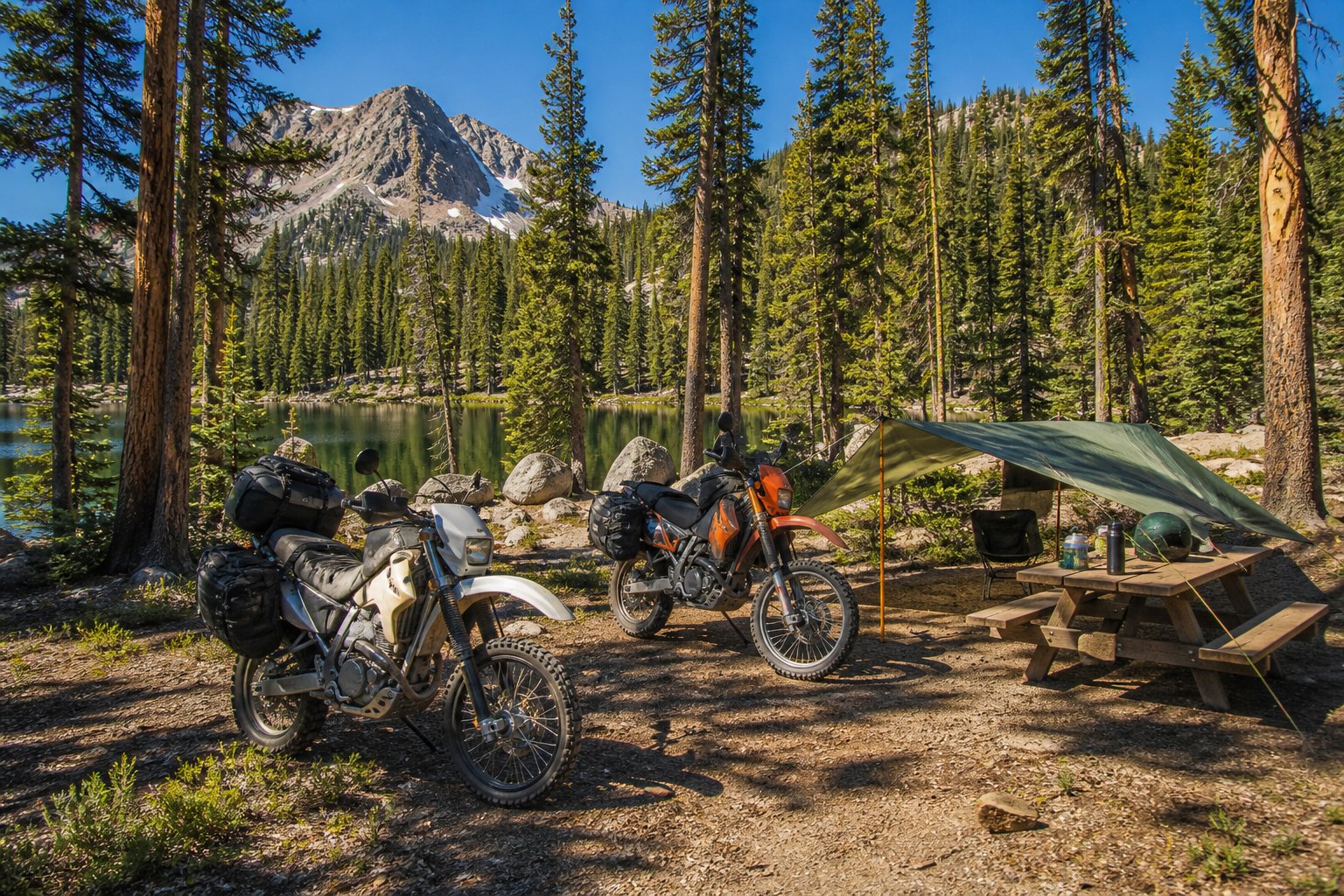
Motorcycle camping strips the experience to its essential elements: a machine, a bag of gear, and a place to sleep that does not require a 40-foot turning radius. Directors who book motorcycle base camps think about security, compact site geometry, weather protection for a bike that cannot sit under an RV awning, and the route segments that justify an overnight stop rather than pushing to a motel.
The motorcycle camping demographic spans adventure tourers on GS bikes with hard panniers, cruiser riders with minimal luggage, and dual-sport riders who camp as a waypoint on dirt-road loops. The campground requirements overlap but are not identical. This guide focuses on developed campgrounds — not dispersed BLM camping, which has its own playbook.
Campground Features That Matter for Motorcycles
Secure parking near the tent pad. The ideal site lets you park the bike where you can see it from the tent — ideally within 10 feet. Many campgrounds assign tent-only sites in loops separated from vehicle parking. Request a site where the bike can sit at the pad edge, or book a small RV site (often cheaper than expected) for the extra space and pad-level parking.
Level, paved or gravel access. Soft grass pads after rain trap a loaded touring bike. Directors prefer state park loops with gravel pads and firm entry paths over national forest sites with grass and ruts.
Covered common areas. A picnic shelter or camp host pavilion provides rain cover for gear sorting and morning coffee when the bike is loaded and wet. Not essential, but a meaningful amenity on multi-day routes.
Proximity to fuel and food. Motorcycle range is 150-250 miles depending on tank size and riding style. Base camps within 5 miles of fuel and a meal source reduce morning logistics. Remote campgrounds are viable only when fuel is planned at the previous stop.
Shower access. After a day in riding gear, a shower is not a luxury. State park campgrounds with central bathhouses outperform national forest vault-toilet sites for motorcycle touring comfort.
Gear-Minimal Systems
Motorcycle camping gear must fit in panniers, a tail bag, and possibly a tank bag. Directors standardize a kit that covers three seasons without exceeding 40 pounds of camping gear.
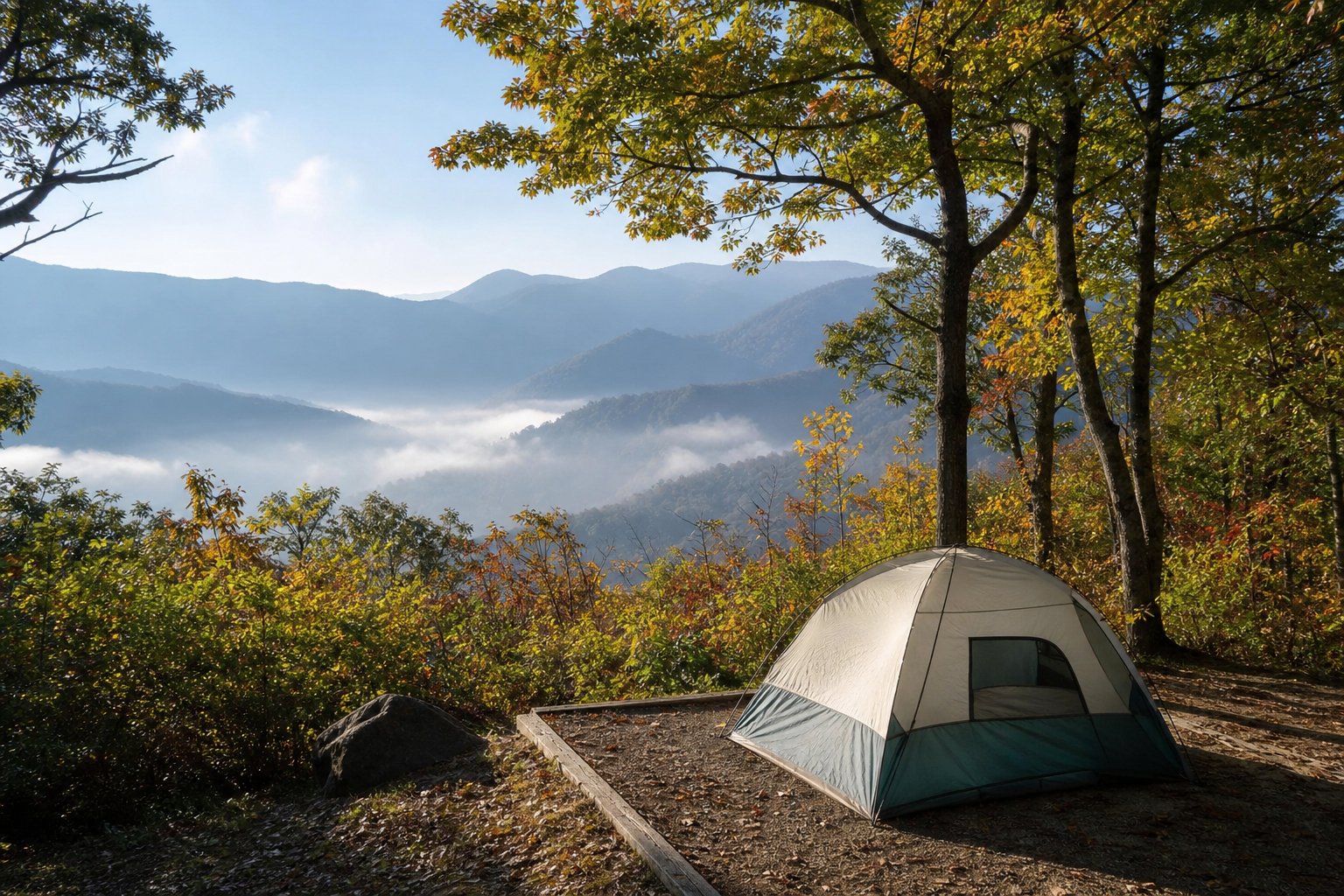
Shelter: One-person or two-person tent under 4 pounds, or a bivy/hammock system for fair-weather routes. Freestanding tents pitch on gravel pads without stakes — important at motorcycle-accessible sites.
Sleep: Down or synthetic bag rated 20°F for three-season touring; 0°F for mountain passes in spring and fall. Inflatable pad with R-value 3+ for ground insulation.
Cooking: Canister stove, single pot, spork, and dehydrated meals. No cooler — fresh food for one day maximum. Many motorcycle campers eat dinner at the last town before camp and carry only breakfast supplies.
Clothing: Riding gear doubles as camp clothing. Merino base layers pack small and dry overnight. A down puffy for camp, rain layer, and one change of underwear/socks. Laundry at campground sinks when available.
Security: Cable lock and disc lock for the bike. Remove panniers and bring them to the tent if the bike sits more than 20 feet away or the campground has open public access. Some riders carry a lightweight cover that obscures the bike model from casual theft interest.
Eastern Routes and Base Camps
Blue Ridge Parkway — Virginia and North Carolina: Otter Creek Campground (MP 60, Virginia) and Price Park Campground (MP 297, North Carolina) are Parkway-adjacent with tent loops and bathhouses. Sites are compact but motorcycle-accessible. Book Otter Creek through recreation.gov; Price Park is first-come. The Parkway itself has no commercial traffic and 45 mph speed limits — ideal touring.
Tail of the Dragon — Deals Gap, North Carolina/Tennessee: Backbone Rock Campground (Cherokee National Forest, 20 minutes north) and Cheoah Point Campground on Santeetlah Lake offer forest-service sites with gravel pads. The Dragon itself has no camping; these are the base camps riders use for multi-day loop rides through the Cherohala Skyway and Dragon.
Route 6 — Pennsylvania: Promised Land State Park and Ricketts Glen State Park serve as motorcycle base camps for northeast Pennsylvania riding. Paved pad loops, showers, and lake or waterfall access. Reserve in advance for summer weekends.
Western Routes and Base Camps
Beartooth Highway — Montana/Wyoming: Colter Pass Campground (Shoshone National Forest) and Soda Butte Campground near Cooke City, Montana, are the classic Beartooth base camps. Elevation 7,000+ feet — cold nights even in July. Compact sites, vault toilets, and direct access to one of America's greatest riding roads.
Utah Highway 12 — Red Canyon to Torrey: Red Canyon Campground (Dixie National Forest, near Bryce) and Thousand Lakes Campground (near Boulder Mountain) offer motorcycle-friendly gravel pads with stunning scenery. Water availability varies — fill tanks in Panguitch or Escalante before camping.
Pacific Coast Highway — California: Kirk Creek Campground (Los Padres National Forest, Big Sur) is the iconic motorcycle camping stop — bluff-top sites, compact pads, and the PCH outside your tent door. Reserve through recreation.gov; walk-in distance from parking to some sites is 100 yards with gear on your back. San Simeon State Park (Hearst Castle area) offers easier pad access with showers.
Going-to-the-Sun Road — Glacier National Park: Avalanche Campground (west side, near Lake McDonald) has tent loops with bathhouses and is the motorcycle base for Sun Road riding. The road has seasonal closures and vehicle size restrictions that do not apply to motorcycles — a significant advantage. Book early; Glacier campgrounds fill fast.
Security and Overnight Protection
Motorcycle theft at campgrounds is uncommon but not unknown. The director standard:
Park in lit areas near the camp host or bathhouse if the assigned site is dark and isolated.
Use two locks — disc lock on the front rotor, cable through the frame and a fixed object. Locks deter opportunistic theft; determined thieves are not stopped by anything short of an alarm system.
Remove valuables from panniers and tank bag. GPS units, cameras, and tools come into the tent.
Cover the bike with a plain cover that hides make and model. A covered bike is less attractive than an exposed Harley or BMW GS.
Talk to the camp host. Hosts know which loops have had issues and will often suggest a better site if you mention you are on two wheels.
Booking Strategy for Motorcycle Campers
Motorcycle campers need one site, not a group block. Single tent sites at state parks are the most available inventory category — use this to your advantage when popular campgrounds show sold out for RV lengths.
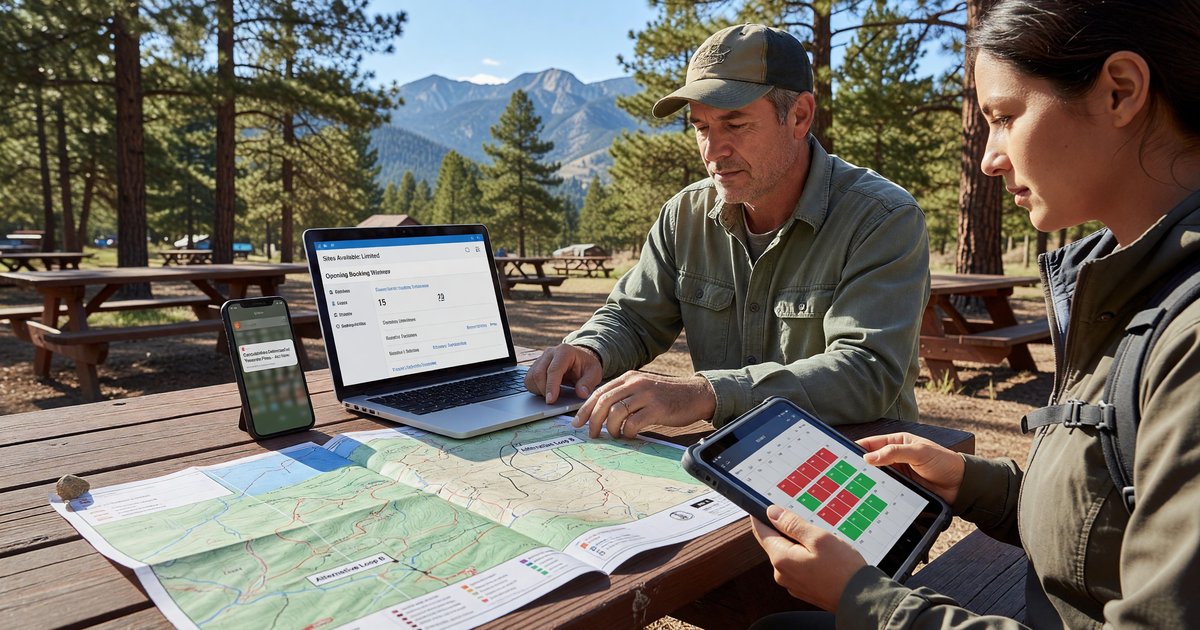
Request specific site numbers based on the campground map: end-cap sites with pad-level parking, sites adjacent to bathhouses, and sites away from generator-heavy RV loops.
Midweek booking is the motorcycle touring norm — riders who can travel Tuesday through Thursday find availability at campgrounds that are sold out every weekend.
For multi-night stays, book two consecutive nights at one base camp rather than one night at two different campgrounds. Setup and breakdown time is proportionally higher when gear is packed in panniers.
Frequently Asked Questions
Can you camp at a campground with a motorcycle? Yes. Most campgrounds that accept tent campers also accept motorcycles. Book a tent site or small RV site for pad-level parking. Request a site where the bike can park adjacent to the tent pad.
What gear do I need for motorcycle camping? Minimum kit: compact tent, sleeping bag and pad, camp stove and dehydrated meals, merino base layers, rain layer, and bike security (disc lock and cable). Total camping gear should fit in panniers and a tail bag — under 40 pounds.
How do I keep my motorcycle safe at a campground? Park within sight of your tent. Use a disc lock and cable lock. Remove panniers and valuables to the tent overnight. A plain bike cover reduces theft visibility. Choose lit sites near the camp host when possible.
What are the best motorcycle camping routes in the US? Classic routes include the Blue Ridge Parkway, Beartooth Highway, Utah Highway 12, Big Sur's Pacific Coast Highway, and Glacier's Going-to-the-Sun Road. Each has established base campgrounds detailed above.
Should I book a tent site or RV site for motorcycle camping? Tent sites work at campgrounds with pad-adjacent parking. Small RV sites provide level gravel pads, more space, and sometimes electric hookups for battery tenders. RV sites reduce parking and security challenges at crowded campgrounds.
Further Reading
- National Park Service — Motorcycle Regulations by Park — Park-specific motorcycle access and road restrictions.
- USDA Forest Service — Recreation Camping — National forest campground directory for route planning.