National Public Lands Day 2026 falls on Saturday, September 26 — the fourth Saturday in September, as it does every year. Entrance fees are waived across national forests, national parks, wildlife refuges, and BLM rangelands, and more than 500 volunteer projects run nationwide.
It is also one of the most misunderstood days on the outdoor calendar, mostly because "fee-free" gets read as "free," and those are not the same thing. Here is what actually gets waived, what does not, and how to build a trip around the day that is better than just showing up.
What "Fee-Free" Actually Covers
The waiver applies to entrance and day-use fees — the money you pay at a park gate or a trailhead kiosk. On a fee-free day you drive into a national park without paying the entrance fee, and you park at a Forest Service trailhead without needing a day-use pass or an Interagency pass hanging from the mirror.
What it does not cover is nearly everything else you would actually pay for on a camping trip:
- Campground fees. Your reserved site still costs what it costs. A $32 night at a Forest Service campground is $32 on September 26.
- Reservation fees. The booking fee on Recreation.gov is charged regardless.
- Concession-operated campgrounds. Many campgrounds inside federal land are run under concession contracts, and those operators set and keep their own fees.
- Cabin, group site, and special-use permit fees.
- State park fees. National Public Lands Day is a federal designation. State systems set their own policies — some participate with their own waiver, many do not.
The practical consequence: if your trip involves a reserved campsite, the fee waiver saves you the price of a park entrance, not the price of the weekend. Worth having, but it is not the reason to go.
The Overlooked Part: The Volunteer-for-a-Pass Trade
The genuinely valuable mechanism is one most people never use. Volunteering at a National Public Lands Day project typically earns a fee-free day pass that can be used on a different day — often good for a full year at participating federal sites.
That is a substantially better deal than the September 26 waiver itself, because you get to spend it on a day you were going to pay full price anyway. A morning of trail work in September can cover a park entrance in July, when the gate is charging and the line is forty cars deep.
The pass is issued at the site by the managing agency, and the details vary by agency and project — confirm with the project coordinator before you go rather than assuming.
Volunteer Projects Are Real Work, and That Is the Point
The 500-plus projects nationwide are coordinated across the National Park Service, the Bureau of Land Management, the U.S. Forest Service, and the National Environmental Education Foundation, with state and local land agencies running their own.
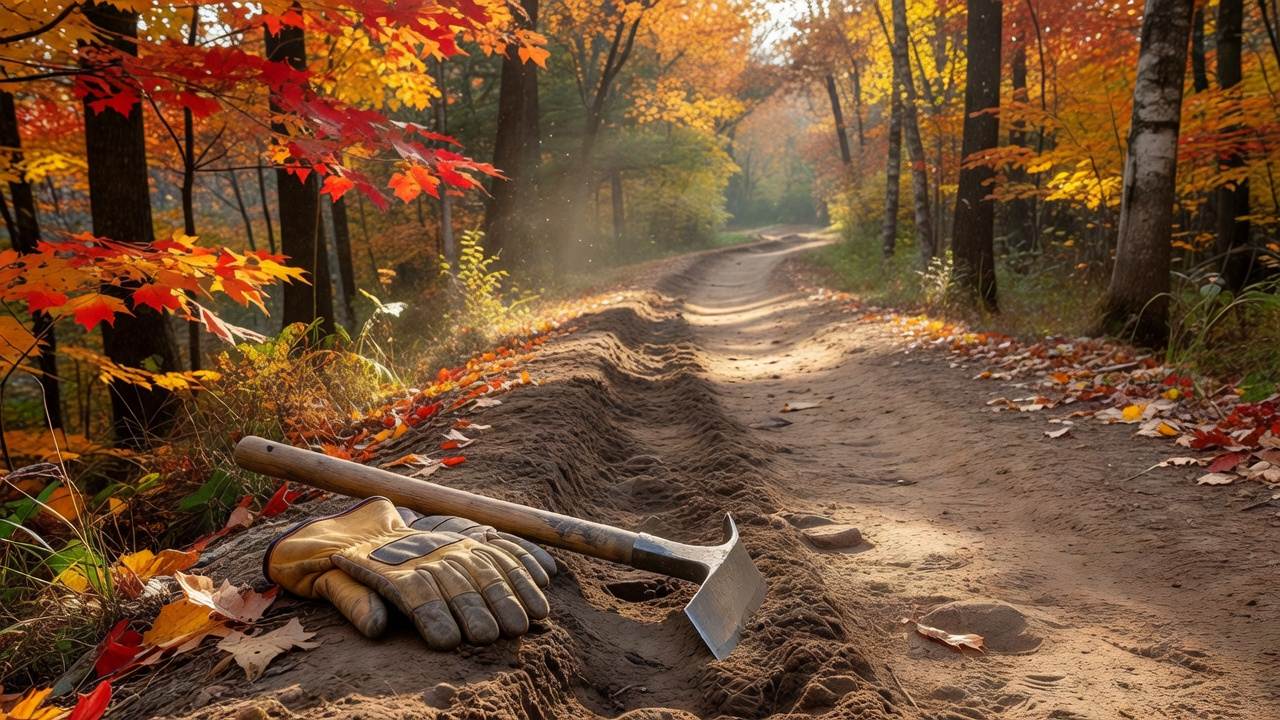
Typical work includes trail maintenance and tread repair, trail-feature construction, invasive species removal, pollinator garden planting, fence removal, trash and debris cleanup, and campground facility repair. Projects are usually a half day, and most are genuinely beginner-friendly — tools and instruction are provided.
A few things nobody tells first-time volunteers:
Bring your own gloves anyway. Loaner gloves exist and are usually the wrong size and damp.
Wear boots you are willing to ruin. Invasive removal in particular is mud and thorns.
Registration usually matters. Projects have crew-size limits set by however many tools and supervisors are available. Showing up unregistered to a full project means being turned away or handed the trash-pickup assignment.
Water and food are on you unless the listing says otherwise.
How to Build a Trip Around It
The naive plan is to drive somewhere on September 26, get in free, and drive home. The better plan uses the date as the anchor for a weekend and works around its predictable problems.
Book the campsite well ahead. A fee-free Saturday in late September, on the shoulder of peak fall color in much of the country, is a busy weekend. Sites at popular federal campgrounds go early. The waiver does not create campsite capacity — it just adds day visitors to the same parking lots.
Plan for the parking, not the entrance. At popular units the constraint on a fee-free day is not the gate, it is the trailhead lot. Arrive early or pick a destination that is not on the region's top-five list.
Volunteer in the morning, camp Saturday night. Most projects wrap by early afternoon. That leaves the whole second half of the day for the actual trip, and you have earned a pass for later in the bargain.
Consider going the day before. Friday, September 25 has none of the crowd and all of the weather. If the fee waiver is not what you were after — and if you hold an Interagency pass, it genuinely is not — Friday is the better camping day.
Check the state-level picture separately. If your trip is to a state park rather than federal land, look up that state agency's own policy. Some run a parallel free day, some run theirs on a different date entirely, and some do nothing at all.
Frequently Asked Questions
When is National Public Lands Day 2026?
Saturday, September 26, 2026. It falls on the fourth Saturday of September each year.
Are campground fees waived on National Public Lands Day?
No. The waiver covers entrance and day-use fees only. Camping fees, reservation fees, cabin and group-site fees, and concession-operated campground charges are all still collected.
Do I get anything for volunteering?
Volunteers at participating projects typically receive a fee-free day pass usable on a future visit, often valid for a year at participating federal sites. Confirm the specifics with the project coordinator, since terms vary by agency.
Does National Public Lands Day apply to state parks?
Not automatically — it is a federal designation covering national parks, national forests, wildlife refuges, and BLM land. Individual state park systems set their own fee policies and may or may not run a matching free day.