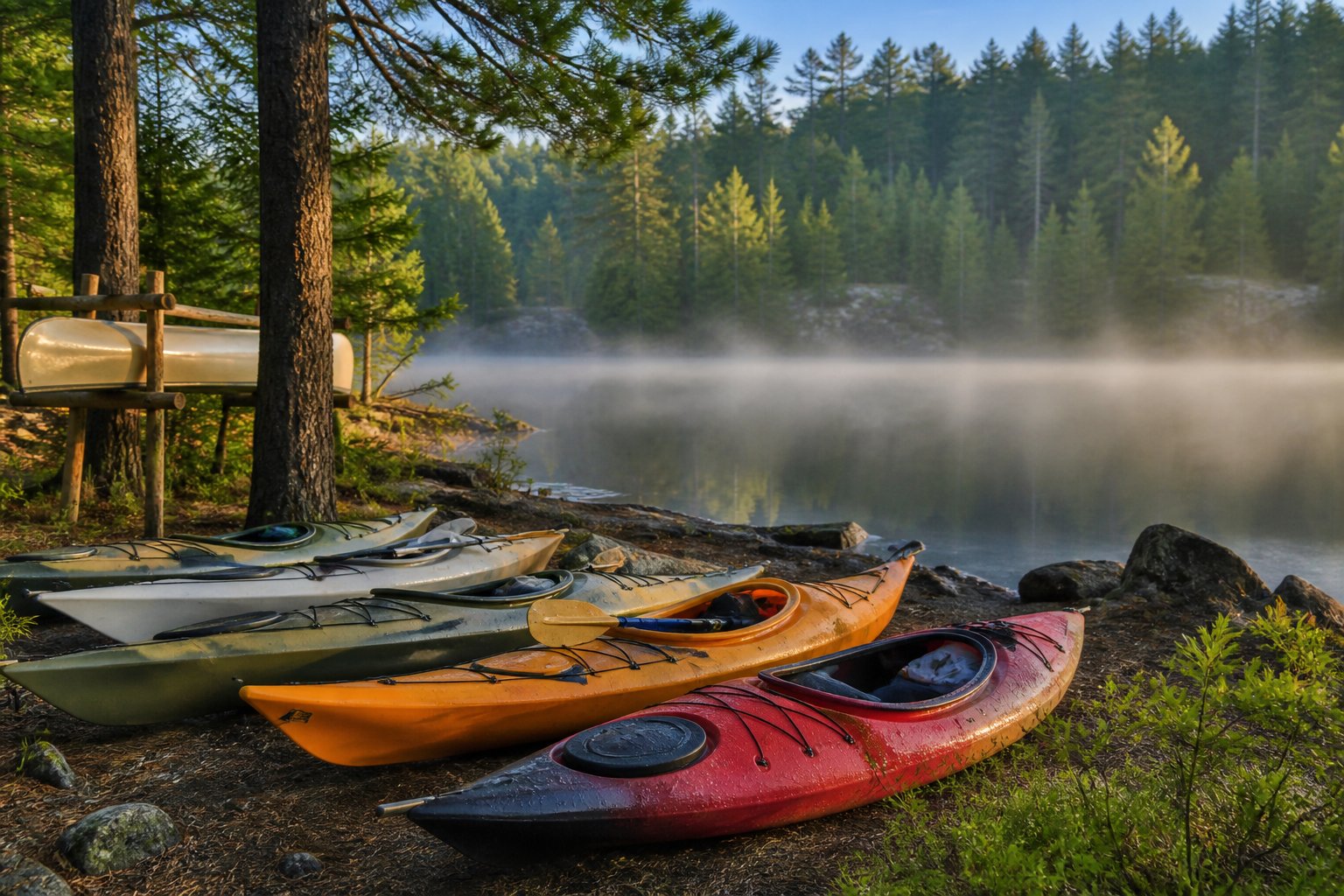
Paddle-in camping filters the camping population faster than almost any other access type. You carry what fits in a boat, navigate water that does not forgive poor planning, and camp on sites that exist because they are hard to reach. The systems worth booking are the ones where the portage cost is proportional to the solitude, fishing, and shoreline quality you gain.
This guide covers paddle-in and kayak campground systems that deliver — Boundary Waters adjacent entry points, Everglades chickee platforms, lake paddle-in sites across the US, and the planning framework that keeps a water-access trip from becoming a logistics failure.
What Paddle-In Camping Demands
Three access categories define the field:
Paddle-in with vehicle staging. You drive to a launch, load the boat, paddle to designated campsites, and return to the vehicle at trip's end. Most lake paddle-in systems work this way.
Paddle-in with portage. You carry boat and gear overland between water bodies. The Boundary Waters and Quetico systems are defined by portages — some 20 rods (320 feet), some exceeding a mile.
Platform and chickee camping. Fixed platforms over water with no ground access. Everglades chickees are the primary US example — elevated wooden platforms in mangrove estuaries, accessible only by boat.
The common requirement: everything you need must fit in the boat or on your back for portages.
Boundary Waters and Adjacent Gateway Campgrounds
The Boundary Waters Canoe Area Wilderness (BWCAW) in northern Minnesota is the definitive paddle-in system in the US — roughly 1,100 lakes, 1,500 miles of canoe routes, and over 2,000 designated campsites accessible only by water.
Entry point selection is the most important decision. The BWCAW has 68 entry points with daily quotas through recreation.gov. Entry points close to Ely (EPs 23, 25, 26, 29) are most popular. Entry points on the Gunflint Trail (EPs 44, 50, 51) require longer drives but deliver less crowded water immediately.
Campsite strategy: Target the second or third lake in from your entry point — most day-trippers stay on the first lake. Large lakes (Basswood, Saganaga) have well-maintained sites but more traffic. Small lakes deliver solitude at the cost of narrower landings.
Gateway campgrounds for staging: Fall Lake Campground (Superior National Forest) provides direct BWCAW access for last-night staging. Hungry Jack Lake Campground on the Gunflint Trail serves the quieter eastern entry points.
Permits: Mandatory May 1 through September 30 via recreation.gov. Shoulder season (May, September) delivers fewer bugs and more availability.
Everglades Chickees and Marine Sites
Everglades paddle-in camping is a different system — mangrove estuaries, tidal water, and chickee platforms that eliminate ground camping in most backcountry zones.
Chickees are 10x12-foot elevated wooden platforms with a roof, accessible only by boat. You sleep on the platform — tent optional, hammock common. Maximum six people per chickee. Food must be hung on provided poles — raccoons and rats are aggressive.
Key routes: Nine Mile Pond to Alligator Creek chickee is a manageable introduction. Flamingo to Florida Bay keys requires open-water skills and tide charts. Ten Thousand Islands from Gulf Coast Visitor Center demands tide-dependent navigation.
Staging: Midway Campground in Big Cypress National Preserve serves as pre-trip base. No developed campground exists at Flamingo — plan to launch and camp backcountry on day one.
Lake Paddle-In Campgrounds
Voyageurs National Park, Minnesota — Over 200 canoe-access sites on Rainy, Kabetogama, and Namakan lakes with fire rings and latrines. Houseboats share the water but island sites deliver genuine solitude.
Adirondack Park, New York — Low's Lake has designated paddle-in campsites on islands and peninsulas — loons, smallmouth bass, and one of the best paddle-in experiences in the East. Permits through the DEC reservation system.
Gear and Planning Essentials
Dry bags are non-negotiable. Everything that cannot get wet goes in rated dry bags. Assume capsize is possible during loading and unloading.
Weight budget: 40-50 pounds of gear per person plus boat weight. Every portage requires carrying boat and packs overland.
Navigation: BWCAW requires paper maps — GPS is useful but not reliable enough alone. Everglades requires tide charts for Florida Bay routes.
For general campground booking and permit strategy, see our campground booking tips.
Frequently Asked Questions
Do I need a permit to paddle-camp in the Boundary Waters? Yes — overnight permits required May 1 through September 30 via recreation.gov. Self-issued permits available October through April at entry points.
What is an Everglades chickee? A 10x12-foot elevated wooden platform over water, accessible only by boat. Includes toilet and food storage pole. Maximum six people.
Can beginners do paddle-in camping? Yes on the right route — Everglades Nine Mile Pond, Voyageurs island sites, and Adirondack Low's Lake are manageable introductions.
How much gear can you bring on a paddle-in camping trip? Plan 40-50 pounds per person plus boat weight. Reduce aggressively for portage-heavy routes.
What is the best time of year for paddle-in camping? BWCAW: May and September. Everglades: December through April. Adirondacks: June through September.