Tent campers who book into a standard developed campground and spend the night listening to a neighbor's generator run until midnight understand the problem immediately. The US campground system was built for RVs — pull-through sites, 50-amp hookups, and pad dimensions designed around rigs, not tents. Tent-only campgrounds exist as a deliberate counterweight: sites sized for tents, noise policies enforced, and the social contract that everyone in the loop chose a quieter experience.
This guide covers why tent-only campgrounds exist, where to find them across the US, and the booking strategy that consistently delivers better sleep than a mixed-use campground with a tent icon on the map.
Why Tent-Only Campgrounds Exist
Three structural reasons drive tent-only designations:
Noise management. Generators, RV air conditioners, and slide-out motors are the primary noise complaints at mixed-use campgrounds. Tent-only loops eliminate the source rather than regulating it with quiet hours that are inconsistently enforced.
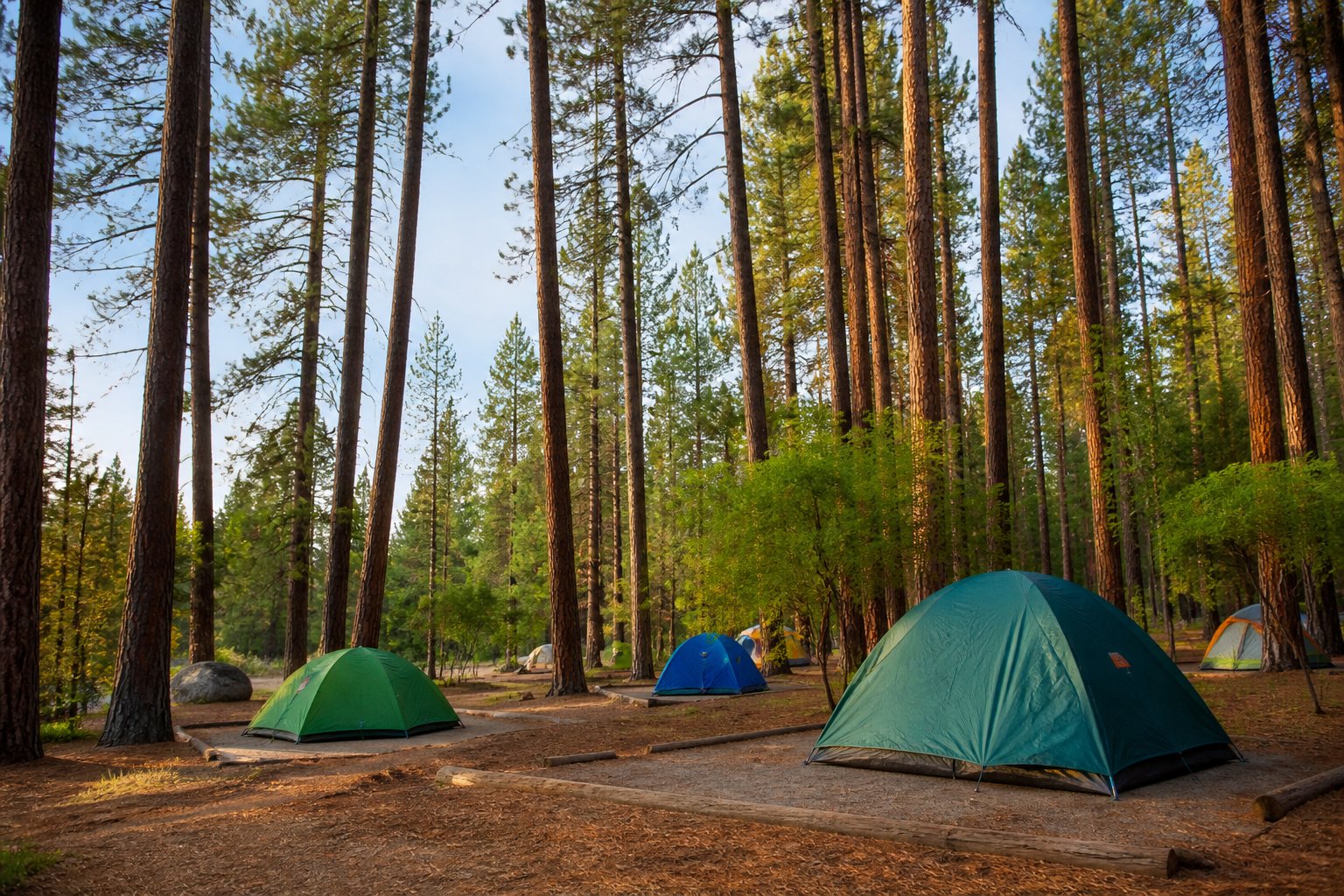
Site geometry. RV sites are paved rectangles with hookup pedestals — poor tent surfaces with inadequate stake placement. Tent-only sites are typically smaller, grass or mulch surfaced, and spaced with vegetation buffers.
Capacity economics. A tent-only loop generates less revenue per acre than an RV loop with full hookups. Parks that maintain tent-only areas do so because the visitor experience mandate outweighs revenue optimization — or because terrain physically prevents RV access.
Types of Tent-Only Camping
Tent-only loops within mixed campgrounds. A section restricted to tents — no RVs, sometimes no car camping. You get tent-only rules but share the campground entrance with adjacent RV loops.
Fully tent-only campgrounds. The entire facility prohibits RVs and often limits vehicle access to a parking area. Smaller, quieter, and more consistently enforced.
Walk-in tent sites. You park in a designated lot and carry gear 50-300 feet. Eliminates vehicle noise within the camping area entirely.
Tent-Only Campgrounds Worth Booking
National Park Tent-Only Sites
Yosemite — Camp 4 — Walk-in sites in Yosemite Valley, climber culture, lottery reservation for peak season. No RVs, no generators.
Grand Teton — Jenny Lake Campground — Tent-only, strict noise policy, lodgepole forest near Jenny Lake. Fills quickly for summer dates.
Acadia — Seawall Campground walk-in loop — Tent-only walk-in sites on the rocky coast. Short carry from parking to ocean-view sites.
Great Smoky Mountains — Smokemont tent sites — Tent-only sites on the North Carolina side. Quieter than Elkmont, with stream access.
State Park Tent-Only Areas
Huntington Beach State Park, South Carolina — Tent-only walk-in sites behind the dunes. No RV access to the tent loop.
Pfeiffer Big Sur State Park, California — Tent-only in redwood forest. No RVs permitted.
Devil's Lake State Park, Wisconsin — Tent-only walk-in sites (Ice Age Campground) with quartzite bluff views.
Booking Strategy for Tent-Only Sites
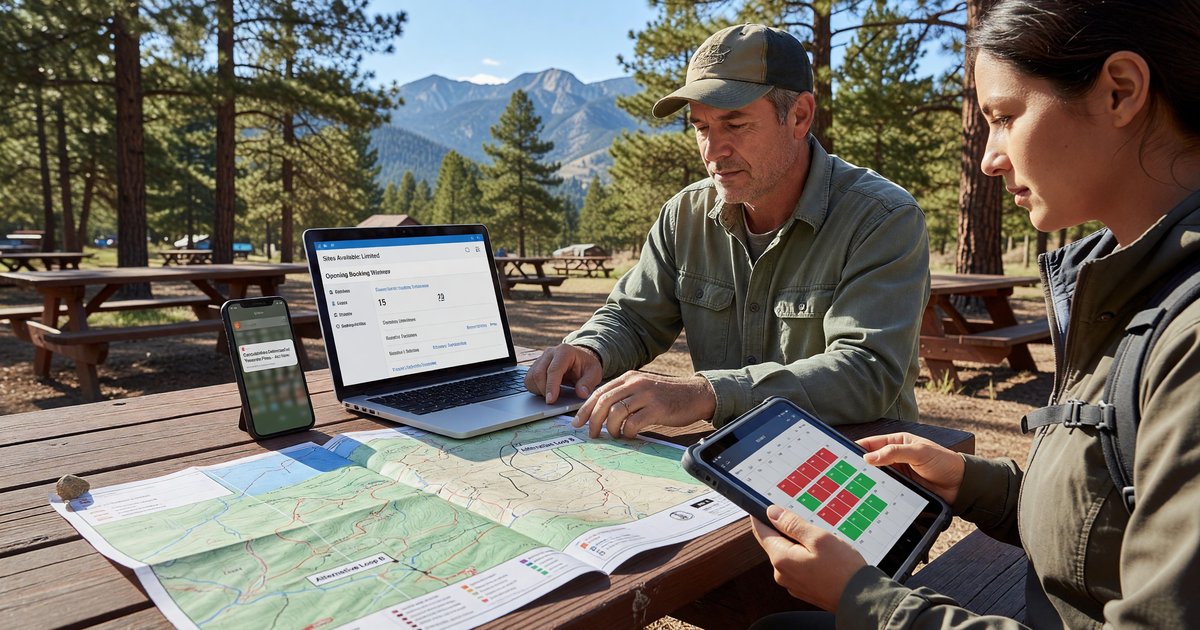
Search filters matter. On recreation.gov, filter by "tent" site type. Look for "walk-in," "tent only," and "no generators" in listing text.
Cancellation alerts are high-value. Tent-only sites at popular parks cancel frequently — monitor recreation.gov in the 2-3 week window before your trip.
Weekday advantage is larger. Tent-only campgrounds that fill on weekends often have midweek availability. Tuesday-Wednesday arrivals are consistently easier to book.
Shoulder season is underrated. Tent-only campgrounds without RV hookups often stay open longer than mixed-use areas. May and September at mountain park tent-only sites deliver availability summer cannot.
For broader reservation strategy, see our campground booking tips.
Frequently Asked Questions
What is the difference between tent-only and regular campground sites? Tent-only sites prohibit RVs and enforce no-generator policies. Sites are grass or mulch surfaced with vegetation buffers. RV sites are paved with hookups.
Are tent-only campgrounds quieter than regular campgrounds? Consistently yes. Walk-in tent-only campgrounds are the quietest developed option.
Can I bring a car to a tent-only campground? Most drive-up tent sites allow one vehicle. Walk-in sites require parking in a lot and carrying gear 50-300 feet.
Do tent-only campgrounds have bathrooms and water? Most have flush or vault toilets and potable water. Walk-in sites may have pit toilets near the parking area.
How do I find tent-only campgrounds near me? Filter recreation.gov by tent site type. Check state park websites for separate tent camping areas.