Camp stoves are sold as lifestyle photos. The useful decision is narrower: how you travel, how cold it gets, how many people you cook for, and whether you can resupply fuel mid-trip. Canister, liquid-fuel, and two-burner propane each win a different trip type — and each fails badly outside that job.
Canister stoves (isobutane blend)
Best for: backpacking and fast car-camping meals for one or two people in mild-to-cool weather.
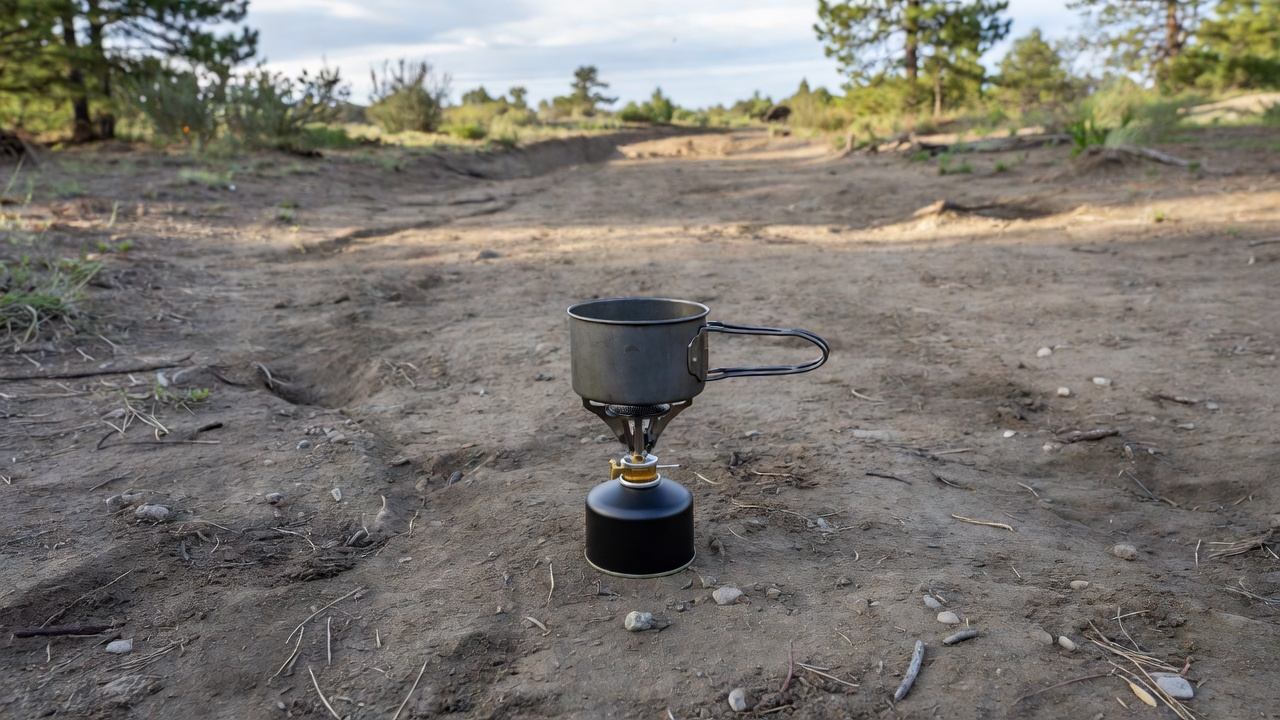
Screw-on canister stoves are light, fast to boil, and nearly foolproof. Fuel is a pressurized isobutane/propane blend in disposable canisters. Performance drops as the canister cools and as residual fuel pressure falls — classic late-trip simmer problems in cold shoulder-season mornings.
Strengths: packed weight, instant light, fine simmer on good models, wide retail availability in North America. Limits: cold-weather pressure loss, canister waste, and awkward airline or remote resupply. Inverted remote-canister systems help in cold, at the cost of bulk and price.
Buy a canister stove if your trips are three-season backpacking or compact car camping and you accept buying canisters near trailheads.
Liquid-fuel stoves (white gas / multi-fuel)
Best for: cold weather, long remote trips, and places where pressurized canisters are scarce.
White-gas and multi-fuel stoves burn from a refillable bottle. You pump pressure yourself. They are heavier, louder, and need priming and maintenance. In return they keep working when canisters sulk in the cold, and a metal bottle is easier to refill from bulk fuel in many regions.
Trade-offs are real: more parts, more soot if mismanaged, and a learning curve. For Alaska shoulder seasons, high-elevation fall trips, or international travel where screw-canisters are unreliable, liquid-fuel still earns its weight.
Two-burner propane (bulk cylinders)
Best for: car camping, family meals, and basecamps where weight does not matter.
A classic two-burner with a 16–20 lb propane tank (or disposable 1 lb cylinders for lighter kits) cooks like a kitchen range. You can boil water and sauté at the same time. The package is heavy, bulky, and unnecessary on trail.
Use two-burners when the vehicle carries the kitchen. Skip them for anything you will hike more than a few hundred yards.
Disposable 1 lb cylinders are convenient and expensive per BTU; bulk tanks win for frequent car campers who already own a regulator hose.
Match stove to trip, not to marketing
| Trip type | Default pick | Avoid |
|---|---|---|
| Weekend backpacking, spring–fall | Canister | Two-burner |
| Winter / deep cold / remote resupply | Liquid-fuel | Relying on half-empty canisters |
| Family car camping | Two-burner propane | Ultralight canister as primary kitchen |
| Mixed car + short hike meals | Canister or compact dual-fuel | Bringing both "just in case" without a plan |
Other buying checks that matter more than brand lore
- Simmer control if you cook real food, not only boil water.
- Pot stability — tippy setups dump dinner in gravel.
- Wind — a stove that shines in a showroom can crawl outdoors without a windscreen compatible with the design (never enclose a canister stove in a way that overheats the fuel).
- Fuel logistics — where will you buy the next canister or white gas on this route?
- Packed size relative to your cook kit, not to Instagram flat-lays.
Practical takeaway
Choose the fuel system for the coldest and most remote night on the itinerary, not the easiest afternoon at the trailhead. Canister for most three-season backpacking, liquid-fuel when cold or resupply is the constraint, two-burner when the car is the mule. Everything else is accessory.