Fall camping steals daylight. Dinner, dishes, and the walk to the bathhouse happen in the dark more often than they did in July. The right light is less about max lumens on a hang tag and more about runtime, beam shape, and whether you need hands-free light or shared camp light.
Headlamp vs lantern: different jobs
A headlamp puts light where you look. It wins for cooking at a stove, staking guys lines, reading in a tent, and walking uneven ground with both hands free.
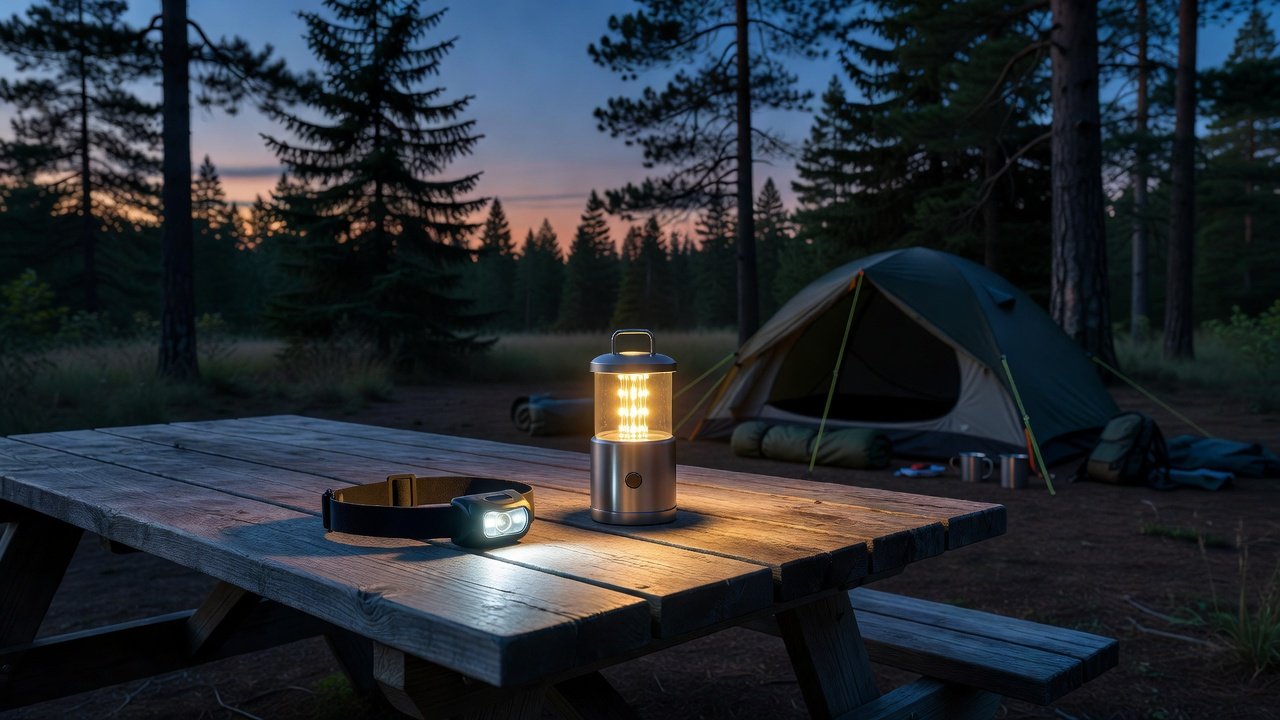
A lantern lights a volume — picnic table, cooking area, or tent vestibule — so multiple people can work without everyone wearing a beam. Lanterns are poor for hiking and excellent for basecamp evenings.
Most fall car-camping kits want both: a headlamp per person and one lantern for the table. Backpacking kits often drop the lantern and keep a capable headlamp plus a tiny backup light.
Specs that actually matter
Lumens measure output, not usefulness. A flood headlamp at 200–400 lumens covers most camp chores. Trail finding at night may want a spot mode and higher output in short bursts. A lantern that claims 1000 lumens with a 45-minute runtime is a marketing stunt for dinner lighting.
Runtime at usable brightness beats peak lumen claims. Check the manufacturer's runtime curve if published — many lights step down hard after a few minutes.
Battery type: USB-rechargeable cells are convenient at car-accessible sites. Removable AAs or 14500/18650 cells are easier to swap on multi-night trips without a power bank ritual. Carry a spare set either way for fall, when nights are long and temperatures cut battery performance.
Red / dim modes preserve night vision and reduce glare in shared tents. Worth having on at least one light in the group.
Weather resistance: fall means dew and rain. Look for a real IP rating and sealed battery doors, not only "weather resistant" copy.
Headlamp buying notes
- Spot + flood is more useful than flood-only for mixed camp and short night walks.
- A lockout or long-press on/off prevents pocket drain.
- Strap comfort matters when you wear it for an hour of cooking.
- Avoid relying on a phone flashlight as primary light — cold drains phones, and you need the phone for maps and emergencies.
Lantern buying notes
- For picnic-table dinners, 200–400 lumens of warm flood is usually enough.
- Hanging hooks and stable bases both matter; tippy lanterns start arguments.
- Fuel lanterns (propane/liquid) still work in deep cold when lithium cells sulk, at the cost of fuel bulk and open flame near tents — respect clearances.
- LED lanterns with power-bank passthrough earn a place on car-camping trips that already carry USB battery packs.
Fall-specific checklist
- One headlamp per person with fresh or charged cells.
- One shared lantern for the table if car camping.
- A tiny backup light in each sleep kit.
- Spare batteries stored warm (inside the cabin or sleeping bag footbox), not in a cold tote.
- Red mode for late tent entries so you do not blast everyone awake.
Practical takeaway
Buy runtime and beam shape for the chores you actually do after dark, not the brightest number on the box. Fall's longer nights punish single-light kits and cold-soaked batteries. A boring headlamp with spare cells plus a modest lantern will outlast a showpiece lumen race every time.