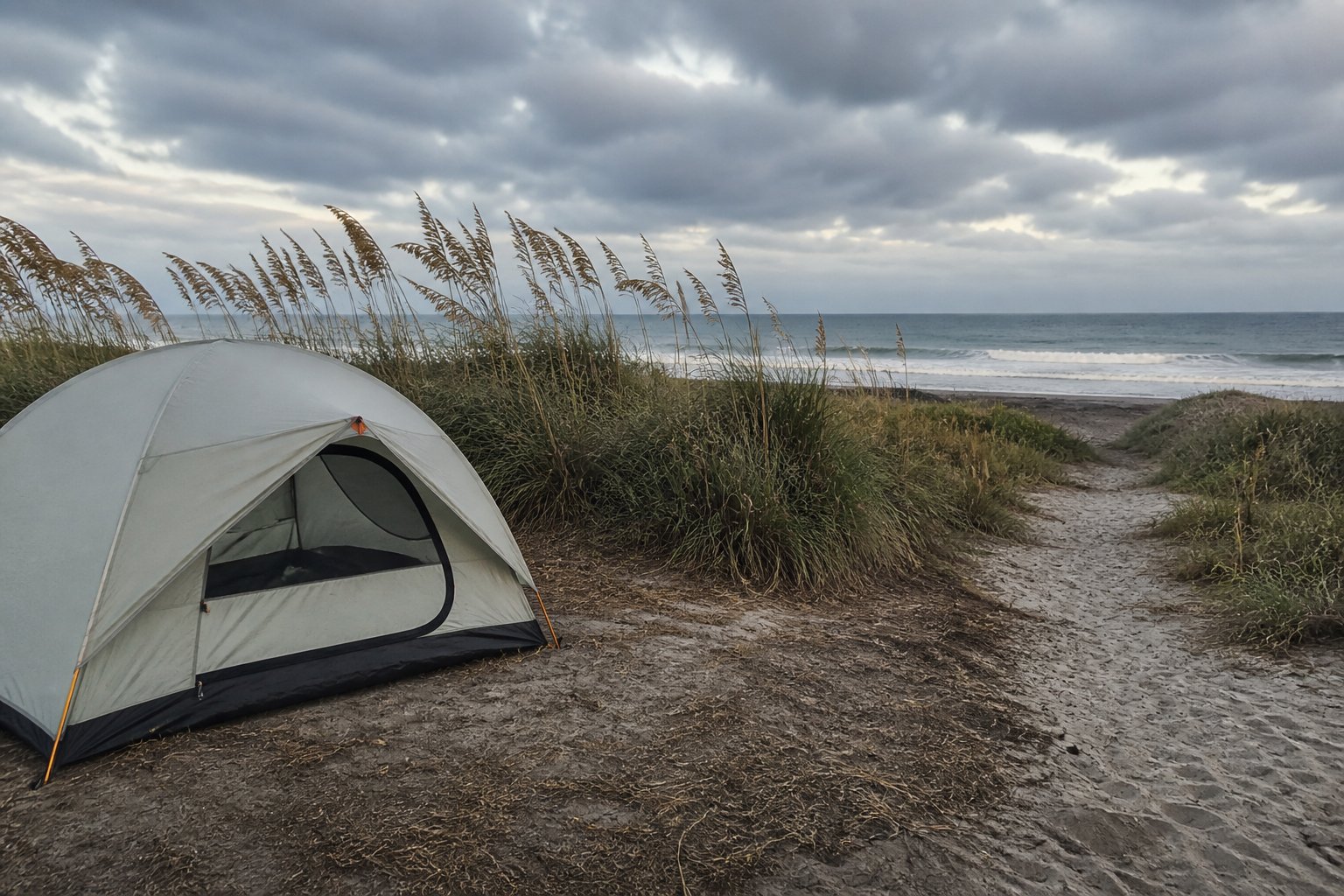
Coastal camping sells itself with photographs — tents silhouetted against sunset, waves within walking distance, the promise of falling asleep to ocean sound. The reality includes sand in every zipper, salt corrosion on anything metal, wind that reshapes your campsite overnight, and tide cycles that turn a beach walk into a navigational problem. Coastal campgrounds that deliver on the promise are the ones where site selection, seasonal timing, and gear management are treated as skills, not afterthoughts.
This guide covers beach and coastal campgrounds across the East Coast, Gulf, and Pacific — with honest assessments of what each delivers and the practical knowledge that separates a great coastal trip from a gritty, corroded, sleepless one.
What Coastal Camping Actually Requires
Three environmental forces define every coastal campsite:
Salt air is corrosive. It deposits on tent poles, stove components, zippers, electronics, and vehicle undercarriages. Coastal camping accelerates gear wear measurably — a tent used exclusively at beach campgrounds may show corrosion on aluminum poles within two seasons that would take five seasons at inland sites. Rinse gear with fresh water before packing out. Wipe down metal components.
Wind is constant and directional. Ocean-facing campsites receive sustained onshore breeze during daylight hours in most coastal climates. This is not a bug — it moderates temperature and keeps insects down — but it means tent orientation, guylines, and stake selection matter daily. East Coast campgrounds face prevailing southwesterlies in summer. Pacific campgrounds face northwesterlies. Gulf campgrounds get variable but persistent breeze from the south and southeast.
Sand is a particulate environment. It infiltrates tent floors through mesh, accumulates in footwear, and abrades fabric over time. Treat sand management as a campsite discipline: brush-off stations, shoe removal rules, and a dedicated "sand zone" outside the tent door.
Tides affect access, not just beach walks. Campgrounds on barrier islands, estuaries, and low coastal plains can have access roads or beach paths affected by extreme high tides and storm surge. Check tide charts for your dates, especially on spring tide cycles (new and full moon).
East Coast Beach Campgrounds
The Atlantic coast from Maine to Florida has developed beach campgrounds in state parks, national seashores, and private operations — with dramatically different quality tiers.
Assateague Island National Seashore, Maryland/Virginia — Two campgrounds (Oceanside and Bayside) on a barrier island famous for wild horses. Oceanside sites sit behind primary dunes with boardwalk beach access; Bayside sites face the calmer bay with better mosquito management and less wind. Oceanside is the beach camping experience; Bayside is the practical choice for families. Reservations through recreation.gov; summer dates fill months ahead.
Cape Hatteras National Seashore, North Carolina — Four campgrounds (Oregon Inlet, Cape Point, Frisco, Ocracoke) spread across the Outer Banks. Cape Point is the most exposed and windiest — popular with surfers and anglers, punishing for tent campers in stiff onshore wind. Frisco and Ocracoke are more sheltered and better for standard tent camping. Ocracoke requires a ferry, which filters casual visitors and keeps the campground quieter.
Huntington Beach State Park, South Carolina — A consistently underrated option. The campground sits in maritime forest behind dunes, with a causeway to a long, undeveloped beach. Sites are large by East Coast standards, the park has excellent birding (more than 300 species recorded), and reservation competition is moderate compared to Outer Banks destinations.
Bahia Honda State Park, Florida Keys — One of the few campgrounds in the Keys with genuine beach access. Sites are tight and the salt air is aggressive — expect corrosion on everything. The beach and snorkeling are exceptional. Book through reserveamerica.com; winter and shoulder season (November through April) are the practical windows before heat and hurricane season.
Acadia National Park — Seawall Campground, Maine — Not a warm beach campground, but the best ocean-front camping in the Northeast. Walk-in tent sites on the rocky coast of Mount Desert Island's quiet side. Cold water, dramatic tide pools, and the kind of coastal camping that involves fleece rather than swimwear. See our national park campground guide for Acadia booking strategy.
Gulf Coast Beach Campgrounds
Gulf Coast camping is warmer, calmer, and sandier than Atlantic options — with hurricane season as the defining logistical constraint.
Gulf Islands National Seashore, Florida/Mississippi — Fort Pickens Campground near Pensacola delivers Gulf-front camping with historic fort structures and long, white-sand beaches. Davis Bayou Campground on the Mississippi side is more sheltered, with bayou paddling and less direct Gulf exposure. Fort Pickens is the beach experience; Davis Bayou is the fallback when Fort Pickens is booked or when wind is forecast above 20 mph.
Padre Island National Seashore, Texas — Malaquite Campground is the primary developed option — paved loops, cold showers ( welcome in Texas summer), and direct access to 70 miles of undeveloped Gulf beach. The campground is exposed and windy but the beach is genuinely wild — no development visible in either direction. Summer temperatures exceed 95°F regularly; October through April is the comfortable camping window.
Pacific Coast Beach Campgrounds
Pacific coastal camping is colder, foggier, and geologically dramatic — rocky headlands, tide pools, and kelp forests rather than white sand and warm water.
Point Reyes National Seashore, California — Wildcat Campground and Sky Campground require hike-in or bike-in access (no vehicle camping at the beach). Wildcat is a 5.5-mile hike to a bluff above the ocean — the payoff is isolation and a beach that feels private. Not a casual trip, but the best coastal camping experience in Northern California for campers willing to carry gear.
Big Sur — Kirk Creek Campground and Plaskett Creek Campground — Bureau of Land Management and US Forest Service campgrounds on Highway 1 with Pacific views from the sites themselves. Kirk Creek sites sit on a bluff directly above the ocean — among the most scenic drive-up coastal campsites in the US. Reservations are competitive; first-come-first-served periods require midweek arrival before 10 am.
Olympic National Park — Kalaloch Campground, Washington — A large campground (170 sites) on a bluff above a wide, driftwood-strewn Pacific beach. Rain is frequent year-round — this is a rainforest coast — but the beach walks, tide pools, and sea stack views are unmatched in the Pacific Northwest. The campground has more amenities than most in this guide (flush toilets, RV hookups at some sites) and serves as a practical base for the western Olympic Peninsula.
Cape Lookout State Park, Oregon — A sandy spit campground on a bay-ocean interface with a classic Oregon coast lighthouse. Sheltered from the worst Pacific wind by the cape itself, with beach access on both bay and ocean sides. One of the most family-friendly Pacific coast campgrounds because the bay side provides calmer water for wading.
Site Quality: What to Look For
Coastal campground site quality varies more within a single campground than most inland parks. Evaluate these factors:
Dune or bluff buffer. Sites with a vegetated dune or bluff between the tent pad and the open beach receive less direct salt spray and wind. First-row oceanfront sites look ideal in photos and are often the worst for sleep quality.
Pad substrate. Sand pads drain well but stakes pull out. Grass or packed-earth pads hold stakes better. Wooden platforms (common in Florida Keys and some Gulf campgrounds) require specialized tie-downs.
Wind orientation. Position tent doors away from prevailing onshore wind. Use natural windbreaks (dune vegetation, restroom buildings, vehicle) rather than fighting exposure directly.
Tide and storm surge awareness. On low-lying barrier island campgrounds, know the elevation of your site relative to mean high tide. Assateague Oceanside and Padre Island sites are on high ground by design, but storm surge during tropical systems is a real evacuation scenario — monitor National Hurricane Center forecasts during hurricane season (June through November).
For family-specific coastal trip planning, see our camping safety guide for families.
Frequently Asked Questions
What is the best beach campground on the East Coast? Assateague Island Oceanside and Cape Hatteras Frisco are the strongest options — wild barrier island camping at Assateague, more sheltered sites with comparable beach access at Frisco.
How do you protect camping gear from salt air? Rinse metal components with fresh water before packing out. Wipe zippers and stove parts dry. Store electronics in sealed bags. Apply silicone lubricant to zippers after coastal trips.
When is hurricane season for Gulf and East Coast camping? June 1 through November 30, peaking August through October. Avoid barrier island bookings during peak season without flexible cancellation and a backup plan.
Can you camp directly on the beach in the US? Generally no at developed campgrounds. Padre Island National Seashore allows permitted beach camping on the Gulf side. Most East Coast and Gulf beaches prohibit overnight sand camping.
Is Pacific coast camping colder than East Coast beach camping? Significantly. Pacific water stays 50-65°F year-round. East Coast and Gulf water reaches 75-85°F in summer. Pacific coast camping requires layers and rain gear regardless of season.