General winter camping gear and layering strategy live in our winter camping guide. This article is narrower: where to tent camp in the snowbelt — the lake-effect zones, northern tier state parks, and high-country campgrounds that stay open when the plows are running — and how to pick a site that does not become a liability at 2 AM when the wind shifts and the fire will not start.
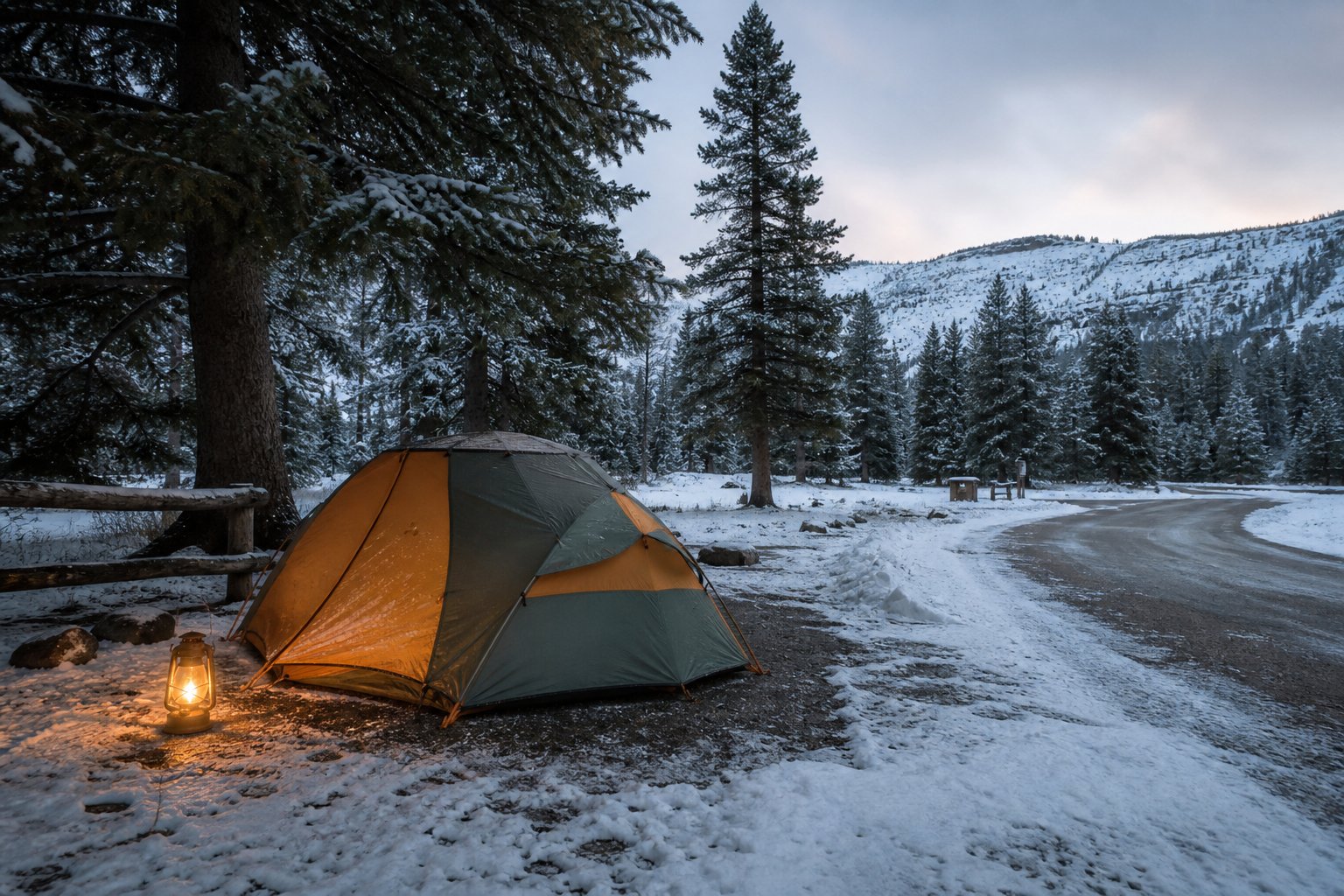
Snowbelt tent camping is a different product from winter RV camping or backcountry snowshoe camping. You drive to a numbered site, carry gear 30 feet from the parking pad, and depend on campground infrastructure (plowed roads, vault or flush toilets, sometimes heated comfort stations) while sleeping on snow. The directors who run these trips well choose campgrounds with reliable winter maintenance and sites with natural wind protection.
What Defines the Snowbelt
The snowbelt is not simply "the North." It is the band where lake-effect and prevailing-winter-storm patterns deliver consistent, deep snow: the lee shores of Lakes Erie and Ontario in New York and Pennsylvania, Michigan's Upper Peninsula, northern Wisconsin and Minnesota, the Maine coast inland to the Allagash, and the Cascade and Sierra east slopes above 3,000 feet.
Campgrounds in these zones fall into three categories: year-round with plowed access, winter-open but walk-in only after snow, and unplowed but accessible by snowshoe or ski from a winter gate. Know which category you are booking.
New York and Pennsylvania: Lake-Effect Belt
Letchworth State Park — Castile, New York: The "Grand Canyon of the East" stays open year-round. Campground 1 (Upper Falls) has winter sites with electric hookups and access to heated restrooms in the main comfort station. Tent sites on the loop farthest from the gorge rim have less wind exposure. Reserve through ReserveAmerica; winter sites are rarely sold out except holiday weekends.
Watkins Glen State Park — Watkins Glen, New York: Finger Lakes winter camping with gorge trail access (sections close for ice). The Main Campground keeps a winter loop open with electric sites. Tent campers should request sites on the interior loop — gorge-adjacent sites receive icy wind off the shale walls.
Promised Land State Park — Greentown, Pennsylvania: Pocono plateau snowbelt camping. Lower Lake Campground closes in winter; Pickerel Point Campground (rustic cabins and tent sites) and the Deerfield Loop remain accessible. Snow depths of 2-3 feet are normal by January. The park plows main roads but not individual site spurs — plan to carry gear from the plowed loop road.
Site selection: In lake-effect zones, pick sites on the lee side of tree lines — consult the campground map and choose sites with evergreen buffers to the west and northwest. Avoid open meadow sites that look scenic in summer and become wind tunnels in January.
Michigan and Wisconsin: Upper Midwest Snowbelt
Tahquamenon Falls State Park — Paradise, Michigan: Upper Peninsula winter camping at the Hemlock Falls campground (near the lower falls). Electric sites, heated bathrooms in the main building, and direct access to snowshoe trails. The park receives 200+ inches of snow some winters. Sites 1-8 in the Hemlock loop are closest to the comfort station — worth the booking effort when carrying gear in deep snow.
Porcupine Mountains Wilderness State Park — Ontonagon, Michigan: Union Bay Campground at the park's east end has winter sites with yurts and standard campsites. The yurts book months ahead; tent sites are more available. Access requires driving through lake-effect snow bands — check M-107 road conditions before departure.
Copper Falls State Park — Mellen, Wisconsin: Northern Wisconsin with less competition than Michigan's UP parks. Winter camping on a plowed loop with electric sites and a heated shower building (check current hours). The Bad River gorge trails are accessible on snowshoes from camp.
Site selection: Upper Midwest snowbelt sites need tree canopy for wind protection and sun exposure for morning warmth. South-facing sites with dense conifer backdrop are the director's standard request. Avoid lakeshore sites — open ice generates wind and cold air drainage.
Maine and New Hampshire: Northern New England
Baxter State Park — Millinocket, Maine: The premier snowbelt destination for serious winter campers. Roaring Brook Campground and Katahdin Stream Campground have winter sites; access requires a high-clearance vehicle on unplowed park roads or a ski/snowshoe approach from Togue Pond Gate. Permits are required and limited. This is not casual winter camping — it is a managed wilderness experience with strict regulations.
Camden Hills State Park — Camden, Maine: Coastal snowbelt with milder temperatures than inland Baxter but real winter conditions December through March. Mount Meg Campground has off-season sites with electric hookups. The summit trail provides views of Penobscot Bay in snow — spectacular on clear days.
White Mountain National Forest — New Hampshire: Multiple campgrounds close for winter, but Hancock Campground and Cold River Campground (when open) serve as snowbelt bases for cross-country skiing. Dolly Copp Campground in Gorham has a large winter loop used by ski groups. Sites near the bathhouse are the premium winter product.
Site selection: New England snowbelt camping requires attention to access road plowing. Confirm with the park whether your specific loop is plowed to the site or plowed only to a central parking area. At Baxter, assume you are hauling gear on sleds or in backpacks.
Western Snowbelt: Cascades and Sierra East Slope
Deschutes National Forest — Hoodoo Ski Area Campgrounds, Oregon: Several Forest Service campgrounds near Santiam Pass remain accessible for winter recreation. Not plowed to individual sites — park at the loop entrance and snowshoe to your site. Vault toilets may be buried; plan accordingly.
Lake Tahoe Basin — California/Nevada: Zephyr Cove Resort and Nevada Beach Campground (when winter-open) offer snowbelt camping at 6,200 feet. Deep snow, plowed access, and proximity to cross-country ski trails. Reserve early for New Year's and Presidents' Day weekends.
Four-Season Site Selection Checklist
Wind protection: Evergreen tree lines, rock outcrops, or campground bathhouse buildings on the prevailing wind side. In the snowbelt, prevailing winter wind is typically from the west or northwest.
Sun exposure: South-facing sites receive low-angle winter sun that melts tent-site snow and raises ambient temperature 5-10 degrees. Worth requesting even if the view is less dramatic.
Distance to infrastructure: In deep snow, every 50 feet of carry from the parking area to the site matters. Request the closest tent site to the plowed road or comfort station.
Deadfall risk: Avoid sites under large dead branches or diseased trees. Snow load brings down limbs. Canopy is good; overhead hazard trees are not.
Fire ring access: Many snowbelt campgrounds allow fires in designated rings. Verify current fire restrictions — snow does not automatically mean fire season is over in dry western snowbelts. In the East, fire is usually permitted and essential for morale.
Access and Reservation Tips
Winter sites at competitive parks (Tahquamenon, Letchworth, Baxter) should be booked 2-3 months ahead for holiday weekends. Midweek January and February dates often have walk-in availability.
Call the park 48 hours before arrival to confirm plowing status, bathhouse hours, and road conditions. Websites update slowly in winter; the ranger on duty has current information.
Carry traction for your vehicle (tires or chains per state law) and for your feet (microspikes minimum, snowshoes if site access is unplowed). A sled for gear transport is standard snowbelt equipment.
For gear specifics — sleeping systems, pad R-values, layering — see the winter camping guide.
Frequently Asked Questions
Can you tent camp in the snowbelt in winter? Yes, at campgrounds with plowed access and open winter facilities. Letchworth, Tahquamenon Falls, Promised Land, and Copper Falls are strong examples. Baxter State Park offers a more rugged experience with limited permits.
What is the best snowbelt campground for beginner winter tent camping? Letchworth State Park in New York and Copper Falls State Park in Wisconsin offer plowed access, electric sites, heated restrooms, and moderate snow depths suitable for first winter trips.
Do I need a four-season tent for snowbelt camping? A four-season tent handles snow loading and wind better than three-season. For sheltered campground sites in moderate conditions, a sturdy three-season tent works. In lake-effect zones with heavy snow and wind, four-season is safer.
Are campground roads plowed in winter? Main access roads are plowed at most winter-open state parks. Individual site spurs may not be — you may need to park on the loop road and carry or sled gear to your site. Call the park before arrival.
How do I pick a warm winter campsite? Choose sites with evergreen windbreaks to the west and northwest, south-facing sun exposure, and proximity to the plowed road and bathhouse. Avoid open meadows and lakeshore sites.
Further Reading
- New York State Parks — Winter Camping — NYS winter camping programs and campground status.
- Michigan DNR — State Park Camping — UP and snowbelt campground winter availability.