Group camping is where individual reservation skills break down. You are coordinating inventory across a loop, managing a shared budget, assigning sites by mobility and tent size, and hoping the pavilion reservation actually includes electricity. I have seen more reunion trips derailed by a misunderstood "group site" listing than by weather.
Group Site Types
Campgrounds use "group" to mean three different things:
Dedicated group campsite — One large site, one reservation, capacity limit (often 25–50 people). One person pays; one check-in. Common at NPS and state park group areas.
Multi-site loop rental — Adjacent standard sites blocked for your group. Each site has its own fire ring; you share the loop. Standard at KOA group programs and county parks.
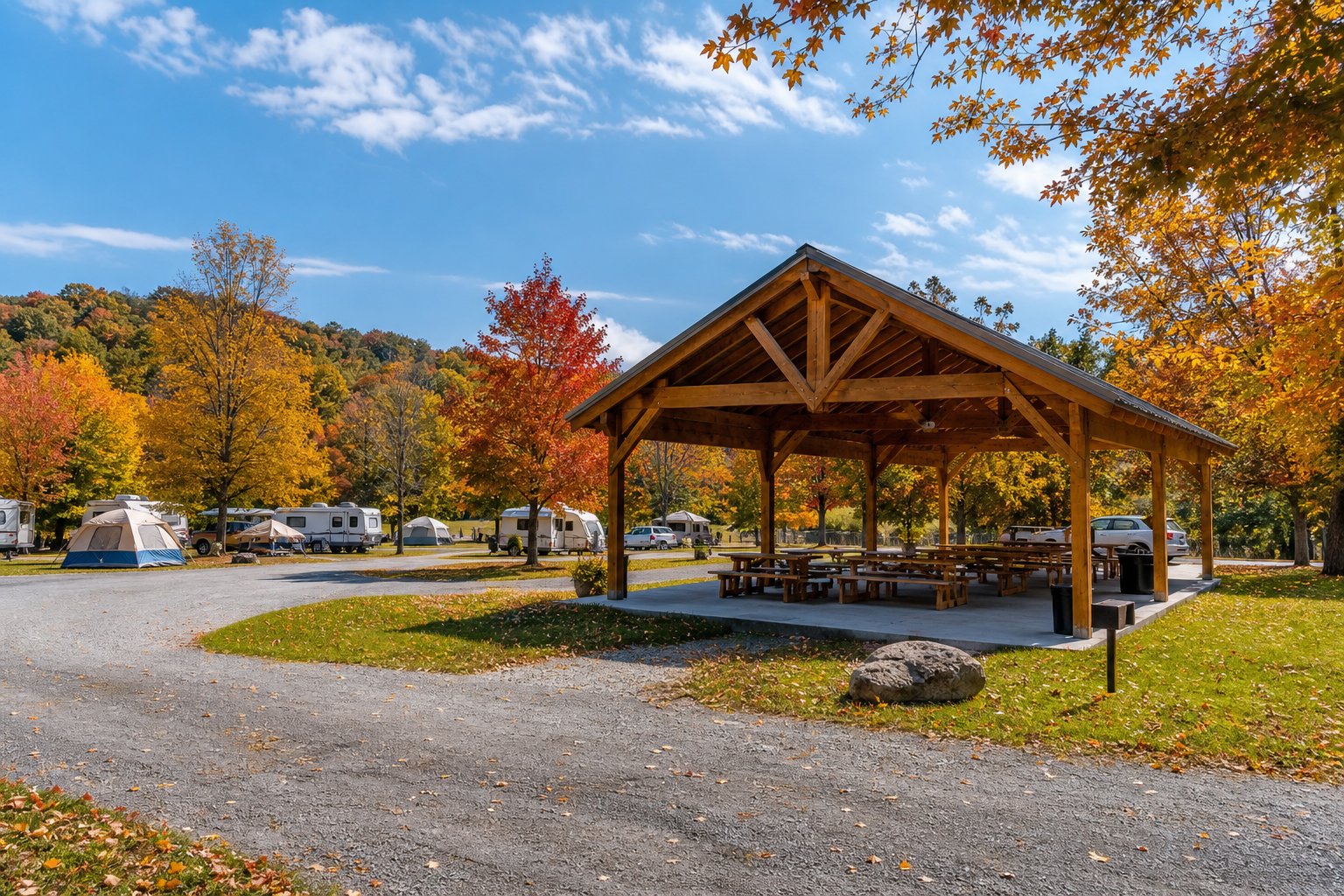
Pavilion plus individual sites — Covered shelter for meals, camping in nearby standard sites booked separately. The most common reunion format at state parks.
Read the site map and capacity fine print before sending the deposit link to 30 relatives.
State Park Group Areas
State parks are the reunion backbone in most regions. Verify:
- Capacity limits — Enforced by rangers, not suggestions
- Vehicle limits — Separate from people limits
- Pavilion electricity — "Shelter with electric" vs "open picnic shelter" are different products
- Restroom proximity — Group sites far from flush toilets lose popularity with older members
Most state park group sites book on the same platform as individual sites in a separate "group" category. Wisconsin lake country, Texas Hill Country, and Oregon coast require 9–12 months ahead for summer weekends.
Regional standouts: Pennsylvania (Raccoon Creek, Laurel Hill), Minnesota (Itasca, Split Rock dining halls), California beach and redwood parks via reservecalifornia.com, Ohio (Hocking Hills, Mohican).
Call the park directly for questions the website cannot answer — volleyball nets, bus access, pavilion kitchen rules.
KOA Group Loops
Participating KOAs offer blocked site loops (6–15 sites), rally fields for multiple RVs/tents, and group pavilions with optional kitchen access.
Advantages: predictable amenities, staff experienced with group check-in, pull-through sites for larger RVs. Trade-offs: 10–20% premium over individual rack rates, less natural setting than state parks.
Book through KOA's group reservation line for blocks over five sites — the group desk can hold adjacent sites while you collect family deposits.
National Park and Forest Group Sites
NPS group sites on recreation.gov typically hold 15–30 people, many tent-only. Competition is intense for Yosemite, Grand Canyon, Smokies, and Zion. Six-month window at 10 AM Eastern.
National forest group sites are less competitive — large fire rings, picnic tables, vault toilets. Verify whether RV access requires parking at a trailhead and walking gear in.
Pavilion and Financial Logistics
Before arrival, confirm: pavilion amp service (15-amp supports one slow cooker, not four), table count, trash capacity, quiet hours (typically 10 PM–6 AM).
Deposit structure: Organizer holds reservation, collects per-family deposits within 48 hours. Build a 10% contingency for no-shows who do not cancel in time.
Site assignment: Closest to restrooms for mobility-limited members. Larger RV pads for big rigs. Young families separated from late-night fire ring crews. Central hub site for shared supplies and kid watch rotation.
Reunion timeline: Survey dates 12 months out. Book group site 9–12 months out with deposit deadline. Collect deposits and assign sites at 6 months. Confirm headcount one month out. Check in early on day one and post site assignments on a central board.
Frequently Asked Questions
How many people can camp at a group campsite? Typically 15–50 people depending on the campground. Limits often include day visitors.
How far in advance should you book group campground sites? Nine to twelve months for popular summer state park group sites; six months for recreation.gov national park group sites.
Do KOA campgrounds offer group camping? Yes — group loops, rally fields, and pavilions. Contact the group desk for five or more sites.
What should a group camping organizer plan for pavilion meals? Confirm electricity, seating, trash storage, and quiet hours. Assign a trash captain and shared gear coordinator.