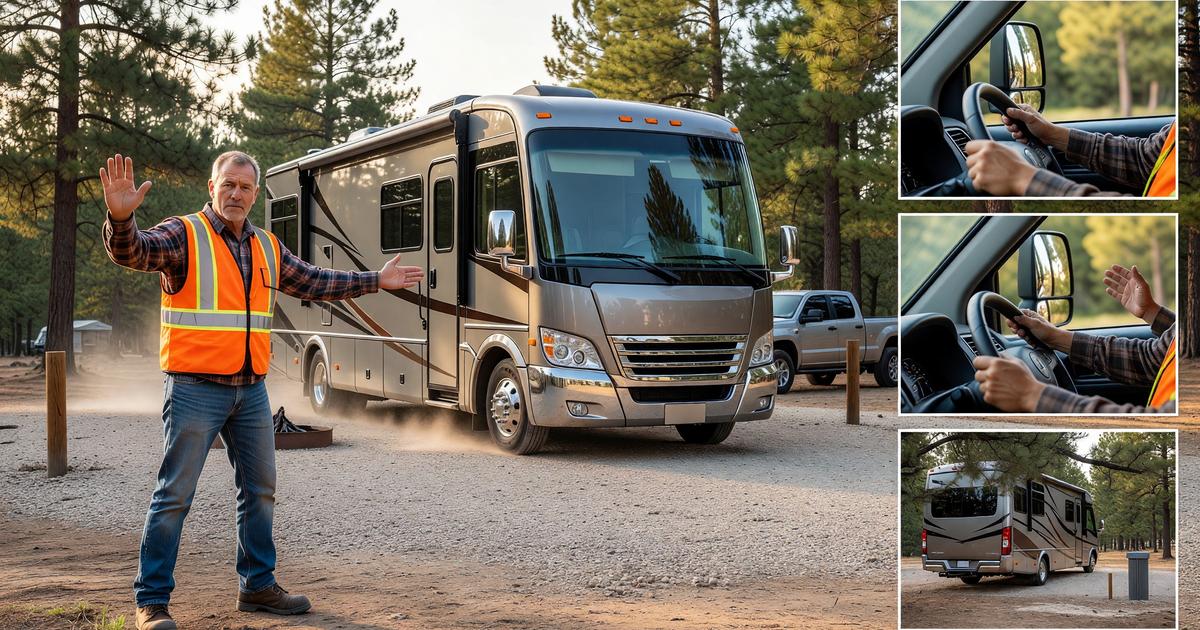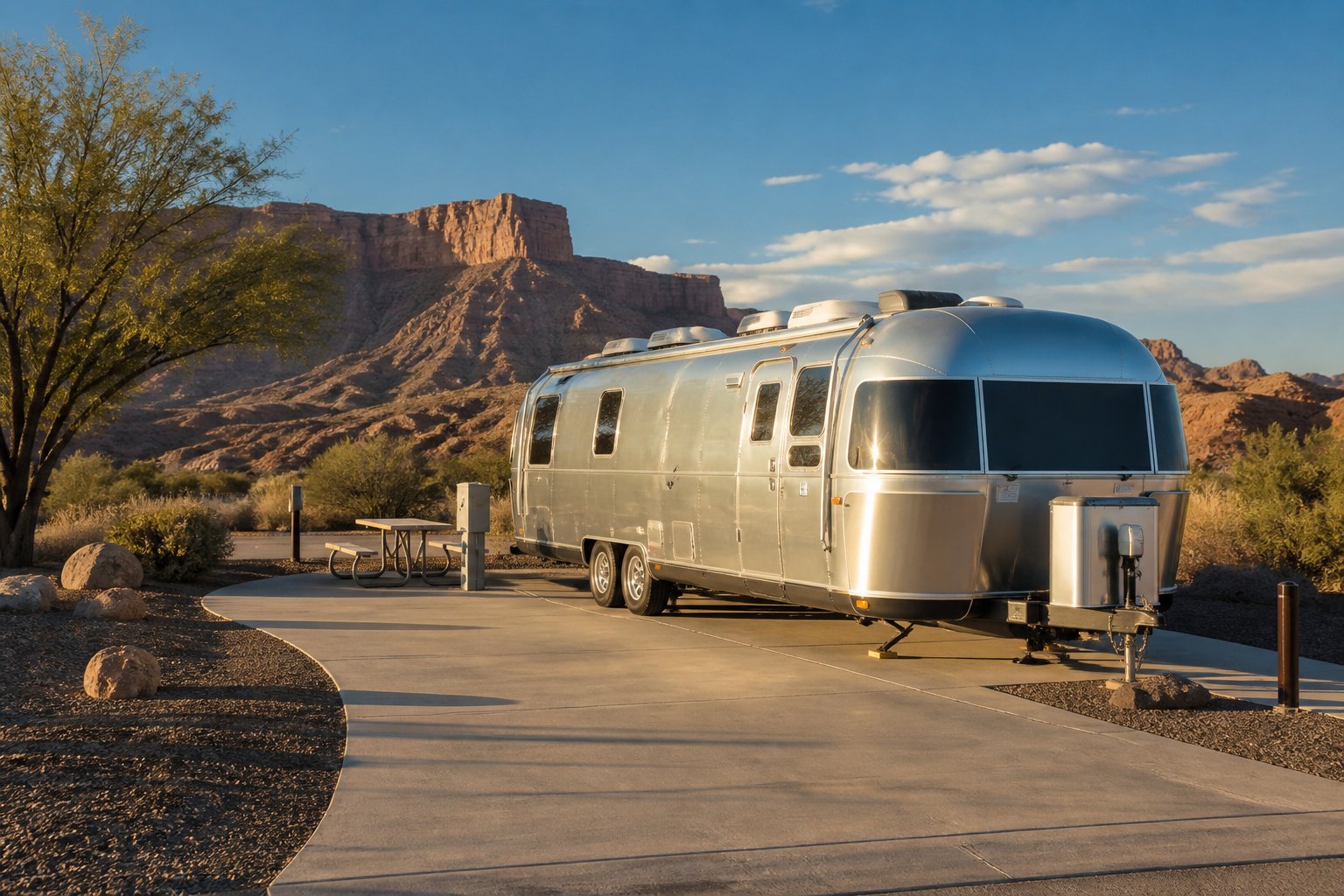
Airstream owners camp differently. The rig is narrower than most contemporary travel trailers but the turning radius, clearance height, and the owner's relationship with the exterior finish create a distinct set of campground requirements. Directors booking for Airstream clients — whether a vintage Safari or a current Interstate — prioritize pull-through geometry, level pads, community culture, and the small amenities (polishing stations, covered maintenance bays, organized rallies) that signal a park understands the product.
This is not snobbery. It is logistics. A 31-foot Classic on a back-in site with a 7-degree slope and a pine branch at windshield height is an expensive problem waiting to happen.
What Makes a Campground Airstream-Friendly
Pull-through availability with correct length rating. Airstreams range from 16-foot Bambis to 33-foot Classics. The listed site length must include hitch-to-bumper, not just box length. A 30-foot rated site fits a 28-foot trailer tightly; a 31-foot Classic needs a 35-foot rated pull-through with room for tow vehicle separation.
Level pads, not "mostly level." Airstream refrigerators are finicky on unlevel ground. Directors request site photos or arrive early to swap sites. Look for concrete or compacted gravel pads rather than soft grass that sinks under jack pads.
Tree clearance on entry paths. Polished aluminum does not forgive branches. Parks with trimmed entry lanes and site-specific clearance notes earn repeat bookings. Ask the office about overhead clearance on the route to your assigned site before committing.
Community and culture. Airstream owners gravitate toward parks that host rallies, have clubhouses with organized events, and tolerate (or encourage) the evening ritual of sitting outside admiring each other's rigs. The Wally Byam Caravan Club International (WBCCI) rally calendar is a reliable indicator of Airstream-friendly parks.
Premium Private Parks Worth the Nightly Rate
The Ridge Outdoor Resort — Sevierville, Tennessee: Purpose-built for premium towables with wide pull-throughs, paved pads, and mountain views near Great Smoky Mountains access. Sites accommodate 40-foot combinations. Not a polishing-station park, but the pad quality and entry geometry are among the best in the Southeast.
Sunny Side RV Resort — Sarasota, Florida: Long-term and seasonal Airstream concentration on the Gulf Coast. Pull-throughs with full hookup, manicured landscaping, and a community that expects polished rigs. Book winter season six months ahead; snowbird Airstreamers return annually.
Wine Country RV Park — Sonoma, California: Narrow rigs like Airstreams fit the smaller premium sites better than 42-foot fifth wheels. Paved, level, and close to Sonoma and Napa tasting rooms. Back-in sites dominate; request end-cap sites for easier departure angles.
Hee Hee Illahee RV Resort — Salt Spring Island, British Columbia: Ferry-access premium park where Canadian and Pacific Northwest Airstream culture concentrates. Pull-throughs are limited — book the A loop early. The park's maintenance standards match the expectations of owners who treat their trailers as heirlooms.
Public Campgrounds That Work for Airstreams
Florida State Parks — Fort De Soto, Anastasia, Grayton Beach: Florida's state park RV loops were designed before the 40-foot fifth wheel era. Airstreams fit naturally. Pull-throughs at Fort De Soto's Bay Pier Campground (sites 1-30) offer Gulf access with adequate length. Reserve through ReserveAmerica at the Florida six-month window.
Texas State Parks — Garner, Lost Maples, Palo Duro: Texas builds long pull-throughs at flagship parks. Garner State Park along the Frio River has 30-amp and 50-amp pull-throughs that handle Airstream-plus-truck combinations. Site maps show riverfront versus interior — riverfront sites have tighter tree canopy; inspect on arrival.
Utah State Parks — Dead Horse Point, Goblin Valley: Desert parks with open sky and minimal tree clearance issues. Dead Horse Point sites sit on canyon rim with level rock pads. Wind is the hazard, not branches. Stake awnings carefully.
Polishing Stations and Maintenance Amenities
Dedicated Airstream service centers double as campground-adjacent resources. Directors routing clients through these regions build polish time into the itinerary.
Jackson Center, Ohio — Airstream Factory and Service Center: The mothership. Factory tours, service appointments, and the Airstream Club rally grounds nearby. Not a campground itself, but the surrounding private parks (including Indian Lake State Park and local RV parks in Shelby County) serve factory visitors. Schedule service mid-week and camp locally.
Mica Creek RV Park — Coeur d'Alene, Idaho: Pacific Northwest Airstream service hub proximity. Several Inland Northwest parks advertise potable wash stations and level concrete pads specifically in Airstream club newsletters.
Las Cruces and Alamogordo, New Mexico: Southwest rally circuit stops with parks that provide hose-down areas and covered picnic structures for maintenance work out of direct sun. Aluminum skin reaches skin-burn temperature in summer; covered work areas matter.
When a campground advertises a "wash station," verify whether it allows exterior polishing (some prohibit wax and polish chemicals in their drain systems) or only rinse water. A rinse station still beats dragging a hose across a gravel pad.
Site Selection for Airstreams
Pull-through versus back-in: Pull-throughs reduce stress on tight campground loops and protect the aluminum from brush on departure. Accept back-ins only at end-of-row sites with a straight approach.
Orientation: Position the door side away from the neighbor's exhaust and generator. Airstream windows are large; privacy orientation improves the interior experience more than at opaque-sided rigs.
Shade versus sun: Partial shade preserves interior temperature and reduces UV oxidation on clearcoat. Full shade under tall pines risks sap and needle debris on the roof — a cleaning chore. The ideal is afternoon shade from the west.
Distance from bathhouse: Airstream bathrooms are functional but small. Sites midway between bathhouse and playground balance convenience with noise.
Booking Strategy
Airstream-friendly parks with rally dates block inventory months ahead. Check WBCCI and local club rally calendars before booking — a park may show availability until a 200-rig rally consumes every pull-through.
Request site assignments in advance. "Any available pull-through" at check-in often means the worst site in the loop. Call the office 48 hours before arrival and ask for a specific site number based on the online map.
For vintage Airstreams without modern tank monitors and power inverters, prioritize 30-amp sites with confirmed pedestal testing. Older electrical systems are sensitive to voltage drop on shared loops.
Frequently Asked Questions
Do Airstreams need pull-through campsites? Pull-throughs are strongly preferred but not mandatory. Airstreams have a tighter turning radius than many fifth wheels, making back-ins manageable at end-of-row sites. Pull-throughs reduce brush contact risk with polished aluminum during entry and departure.
What site length do I need for an Airstream? Book a site rated at least 4-5 feet longer than your total rig length including tow vehicle. A 28-foot Airstream with tow vehicle needs a 33-35 foot rated site minimum.
Are there campgrounds with Airstream polishing stations? Dedicated polishing stations are rare at public campgrounds. Premium private parks and rally-host parks near Airstream service centers offer rinse stations or covered maintenance areas. Jackson Center, Ohio is the primary service hub.
Can a vintage Airstream use 50-amp service? Most vintage Airstreams are wired for 30-amp service. A 50-amp-to-30-amp adapter works safely on a 50-amp pedestal. Do not run dual-air-conditioner loads on a vintage system without professional upgrade.
Where do Airstream rallies happen? WBCCI and regional Airstream clubs publish rally calendars annually. Popular locations include Jackson Center Ohio, state fairgrounds, and premium RV resorts in Florida, Arizona, and the Pacific Northwest.
Further Reading
- Airstream — Find a Dealer and Service Center — Factory and authorized service center locator.
- WBCCI — Wally Byam Caravan Club International — Rally calendar and Airstream community events.