Most overlanding content focuses on the track. Expedition support crews and rally organizers spend equal attention on base camp. A reliable campground with the right hookups, dump access, and staging space separates a trip that starts rested from one that starts with a dead battery and a full gray tank from last night's parking lot.
Base Camp vs Trail Camp
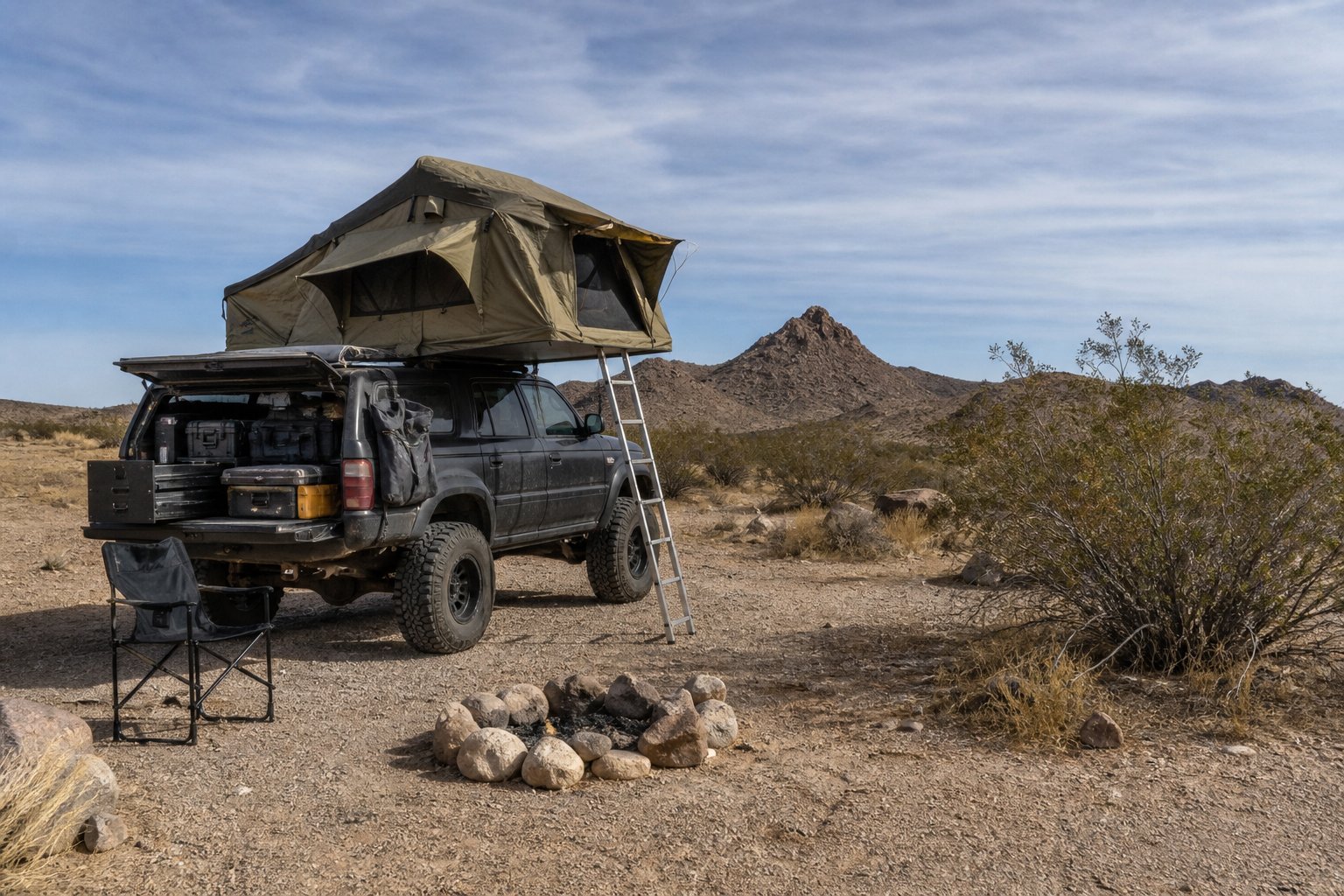
Trail camp is where you sleep on route — dispersed BLM, forest pullouts, backcountry sites.
Base camp is where you stage, resupply, wrench, and recover. You want predictable check-in, dump and water, level pads for maintenance, comms connectivity, and secure gear storage while day-tripping trails.
The mistake I see repeatedly: treating a base camp like a trail camp to save $20. You end up without water to rinse filters, nowhere to dump after a shakedown week, and no flat surface to torque suspension.
Full-Hookup vs Dry Camp
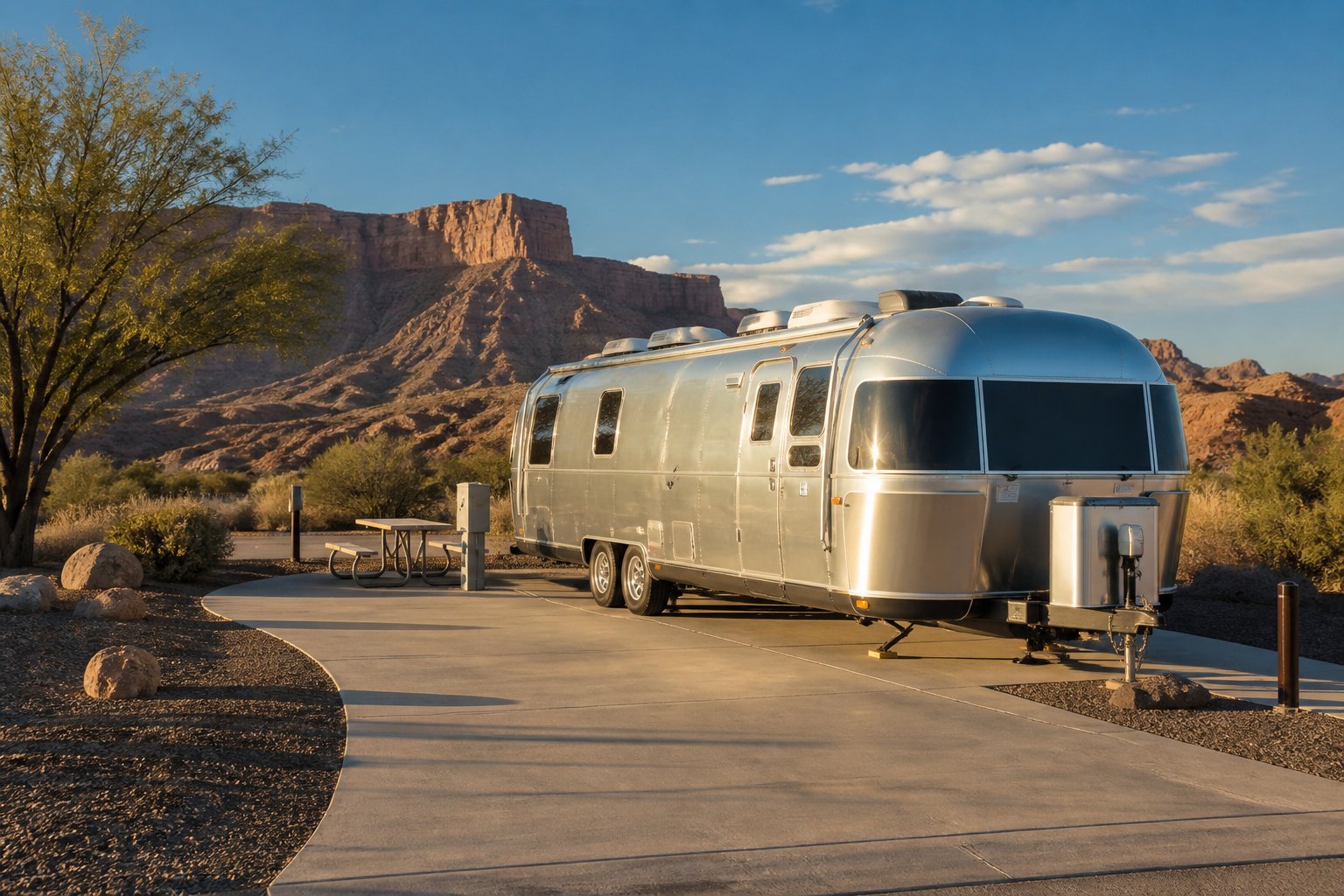
If staging exceeds two nights or involves mechanical work, pay for full hookups. Shore power charges house batteries, unlimited water supports provisioning, and sewer hookups eliminate dump runs. Dry camp works for single-night departures with self-sufficient rigs.
| Factor | Full-hookup | Dry camp |
|---|---|---|
| Cost | $45–$80/night | $15–$30 or free |
| Best for | Multi-night prep, recovery | Overnight before wheels-up |
| Staging duration | Prep weeks | 1–2 nights |
Moab: The Classic Staging Problem
Moab trails — Hell's Revenge, Poison Spider, Kane Creek — radiate from town, and campground inventory tightens every spring and fall.
- Full-hookup private parks (Moab Valley RV, OK RV Park) — Multi-day prep: skid plate checks, comms testing, group coordination. Book 3–6 months ahead for Easter Jeep Safari.
- BLM along Highway 128 — Dry camp with river access. One night before Kane Creek or Gemini Bridges for dialed rigs.
- Sand Flats Recreation Area — Near Hell's Revenge. Camp here, leave the tow vehicle, run trails, return to a known site.
Rubicon Trail Approach
Staging happens on the western approach — Georgetown, Loon Lake, Ice House Road.
Loon Lake Recreation Area — Traditional pre-Rubicon dry camp at ~6,500 feet. Last-chance gear audit, radio check, overnight acclimatization. No hookups.
Georgetown private RV parks on Highway 50 offer hookups for crews that leave trailers parked while running the Rubicon without tow. Verify current El Dorado National Forest gate and permit requirements before departure day.
Baja Prep: Southern California Staging
Baja trips start in the US staging corridor — San Diego, Calexico, or Yuma depending on your crossing.
- San Diego full-hookup parks (Santee Lakes, Mission Bay RV) — Multi-night prep with laundry, provisioning, shore power for fridge loading.
- Calexico / El Centro corridor — Lower cost staging before Mexicali crossing. Last US dump and water fill before crossing.
Baja-specific tasks at base camp: verify Mexican auto insurance and tourist permits, photograph vehicle condition, load 2–3 days extra water, stage peso cash.
Three-Phase Staging Itinerary
- Pre-departure (2–5 nights, full hookup) — Mechanical check, load supplies, comms test, group briefing
- Departure eve (1 night, dry camp OK) — Trailhead proximity, early wheels-up
- Recovery (1–3 nights, full hookup) — Dump, deep clean, parts assessment
The middle phase is where dry camp saves money. The bookends are where full hookups save trips.
Frequently Asked Questions
What is an overlanding base camp? An established campground for staging, resupply, and maintenance before and after trail segments.
Where do overlanders stage before Moab trails? Moab private RV parks for multi-day prep; Highway 128 BLM or Sand Flats for dry camp near trailheads.
Where do Rubicon Trail groups camp before the run? Loon Lake for dry camp staging; Georgetown private parks for hookups and trailer storage.
Where should you stage before a Baja overland trip? San Diego for full prep; Calexico/El Centro for lower-cost staging before Mexicali crossing.