In March 2026, Campspot surveyed 1,453 campers across North America about their summer travel plans. The headline they put on the findings: "Dust-Off Summer." The idea is that this year's campers are not planning elaborate new experiences — they are dusting off what they already own, driving somewhere within a reasonable radius, and going camping with deliberately less complexity than they've attempted in recent years.
The data behind that framing is worth reading carefully, because it describes something real about how camping motivations are shifting — and it has practical consequences for how you plan a trip and which campgrounds actually serve you well.
What the Survey Found
The Campspot data covers three interrelated shifts: travel radius, gear philosophy, and timing.
On travel radius: 79% of respondents said they are actively reducing air travel, and 60% said they are avoiding flights entirely this summer. 58% said they are more likely to take a drive-to getaway this year than last year, and 86% said they are actively interested in exploring more of the US through road trips and nearby destinations. These numbers are not marginal — they reflect a clear gravitational pull toward shorter-haul, car-based camping.
On gear and spending: The survey found that 95% of respondents said they are trying to get more value from what they already own rather than buying something new for travel. 60% said owning fewer "nice things" but taking more trips feels more appealing this year than it did last year. That is a distinct orientation shift for a category where new-gear acquisition has historically been part of the appeal.
On timing: 77% said they plan to extend their camping into September, and 58% said they plan to stretch travel into October. This aligns with a broader shift toward shoulder season that multiple camping surveys have noted over the past two years — campers are deliberately avoiding the peak-summer crowd and pricing crunch.
What "Dust-Off Summer" Actually Looks Like in Practice
Campspot organized the trend into three patterns they observed in how the data clusters.
The Radius Run — tightening the geographic footprint to vacation closer to home. For campers, this means state parks, national forests, and local campgrounds within a 2-4 hour drive rather than multistate road trips or national park circuit tours. The practical upshot: campgrounds that a few years ago seemed like "local" options rather than destinations are getting more serious consideration.
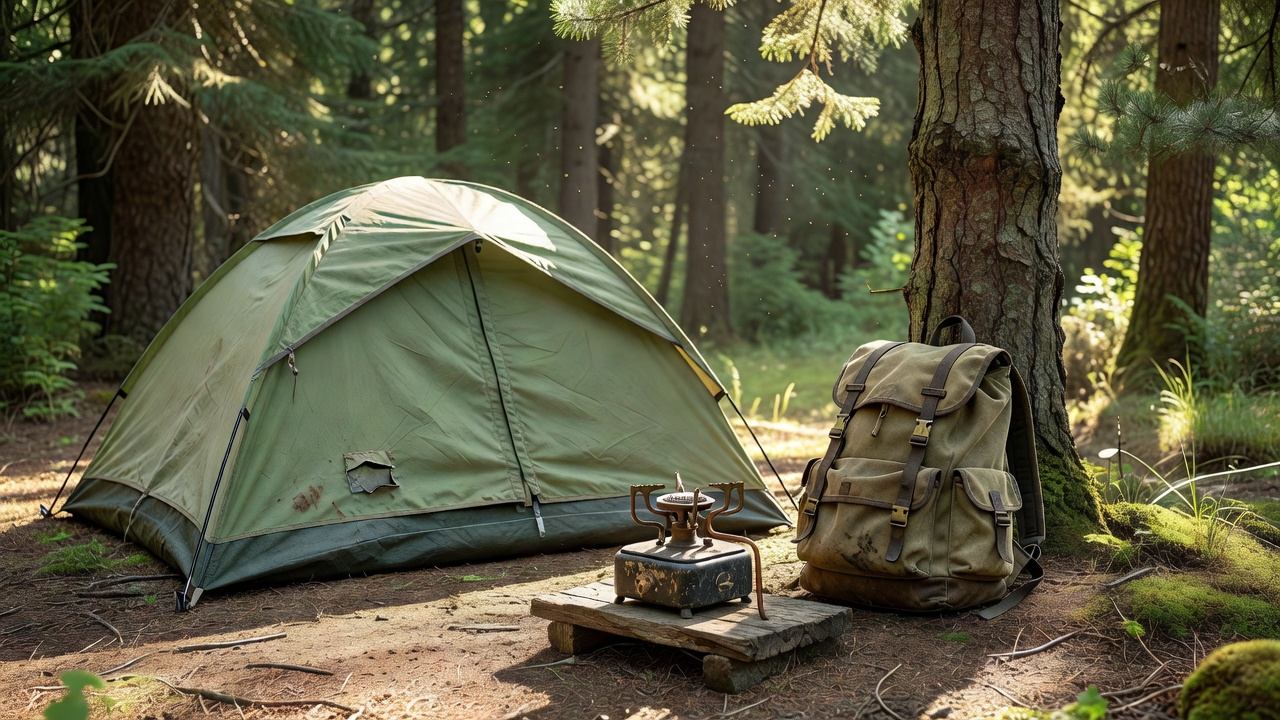
The Gear-Led Getaway — the setup determines the destination, not the other way around. If you own a tent and a two-burner camp stove, your trip is a tent-camping trip. If you own a pop-up camper, your trip is a pop-up trip. You are not shopping for a new experience that requires new equipment; you are using the equipment to define the trip. This inverts the logic of aspirational camping content, which typically presents the destination or the gear as the draw.
The Shoulder Stretch — deliberately pushing camping dates outside of summer peak. This connects to the 77% of respondents planning September camping and the 58% targeting October. Shoulder season availability is better, pricing is lower, and the crowds that have made peak summer at popular campgrounds a logistics problem are reduced. More on this below.
Why This Is Happening
The "back to basics" framing is partly economic and partly a reaction to the complexity accumulation of recent years.
Campground nightly rates at private campgrounds have risen consistently year-over-year. KOA's annual North American Camping and Outdoor Hospitality Report has tracked this; private RV parks and campgrounds now routinely charge rates that would have seemed anomalous five years ago. For campers accustomed to comparing camping costs favorably to hotels, the math is tighter than it once was. Driving less far and using what you own sidesteps some of that cost pressure.
The other component is complexity fatigue. The pandemic era drove a significant surge in new camping participation, and many people who came to camping in 2020 and 2021 did so with ambitious trips — national parks, long routes, substantial new-gear purchases. By 2026, some of that cohort is recalibrating toward simpler versions of camping they can execute more easily and more often.
What This Means for Campground Selection
The Dust-Off Summer orientation is actually useful guidance for choosing campgrounds and planning logistics.
Local and regional campgrounds over marquee destinations. A campground 90 minutes away that you can drive to after work on Friday — arriving before dark, set up without stress — delivers a different experience than a major national park destination that requires two days of driving. For many camping groups with limited trip time, the nearby option is the better choice. The site quality question (hookups, shade, noise level, reservation difficulty) matters more than the destination prestige.
BLM dispersed camping and national forest campgrounds. For campers who are already geared up and want free or very-low-cost options, dispersed camping on BLM land and developed national forest campgrounds represent the highest-value end of the "use what you have" philosophy. Our dispersed camping and BLM guide covers how to find and plan these trips.
Mid-week over weekend bookings. The reservation pressure at popular campgrounds is concentrated in Friday and Saturday nights during peak summer. If you have any flexibility on dates, mid-week camping — Tuesday through Thursday — dramatically improves your site selection and reduces your costs at campgrounds with variable pricing.
Campground amenities that actually matter for simple trips. The Dust-Off Summer camper is not looking for resort amenities — they're looking for a clean bathhouse, a working fire ring, enough space between sites to feel like camping rather than a parking lot, and cell service if they need it. Checking recent reviews on sites like Recreation.gov or the park's own website for current amenity conditions beats relying on amenity lists that haven't been updated in years.
Shoulder Season Is the Logical Extension of This Trend
The "shoulder stretch" finding in the Campspot data doesn't come out of nowhere. Multiple surveys across the past couple of years have pointed toward spring and fall as the growing edge of camping participation. The Dyrt's 2026 Camping Report found that 42% of campers cited lower costs, 41% said better weather, and 66% cited fewer crowds as reasons they prefer shoulder season.
That combination — lower cost, better availability, smaller crowds, and for many regions genuinely better weather — is a strong case that doesn't require elaboration. September camping in the Rocky Mountain parks, along the Oregon Coast, and in the Appalachians is frequently the best camping of the year by experience metrics. The reservation pressure is lower, the light is different, and most summer-season campers have returned to school and work schedules.
The Dust-Off Summer trend is, at bottom, a practical reorientation: use what you have, go where you can actually get there easily, and stop trying to optimize camping into something that requires months of advance planning for a single big trip. That's a reasonable way to camp more, even if it's not the content that generates the most aspirational engagement online.
For campground booking strategies and making the most of late-season availability, see our campground booking tips guide and the state park reservation overview in our state park camping reservations guide.