Desert campground site selection is an engineering problem disguised as a reservation. The pad, the orientation, the wind fetch, and the shade structure (if any) determine whether a guest spends the evening watching a world-class sunset or fighting a sandstorm through a flapping tent door. Heat safety is its own discipline — see our desert heat safety guide for that. This guide is about picking the right site once you have chosen your dates and park.
Directors who run desert programs think in terms of microclimate. Two sites 200 feet apart at the same campground can differ by 15 degrees of afternoon shade and 20 mph of wind exposure.
Joshua Tree National Park
Joshua Tree has nine developed campgrounds, each with a distinct character. Peak season is October through April; summer closures affect some loops.
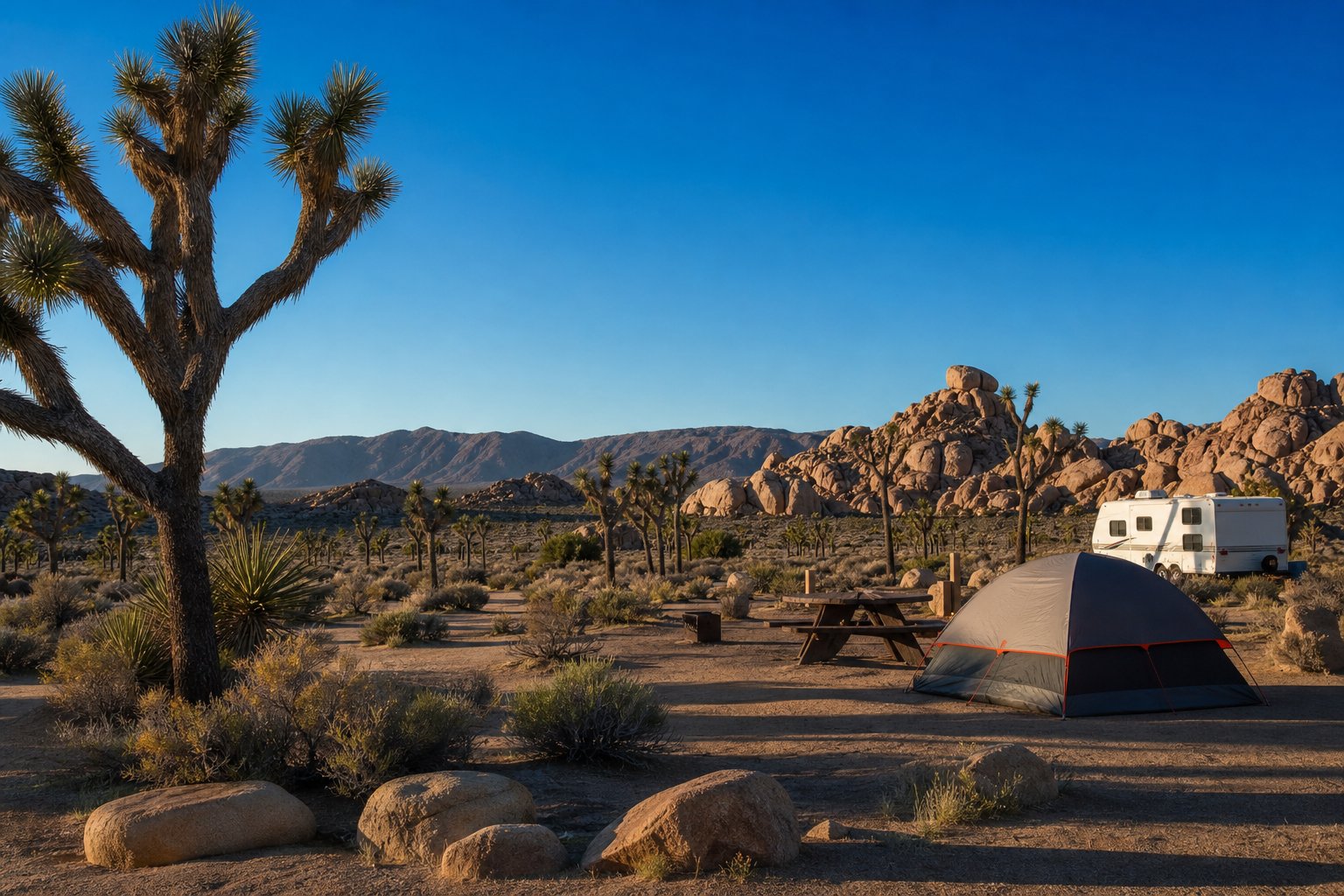
Jumbo Rocks Campground: The flagship — 124 sites among massive boulder formations. Sites 12, 14, 18, and 22 through 28 sit in amphitheater-style rock enclosures that block wind and create privacy. Interior loop sites (40-80) are more exposed and louder on weekends. Reservations required in peak season through recreation.gov; first-come in summer off-season.
Hidden Valley Campground: Small (44 sites), popular with climbers. Sites on the north side of the loop have afternoon shade from the rock walls; south-facing sites bake until sunset. Book early — this campground sells out faster than Jumbo Rocks for spring wildflower weeks.
Indian Cove Campground: Separate park entrance north of the main park. No Joshua trees in the campground itself, but excellent rock formations and wind protection. Sites 30-50 sit against the cliff base with the best shade. This campground is often available when Jumbo Rocks is sold out.
Site orientation tip: In Joshua Tree, face your tent door east or southeast. Prevailing winds come from the west; a door facing west catches dust. Position cooking areas downwind of sleeping areas regardless of door direction.
Big Bend National Park, Texas
Big Bend is three parks in one — river, mountain, and desert — and campground selection should match which zone you are exploring.
Chisos Basin Campground: Mountain desert at 5,400 feet. Cooler than the river corridor but exposed to canyon winds. Sites 14, 16, and 18 have stone windbreaks built into the pad. The basin traps cold air on winter nights — pack accordingly even when the Rio Grande valley is mild.
Rio Grande Village Campground: River-level desert with mesquite shade and access to the hot springs trail. Sites along the river loop (1-20) have the most shade but attract the most traffic. Interior sites (40-60) are open and hot but quieter. This is the campground for river-focused itineraries.
Cottonwood Campground: Remote, on the park's west side near Santa Elena Canyon. No generators allowed. Small (24 sites), quiet, and dark-sky certified. Wind can be fierce in spring — the canyon mouth funnels gusts. Sites 8-12 sit behind a mesquite berm with the best protection.
Site orientation tip: At Big Bend river campgrounds, park your vehicle or trailer on the west side of the pad to block afternoon sun from the living area. Mesquite shade is dappled but meaningful after 3 PM.
Organ Pipe Cactus National Monument, Arizona
Organ Pipe is one of the least crowded Sonoran Desert parks and one of the most site-selection-sensitive. The monument sits on the Mexican border; check current access advisories before planning.
Twin Peaks Campground: The only developed campground — 208 sites with no hookups. The A loop (sites A1-A20) has palo verde and ocotillo shade with views of the Ajo Mountains. B loop sites are more open and better for solar charging but hotter. C loop is the quietest, farthest from the entrance station.
Wind: Spring winds at Organ Pipe can sustain 30 mph for days. Sites with vegetation on the northwest side provide the best windbreak. Avoid hilltop-exposed sites at the loop ends.
Site orientation tip: Sonoran Desert campsites reward a north-south pad orientation — the low-angle winter sun stays south, and a tarp or awning on the south side creates usable shade without blocking northern breezes.
Death Valley and Mojave Adjacent Campgrounds
Furnace Creek Campground (Death Valley): Below sea level, open desert. Shade structures are the only meaningful site differentiator — sites with ramadas (check the map legend) are worth a premium booking effort. Sites FC 38-50 cluster near the Furnace Creek visitor area with the best infrastructure.
Hole-in-the-Wall Campground (Mojave National Preserve): Elevated Mojave Desert with cooler nights than Death Valley. Campsites sit among volcanic rock formations with natural wind protection. First-come, first-served — arrive by noon on weekends.
Site Selection Framework for Desert Campgrounds
Shade structures beat tree shade. Desert campgrounds rarely have mature tree canopy. Metal or wood ramadas, rock overhangs, and cliff-base sites are the shade sources that matter. On recreation.gov maps, ramada icons are the first thing to scan.
Wind fetch analysis. Look at the campground satellite view. Sites on open flats with 200+ yards of fetch to the west will receive full afternoon wind. Sites nested in rock formations, behind mesquite bosques, or at the base of cliffs stay usable when exposed sites are uninhabitable.
Surface type. Packed dirt pads dust in wind. Gravel pads drain better but are harder on tent floors. Concrete pads (rare in desert parks) are the premium product — request them at state park RV loops in Anza-Borrego and Red Rock Canyon.
Neighbor density. Desert sound carries. In campgrounds without vegetation buffers, book end-cap sites or sites separated by rock formations. At Jumbo Rocks, the boulder clusters between sites provide natural sound barriers that open-loop sites lack.
Seasonal loop closures. Many desert campgrounds close loops for summer (June-September) or for wildlife protection. Verify which loops are open for your dates — a reservation for a closed loop gets reassigned to whatever is available, usually the worst exposed sites.
Reservation Strategy
Joshua Tree peak-season sites release six months ahead and fill within hours for holiday weekends. Book a Sunday-through-Thursday block if weekends are gone — desert camping midweek is the director's standard play.
Big Bend campgrounds are more available than Joshua Tree but Chisos Basin fills for Thanksgiving and spring break. Rio Grande Village has more capacity.
Organ Pipe rarely sells out except during wildflower super-bloom years (roughly once per decade). Standard booking windows apply.
For BLM dispersed camping adjacent to these parks — a legitimate overflow strategy — see our dispersed camping guide.
Frequently Asked Questions
What is the best campground in Joshua Tree National Park? Jumbo Rocks is the most scenic with sites among boulder formations. Hidden Valley is best for climbers. Indian Cove offers wind protection and availability when other campgrounds sell out. Site selection within each campground matters more than which one you choose.
How do I pick a shady desert campsite? Look for ramada shade structures on campground maps, sites at the base of rock formations, and sites with mesquite or palo verde on the south and west sides. Rock and structure shade is the primary resource in desert parks.
Which Big Bend campground is coolest in summer? Chisos Basin at 5,400 feet is significantly cooler than Rio Grande Village at river level. The park recommends visiting October through April regardless of campground choice.
How windy are Southwest desert campgrounds? Spring is the windiest season, with sustained 20-30 mph gusts common. Sites in rock enclosures or behind vegetation berms handle wind best. Avoid hilltop and open-flat sites during spring.
When should I book desert campground reservations? Book Joshua Tree peak-season sites six months in advance. Big Bend sites should be booked 3-6 months ahead for holidays. Organ Pipe and Mojave Preserve are more flexible except during wildflower super-bloom years.
Further Reading
- National Park Service — Joshua Tree Camping — Campground details, seasonal closures, and reservation links.
- National Park Service — Big Bend Camping — Chisos Basin, Rio Grande Village, and Cottonwood campground information.