By November, water is shut off at a lot of northern campgrounds and the comfortable camping window is closing. The usual answer is to point the rig south, but "Florida and the Gulf Coast" covers a lot of ground, and the stretch between November and early December is a transition period, not the peak of winter season. Knowing what that period actually looks like helps you pick a campground that matches the weather you will really get.
This guide covers how the region splits up, which public campgrounds are worth building a trip around, and how the booking windows work. We have not stayed at every campground mentioned here; where a point comes from an agency page rather than a visit, we say so and link the source.
Late Fall Is Not the Same as Peak Winter
Two things shape this window. First, the Atlantic hurricane season officially runs through November 30, so late-fall Gulf trips still need a weather-watching plan. If you are towing a trailer, our guide to coastal camping and hurricane-season evacuation covers what to decide before you book.
Second, cold fronts reach the northern Gulf Coast. Camping along the Mississippi, Alabama and Florida Panhandle coast can swing from shirt-sleeve afternoons to a hard overnight chill within a couple of days. Peninsular Florida and the south of the state are generally milder, so if warm nights matter more than anything else, plan to go farther south rather than relying on the Gulf label.
The other late-fall advantage is crowds. The snowbird surge that makes January and February difficult to book has not fully arrived, so you can often find sites that disappear by midwinter.
Three Regions, Three Trade-Offs
Florida Panhandle and the northern Gulf. Beach and bayou campgrounds with the shortest drive from the Midwest and Southeast. Expect the most variable weather. Gulf Islands National Seashore's Davis Bayou campground in Mississippi stays open year-round, takes reservations on Recreation.gov up to six months ahead, and lists water and electric hookups at the sites. Recreation.gov also lists a 14-consecutive-day stay limit during the January through March busy season, so a longer stay needs to be a late-fall one. Read the listing for the current rules, since site counts and limits change. Reviewers mention train noise in the area, so ask about site location if you sleep lightly.
Florida's west coast and central peninsula. Warmer, with a deep supply of state-park campgrounds. We cover the system in more detail in our Florida state park campground guide. Because these parks anchor winter trips for a lot of campers, they are the first to be claimed once the season gets going.
South Florida and the Everglades. Everglades National Park describes its dry season as typically running December through April, with the wet season from May through November, so early-to-mid November can still feel like the tail of the wet season. The park notes that cooler months mean fewer mosquitoes, but not none, and recommends repellent, head nets or bug jackets, especially at dusk and dawn. Flamingo campground is described as open year-round, with reservations taken from November 20 through April 15 through the park's concessioner. Long Pine Key has historically been first-come, first-served and seasonal, but NPS pages disagree on site counts and dates, so check the park's current campground page before you drive south for a specific site.
How Florida State Park Booking Works
Florida State Parks lets Florida residents book campsites and cabins up to 11 months ahead and non-residents up to 10 months ahead. Residents booking beyond the 10-month point must show proof of residency, and the early window does not apply to primitive sites. Per the agency, new dates open at 8 a.m. each day.
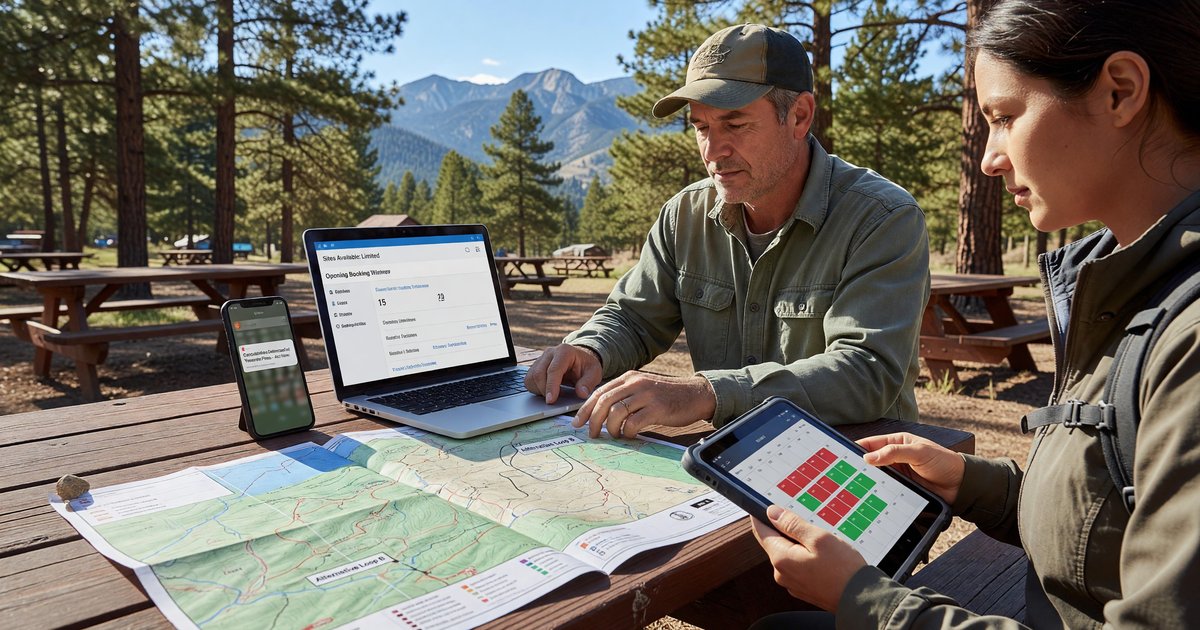
What that means in practice: a November trip is not a problem to solve in November. For late-fall dates at popular parks, work backward from the ten-month mark. If you miss it, do not give up. Cancellations release sites back into inventory, and checking the booking page at the daily release time on weekdays can turn up a site.
Federal sites such as Davis Bayou use Recreation.gov's rolling window, which for that campground is six months. Our Recreation.gov listing walkthrough explains how to read the fine print on stay limits and hookups before you commit.
Match the Campground to the Rig
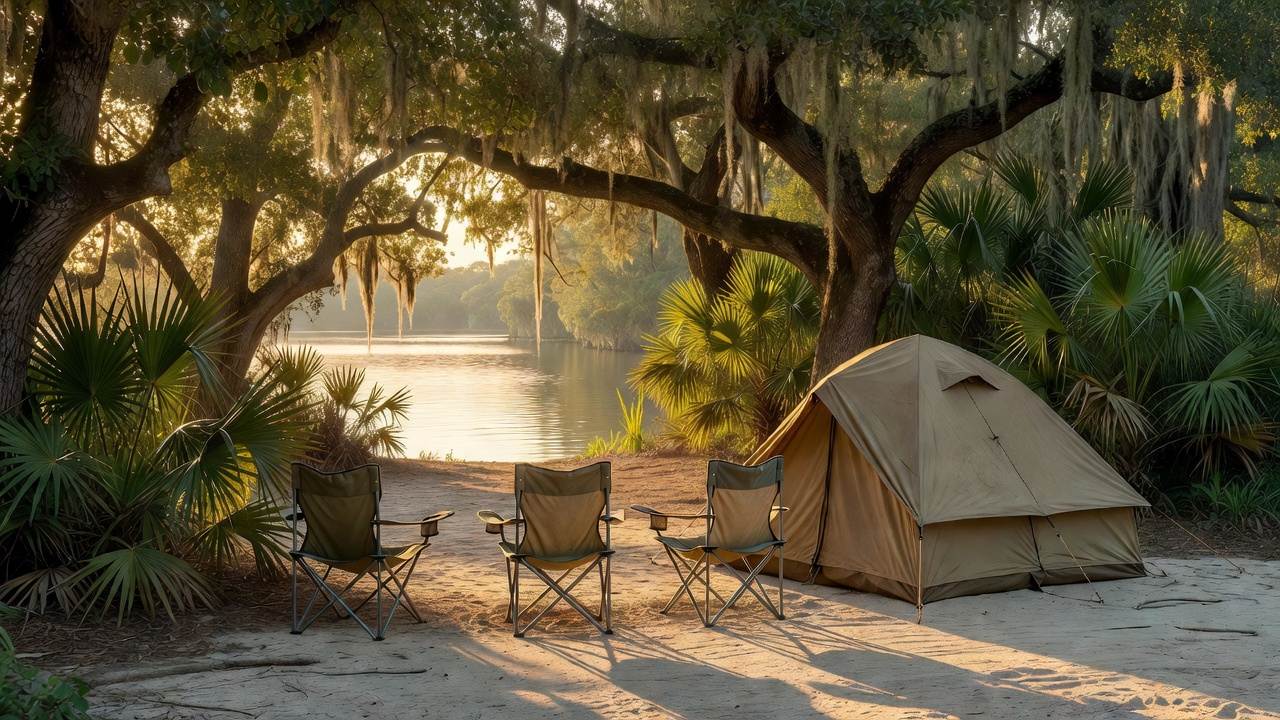
Late-fall Gulf weather affects tents and RVs differently. Tent campers should pack for wet and windy rather than cold: a rainfly that actually seals, stakes that hold in sandy soil, and a warmer layer for the nights a front passes. RVers should confirm hookups, because electric sites make a big difference in an unexpectedly cold or humid week, and check the maximum rig length on the listing. Coastal campgrounds with live oaks often have tight, low-hanging sites.
If you want a deeper comparison of shoulder-season trade-offs, our guide to shoulder-season camping covers the pricing and weather side of the bargain.
Making the Plan
Pick the region by the weather you can tolerate, then book the campground that fits it, and keep a flexible backup within a couple hours' drive. Watch the forecast and the National Hurricane Center through November, read the agency page for each campground the week you leave, and confirm that any seasonal loop you are counting on is actually open. Do that and a late-fall Gulf trip delivers the warm, uncrowded camping people head south for.
Sources: Florida State Parks reservation information, Everglades National Park seasons, and the Davis Bayou listing on Recreation.gov.