The cheapest place to store an RV is not always the cheapest place to own one. A trailer that sits through months of snow load, ultraviolet light and temperature swings can come out in spring with a damaged roof seal, flat-spotted tires, or a family of mice in the cabinets. Choosing storage is a trade between what you pay each month and what you risk paying in repairs.
This guide compares the three common storage types, lists the questions to ask a facility before you sign, and covers what to do to the rig first. Prices vary widely by region, so we do not quote a number. Get at least two local quotes.
The Three Options
Open lot. An outdoor space with no roof. It is the lowest-cost choice and often the easiest to access, since many lots allow you to come and go at any hour. The downside is full exposure to sun, rain, snow, hail and debris. Winter snow load on a roof and UV on tires and seals are the main stressors, and several storage guides put those two at the top of the list. If you pick an open lot, a fitted breathable cover and a recent roof inspection matter more than any other upgrade.
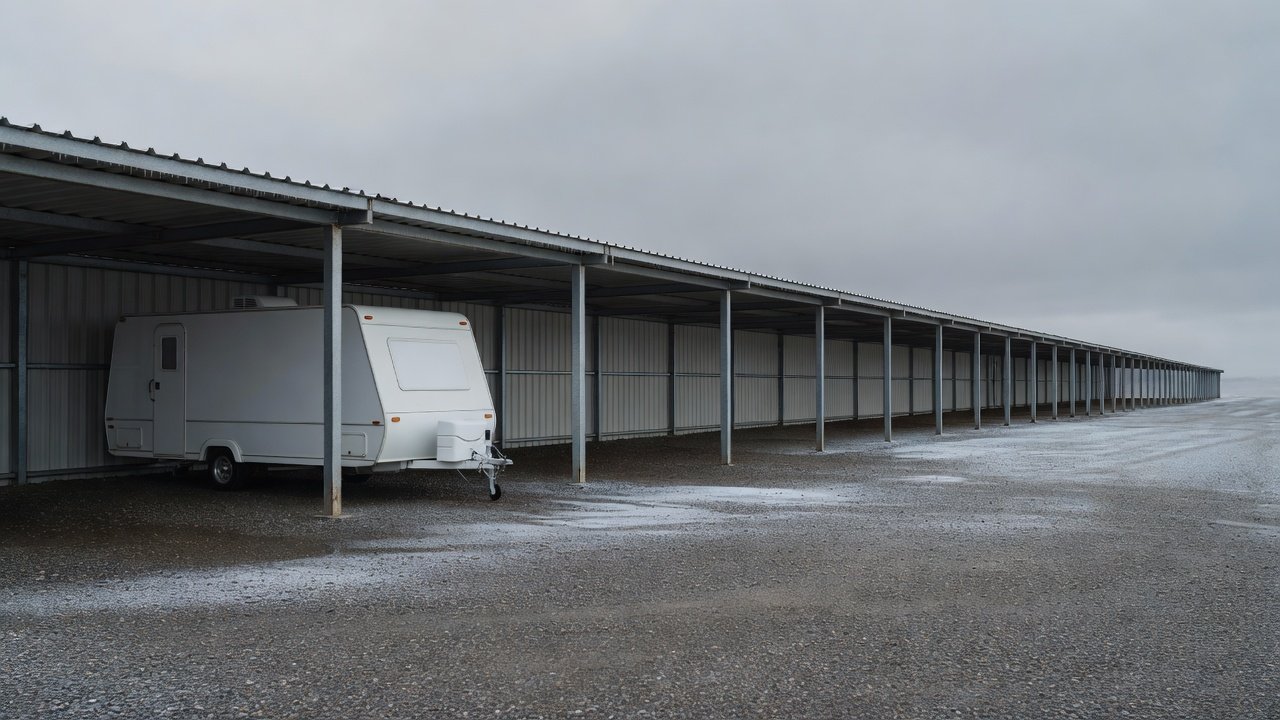
Covered. A roof with open sides, usually a carport-style structure. It blocks snow load, sun and most direct rain, and it typically costs more than an open lot but less than an enclosed building. It does not stop wind-blown rain, dust or rodents. For many owners with a trailer in a mild climate, this is the practical middle.
Indoor. A fully enclosed building, sometimes with climate control at a higher price. It offers the best protection from weather, theft and pests, and is the usual pick for a high-value motorhome or harsh winter. Ceiling height, door size and bay length limit what fits, so confirm your rig's measurements, including roof-mounted air conditioners and antennas, before you commit.
| Open lot | Covered | Indoor | |
|---|---|---|---|
| Weather protection | None | Roof only | Full |
| Pest protection | Low | Low | Higher |
| Relative cost | Lowest | Middle | Highest |
| Best for | Budget, short off-season, well-covered rig | Trailers, mild winters | Motorhomes, harsh winters |
Questions to Ask Before You Sign
- Security. Is the lot fenced and gated, with cameras and lighting? Who has access, and is there a gate log?
- Insurance. Does the facility carry coverage for stored vehicles, and does your own policy still cover the RV there? Do not assume one covers the other. Ask both parties in writing.
- Access. Can you get in during winter to check on the rig? Is the lane plowed?
- Surface and drainage. Gravel or pavement, and does water pool around the tires? Level, well-drained ground away from overhanging trees is the goal.
- Electrical. Is a hookup available to keep a battery maintainer connected?
- Contract terms. What is the notice for rate increases, and what happens if the facility sells?
Also ask whether you can store the RV at your own property or a campground that offers off-season storage. Some RV parks do, and you may save a trip.
Prep the Rig First
Storage does not replace maintenance. Start with a roof inspection, since a small crack becomes a leak over a winter of snow melt. Winterize the water system so a freeze does not crack lines or fittings; our RV winterization guide walks through it. Empty and clean the holding tanks, following our holding tank maintenance guide.
Then handle the rest:
- Remove all food, including canned and dry goods, to avoid attracting rodents, and prop the refrigerator door open after cleaning it.
- Cover or seal vents and openings so pests cannot get inside once the propane is off.
- Disconnect the battery or put it on a maintainer, and check the charge periodically if you can access the rig.
- Clean the tires, inflate them to the proper pressure, and use covers to protect them from UV. Moving the RV a short distance now and then can limit flat spots.
- Park on level ground and avoid trapping moisture under a tight plastic tarp. A breathable cover is better.
Storing at Home or at a Campground
Before you pay for a facility, check whether your municipality or homeowners association allows an RV on the property. Many do not allow long-term parking in a driveway or on the street, and some require a screened pad. A few campgrounds and RV parks sell off-season storage on-site, which is convenient if you camp there regularly, but ask the same questions you would ask a dedicated facility about security, insurance and access.
If the rig stays at home, the same prep applies. Keep it level, protect the tires from direct sun, clear snow from the roof carefully if it accumulates, and check for pest entry points. A short walkaround every few weeks catches small problems early, such as a cracked vent cover or a soft spot in the ceiling.
Which One to Pick
If the rig is a motorhome or an expensive trailer, or you live where winter means serious snow, indoor is worth the premium. If it is an older trailer in a mild region, covered storage gives most of the protection at a lower price. Open lot works when the budget is tight, the rig is well covered, and you can check on it. Whatever you choose, document the condition of the RV with photos before you hand over the keys, and check on it at least once during the winter if the facility allows.
Facility terms, prices and insurance rules vary by operator and region, so confirm them locally and in writing. This guide is general; check your RV manufacturer's storage recommendations for your specific model.